

Vacuum Casting Services: The Best Solutions for Precision Prototyping and Low-Volume Production
2026-08-03
Imagine transforming a digital design into a flawless physical part within days—without the high costs of full-scale manufacturing. ProtoMat makes this possible with advanced vacuum casting services, delivering precision prototypes and low-volume production runs that rival injection-molded quality. Whether you're refining a medical device or testing a consumer product, our approach bridges the gap between concept and reality with unmatched speed and detail.
How Vacuum Casting Turns Concepts into High-Fidelity Prototypes
Bringing an idea to life demands a process that captures every subtle detail, and vacuum casting excels at this by faithfully replicating even the most intricate surface textures and complex geometries. When a master model is encased in liquid silicone, the resulting mold picks up every curve, grain, and undercut with remarkable precision. This means that your prototype emerges not as a rough approximation but as a true high-fidelity copy—something you can hold, test, and present with confidence, knowing it mirrors the final product’s look and feel.
Beyond mere aesthetics, the materials used in vacuum casting play a pivotal role in achieving functional realism. A wide range of polyurethane resins can be selected to mimic the performance of production plastics, from flexible and rubberlike to rigid and impact-resistant grades. By choosing the right resin, you can evaluate ergonomics, snap-fits, and even thermal behavior long before committing to expensive tooling. This material versatility, combined with the process’s ability to produce multiple copies from a single master, accelerates design iteration without sacrificing the tactile and mechanical authenticity that solid decision-making requires.
Perhaps what truly sets vacuum casting apart is how seamlessly it fits into the creative flow of product development. Unlike machined or fully tooled parts, which often introduce delays and cost barriers, vacuum cast prototypes can be turned around in a matter of days. This speed allows design teams to act on feedback immediately, refining form and function in a continuous loop. The result is a more responsive development cycle where concepts are challenged, validated, and evolved into production-ready designs with a level of polish that feels far removed from the prototype lab.
Choosing the Right Materials for Realistic Product Testing
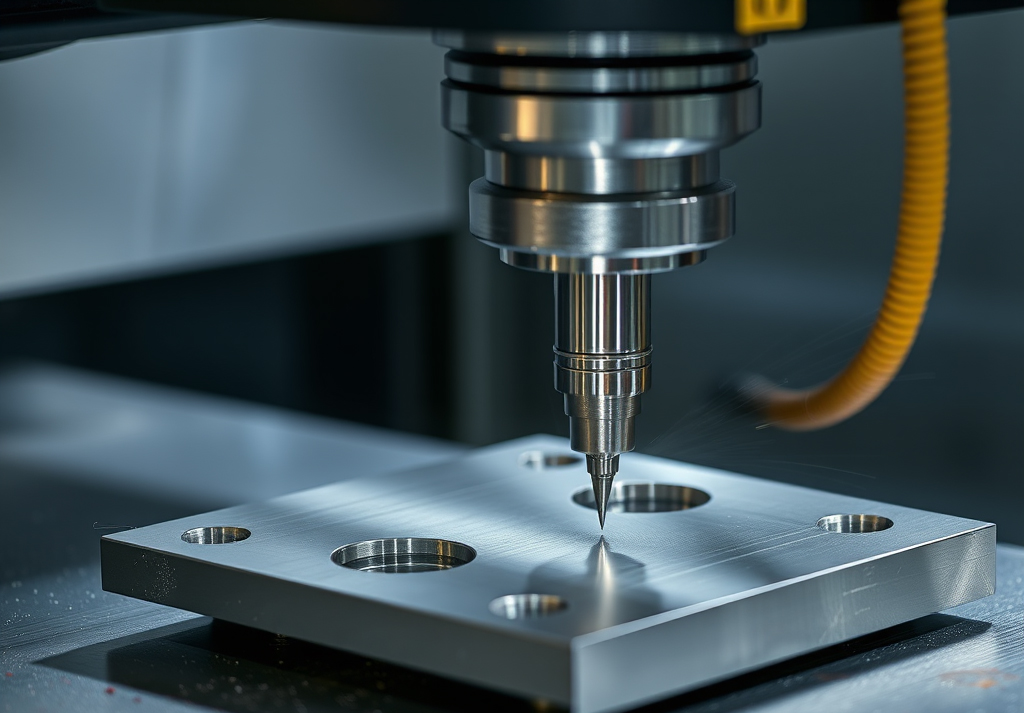
When you're building prototypes to test a product, the materials you pick can make or break the validity of your results. It’s not just about finding something that looks similar – the weight, texture, and flexibility all feed into how a user interacts with the design. If the test model doesn’t mimic the final material’s behavior, you might get feedback that’s far from what will happen in real life. Every subtlety counts, from the way a surface warms in the hand to the sound it makes when tapped.
Consider the environment where the product will live. A material that works perfectly in a climate-controlled lab might fail miserably out in the field. Think about UV exposure, moisture, temperature swings, and even chemical contact. These factors can dramatically change performance, and overlooking them leads to tests that don't predict real-world durability. Sometimes you need to sacrifice a bit of early precision to get a sample that actually tells you what’s going to break or wear down first.
Finally, don’t underestimate the role of manufacturing methods in material selection. A resin that casts beautifully in small batches might have nothing in common with the injection-molded plastic of mass production. Bridging that gap often means running parallel tests – one with a quickly fabricated proxy, and another with something closer to the production material. It’s an investment that pays off when your final product doesn’t encounter surprises that should have been caught early.
Scaling from One to Hundreds Without Sacrificing Detail
Growing from a single prototype to a full production run often means accepting trade-offs in precision, but it doesn’t have to. The key lies in building processes that treat each unit with the same scrutiny as the first. Instead of relying on broad quality checks that only catch major flaws, successful scaling uses adaptive inspection points that mirror the original handcrafted attention. This approach ensures that even when output multiplies, the fine details—those subtle touches that define excellence—remain intact.
One effective strategy is to design manufacturing or operational workflows that embed detailed checklists at every stage, not just at the end. By training teams to recognize and prioritize micro-adjustments, consistency emerges without slowing down the line. Technology can assist here, but the real difference comes from a culture that refuses to let speed erase nuance. When every person involved understands that preserving detail is non-negotiable, scaling becomes a matter of replication rather than dilution.
Over time, this meticulous foundation allows you to handle larger volumes while actually enhancing the final result. Customer feedback loops, fed back into the process, sharpen those details further. Instead of watching quality dip as numbers rise, you create a system where increased quantity reinforces precision. That shift turns scaling from a risky growth phase into a chance to solidify your reputation for excellence.
Avoiding Common Pitfalls in Low-Volume Production
Low-volume production often catches teams off guard with hidden costs that don't scale the same way they do in mass manufacturing. When setting up for a run of a few hundred units, process inefficiencies like manual part sorting or custom jig fabrication can silently eat up margins. Instead of assuming that simply reducing quantity trims cost proportionally, it pays to scrutinize every non-recurring engineering step. Early on, question whether a machined fixture that takes hours to produce is truly necessary, or if a modular adjustable setup could serve multiple low-volume projects. These micro-decisions compound, and without a deliberate focus on minimizing touch time per part, what looks profitable on a spreadsheet can turn into a loss once real shop rates hit the ledger.
Material selection is another sand trap—purchasing small amounts of stock often carries punitive premiums, and lead times can derail a schedule if the specified grade isn't locally available. Sourcing from standard, off-the-shelf dimensions and alloys that suppliers keep in inventory not only lowers unit price but also shrinks the risk of production standstills. It's equally critical to loop in fabricators during the design phase; a minor geometry tweak, like avoiding a deep pocket that demands a special long-reach tool, can be the difference between a smooth low-volume run and a series of expensive workarounds. The goal isn't to compromise on function but to bake in manufacturability from the start, sidestepping features that are only economical at scale.
Testing and quality assurance routines borrowed from high-volume lines can also backfire. Destructive testing that consumes five or ten parts out of a batch of 200 is devastating to yield, whereas the same fraction in a 10,000-unit order is trivial. Instead, lean on non-destructive evaluations, iterative in-process checks, and tighter supplier collaboration to hold tolerances without sacrificing hardware. Similarly, avoid the trap of ordering large safety buffers of custom components—obsolescence and storage costs pile up quietly. Treat each low-volume build as a learning loop: document the snags, push those findings back into the design repository, and refine the process so the next small batch comes together with fewer surprises and less waste.
When Vacuum Casting Outperforms Traditional Injection Molding
Vacuum casting really pulls ahead when you need small batches of high-fidelity parts without the crushing tooling costs of injection molding. Think prototypes, functional testing units, or limited-edition runs—places where speed and surface finish matter more than per-unit price at scale. The silicone molds capture incredible detail, letting you mimic textures, logos, and complex geometries without secondary finishing. You’re also free to experiment with different polyurethane resins that simulate production plastics, giving you flexibility that hardened steel tools simply can’t match.
Another sweet spot is when your design is still evolving. Making tweaks to a silicone mold is far cheaper and faster than re-cutting steel, so iterative testing suddenly becomes affordable. The process handles undercuts and thin walls with ease, and you can go from CAD to first parts in a matter of days—not weeks. This makes vacuum casting a natural fit for medical devices, consumer electronics covers, or automotive components that need form and function validation before committing to mass production.
It’s also the go-to method when you need multi-color or overmolded parts without the complexity of multi-shot injection tooling. You can cast in layers, embed inserts, or produce soft-touch grips directly in the mold. No heavy machinery, no lengthy setup, just a straightforward way to bridge the gap between one-off prototyping and full-scale manufacturing while keeping your costs grounded and your timeline intact.
Streamlining Product Launches with Rapid Bridge Manufacturing
Getting a product to market quickly often hinges on the transition from prototype to production. Rapid bridge manufacturing fills this gap by producing low-volume, production-grade parts without the wait and expense of full-scale tooling. It allows teams to validate designs with real materials and processes early, uncovering issues that might otherwise stall a launch.
This approach keeps product development agile. Instead of committing to costly molds upfront, companies can iterate on functional prototypes and even fulfill initial demand with bridge tooling. The result is a more flexible path to market, where adjustments are quick and the risk of delayed launches drops significantly.
Beyond speed, rapid bridge manufacturing supports a smoother handoff to mass production. With parts that closely match final production quality, supply chains can start with confidence, and any last-minute design tweaks are accommodated without derailing schedules. It’s a practical way to align engineering, manufacturing, and business timelines.
FAQ
Vacuum casting excels at replicating fine details and complex geometries using silicone molds, delivering parts with surface finishes and accuracy that rival injection molding without the high tooling costs.
While 3D printing is ideal for quick, one-off parts, vacuum casting offers superior material versatility and surface quality, making it better suited for batches of 10–100 units that need to look and feel like production pieces.
Absolutely—many of our clients use vacuum casting for durable, short-run production components. With a wide range of polyurethane resins available, we can match properties like heat resistance, flexibility, and impact strength required for real-world use.
We work with a broad selection of polyurethanes that simulate common thermoplastics, including rigid, flexible, transparent, and rubber-like materials. Specialty grades offer flame retardancy, UV stability, or food-contact compliance.
Lead times vary by complexity and quantity, but we often deliver first-article parts within 7–10 working days after master pattern approval. Small production runs can be completed in as little as two weeks.
Silicone molds typically accommodate parts up to about 800 × 600 × 400 mm in size. Very deep undercuts or enclosed hollow sections may require creative mold design, but our engineers can often find workable solutions.
Yes—once a master pattern is made, we can rapidly cast new versions from the same mold, allowing for affordable design tweaks. This iterative approach saves time and money compared to hard tooling changes in injection molding.
We control every step in-house, from mold pouring to casting and finishing. Each part undergoes dimensional checks and visual inspection, and we maintain strict process controls to keep material properties uniform throughout the batch.
Conclusion
Vacuum casting transforms rough concepts into remarkably precise prototypes by faithfully replicating even the most intricate master patterns. The process starts with a high-quality master model—often 3D-printed or CNC-machined—which is encased in a silicone mold. Once the mold cures, it becomes a negative cavity that captures surface textures, undercuts, and fine details with outstanding fidelity. Because the silicone is flexible, complex geometries can be demolded without damage, eliminating the need for costly tooling changes. This allows designers to iterate rapidly, testing fit, form, and function within days. Engineers can also simulate production materials by choosing from a wide range of polyurethanes that mimic ABS, polypropylene, or even elastomers, ensuring that prototypes not only look like the final product but also behave like it under real-world conditions.
Beyond prototyping, vacuum casting excels in low-volume production runs where injection molding simply isn't economical. By using a single master to create multiple molds, manufacturers can produce several hundred units while preserving crisp details and tight tolerances. This scalability bridges the gap between prototyping and full-scale manufacturing without the heavy upfront investment of steel tooling. When product launches demand speed, this approach serves as a rapid bridge, filling supply chains with market-ready parts while hard tooling is still being fabricated. Common pitfalls such as air entrapment or uneven wall thickness are managed through careful gating and venting, and experienced providers know how to fine-tune the casting parameters to avoid sink marks or incomplete fills. The result is a streamlined path from design to delivery, delivering high-fidelity parts that rival injection-molded quality at a fraction of the lead time and cost.
Contact Us
Contact Person: Joe
Email: [email protected]
Tel/WhatsApp: +8613799507208
Website: https://www.3dprotomat.com/