

Ultrasonic Coating System Company Selection Tips for Precision Manufacturers
2026-09-29
Choosing the right ultrasonic coating system partner can make or break your precision manufacturing line—yet many teams overlook critical factors until costly defects appear. From nozzle consistency to real-time process control, the selection criteria go far beyond a spec sheet. At Siansonic, we’ve seen firsthand how the right supplier transforms coating uniformity, adhesion, and yield. In this guide, we break down practical tips that precision manufacturers need to evaluate ultrasonic coating companies—so you can avoid common pitfalls and secure a system that truly fits your application.
When Precision Means Microns, Demand Proof of Repeatability
A single measurement hitting the target means almost nothing when tolerances live in the micron range. What actually matters is whether the machine, fixture, or probe can land in that same narrow window at 2 a.m. on a Tuesday, after a shift change, with coolant temperature drifting by three degrees. In semiconductor lithography, a stage that drifts half a micron between runs doesn't just produce scrap—it quietly erodes yield until the line stops making sense. Repeatability, not a lucky pass, is the real spec.
The only way to know if repeatability exists is to test it like you don't trust the vendor. That means thirty consecutive runs without touching the setup, then break down and rebuild the fixture, swap operators, let the lab warm up from a cold start, and run another thirty. Collect the raw data, run a GR&R study, and look at the spread. If the standard deviation creeps past a quarter of your tolerance band, the process is already lying to you. Precision claims without that kind of evidence are just marketing adjectives.
Ask for the unedited log files, the temperature plots, the operator notes. A supplier who has done the work will hand over the whole dataset without flinching—including the runs that fell outside the line. If they only show you the best three cycles or a polished demo video, walk away. In micron-scale manufacturing, the difference between a hero sample and a reliable process is exactly what ruins a product launch. You're not buying a measurement; you're buying the certainty that tomorrow's measurement will match today's.
The Coating Window: Matching Your Process, Not Their Standard
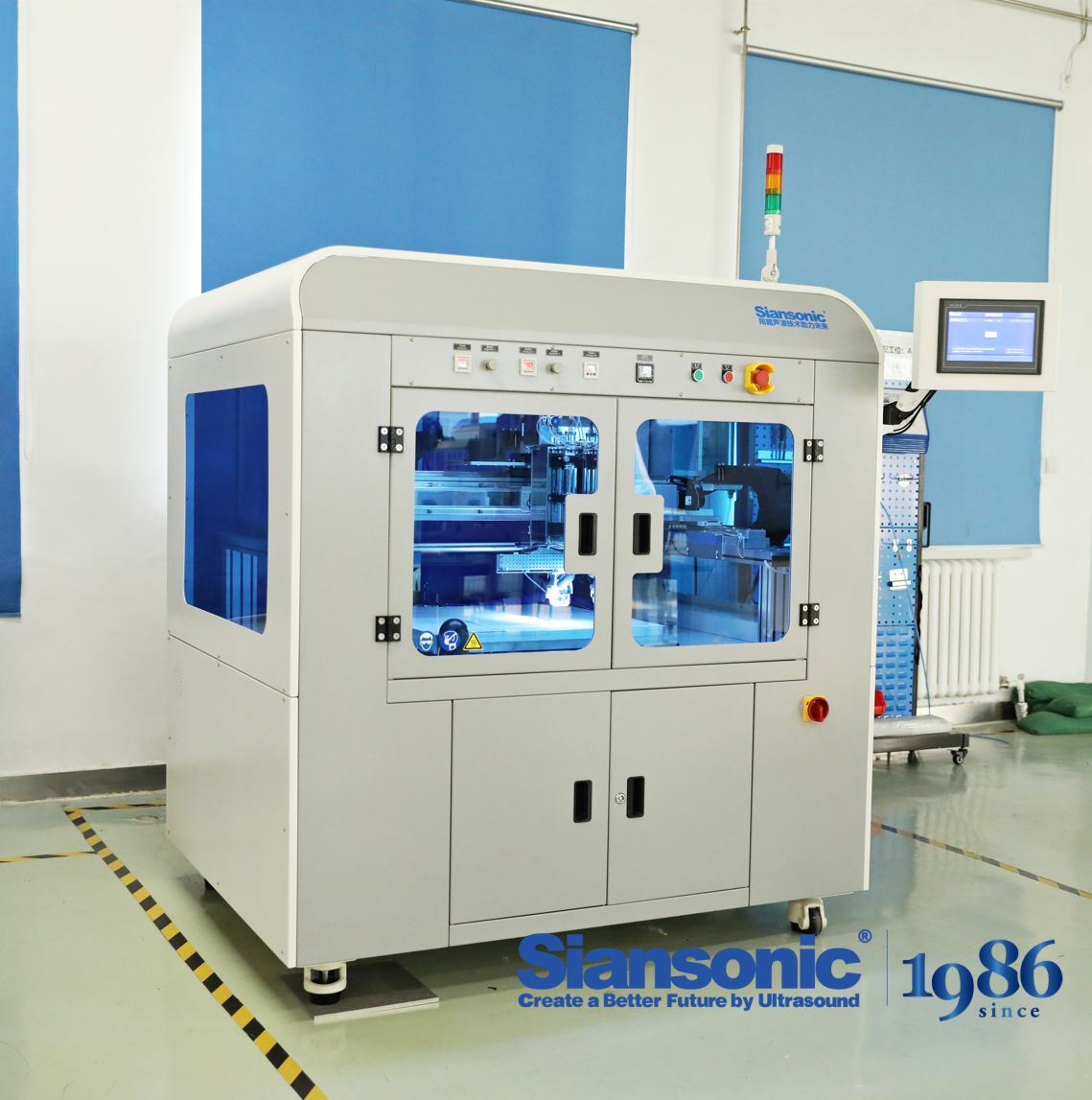
A coating window isn't a fixed set of numbers you pull from a general datasheet. It shifts with your line speed, booth air flow, part geometry, and even the batch of paint sitting in the drum. What sprays perfectly in a lab under controlled humidity often fisheyes or sags on a Tuesday afternoon when the plant doors have been open since six in the morning.
Finding your own window takes more observation than calculation. Run a small matrix of pressure and distance changes while watching how the film flows out. Write down what actually works on your parts, with your operators, on your worst-day conditions—not the ideal cured sample the vendor brought to the meeting.
That window also moves. A new lot of reducer, a worn nozzle, a change in pretreatment chemistry—any of these can narrow or shift the range where the finish still lays down clean. The goal isn't to lock in someone else's perfect settings; it's to know your process well enough to recognize when the window drifts and adjust before the rejects start stacking up.
Support After the Sale: What Actually Keeps Lines Moving
Most companies treat post-sale support as a cost center to be minimized, but the ones with repeat customers know it's the quiet engine behind the next order. When a buyer runs into a snag and gets a real person who actually knows the product, that moment does more than solve a problem. It builds a silent contract: we'll be here next time, too. That's why some industrial suppliers keep a retired engineer on call just to walk a confused operator through a setup at 6 a.m.
The difference often shows up in the details nobody tracks on a dashboard. A customer who receives a proactive call about a batch number recall usually remembers the brand for years, even if the fix was simple. Meanwhile, a competitor who forced them through a chatbot maze loses that account without ever seeing a complaint ticket. Support isn't just about fixing what broke. It's about reading the pause in a customer's voice and offering an alternative before they ask.
Long-term, the sales that move fastest are the ones where the buyer doesn't have to think twice about who they'll call if something goes wrong. That confidence comes from a pattern of small, unglamorous responses: a return label that shows up in an hour, a wiring diagram sent as a text message, or a spare part packed with the original order because the support team flagged a known wear point. These acts are invisible on a revenue chart, but they're exactly why some suppliers never lose a key account to a cheaper quote.
Materials Matter More Than the Machine
It's easy to get distracted by stepper motors, linear rails, and hotend temperatures. But anyone who has spent a weekend troubleshooting a failed print knows the truth: the filament or resin in your hand often matters more than the machine pushing it. Swap a budget PLA for a quality nylon and the same printer suddenly produces parts that survive real stress instead of snapping at the first bend. The machine sets the stage, but the material writes the script.
Think about warp, shrinkage, and layer adhesion. A mid-range printer loaded with a well-characterized ABS or PETG will outperform a flagship machine fed with cheap, inconsistent feedstock every single time. Material batches vary, moisture absorption changes behavior, and even the color pigments can alter thermal properties. Skilled makers don't obsess over upgrading their motion system—they build a dry box, track batch numbers, and test each spool before committing to a long print.
The same logic applies beyond 3D printing. In machining, tool steel selection outweighs spindle horsepower. In composites, resin chemistry beats autoclave precision. You can always buy a faster machine later, but you can't cheat physics with a better stepper driver. Pay for the material first, and the machine will follow.
Custom Engineering Without the Custom Price Tag
Most engineering firms treat customization as a luxury add-on, with change orders and inflated invoices to match. We've flipped that model. By building our core platform around a modular architecture and a library of proven, pre-certified building blocks, we can reconfigure mechanical, electrical, and software elements to fit your exact workflow without starting from scratch. The result is a solution that behaves like a one-off design, yet costs and ships like a standard product.
That doesn't mean you're stuck with a limited set of choices. Typical projects involve dozens of adjustments—mounting patterns, connector types, firmware logic, even enclosure finishes. Because each of those variables has already been tested and documented, the engineering effort goes into selecting and verifying the right combination, not inventing new parts. You get the performance and fit of a bespoke build, minus the extended lead times and surprise fees.
We also don't lock you into a rigid spec before you've seen the first prototype. Small revisions mid-project are handled through the same modular toolkit, so a tweak to a sensor range or a change in communication protocol doesn't trigger a complete redesign or a budget review. That's how we deliver custom engineering that feels tailored, not taxed.
Why On-Site Trials Beat Marketing Claims Every Time
Marketing brochures can promise the moon, but nothing exposes a product's true character like letting your team run it through its paces in the exact environment where it will live. Controlled demos in a vendor's lab are staged for perfection; your own floor, with your own operators, your own materials, and your own unpredictable variables, reveals how the machine actually holds up when nobody is polishing the edges.
On-site trials strip away the theatre. You get to see how the equipment handles your specific tolerances, whether the software integrates with your existing workflow without a hitch, and how the vendor's support team behaves when something inevitably goes sideways at 3 p.m. on a Tuesday. Those are the moments that no glossy datasheet can fabricate, and they matter more than any spec sheet bullet point.
Trust is built from observed behaviour, not from adjectives. A trial gives you the unvarnished truth: real cycle times, real scrap rates, real ergonomics for the people who will touch it daily. When a supplier agrees to leave their machine under your roof for two weeks and let you break it in your own way, that confidence says more than any marketing slogan ever could.
FAQ
Ask for a coating trial on your actual production substrate, not a generic coupon. A competent vendor will run it at your target speed and provide film thickness measurements across the full surface. If they hesitate or only show a visual result, treat that as a red flag.
Focus on the fluid properties you will actually spray — viscosity, solids content, surface tension. Then ask the vendor for continuous spray data at your required flow rate. Nozzle material matters more than nozzle frequency for abrasive or chemically aggressive fluids, so ask for erosion data if you run ceramic slurries or acidic coatings.
A real application lab has multiple ultrasonic generators, several nozzle types, and motion platforms ready for testing, plus engineers who ask about your tolerance stack-up. If they can't show you thickness mapping from a recent similar application, their 'lab' is probably a demo bench.
When you already have validated motion control or robotics in-house. Buying a bundled system can force you to replace working infrastructure and create new integration risk. Instead, ask for an open-control coating head that talks to your existing PLC or robot, and pay only for the ultrasonic stack if that's what you need.
Exhaust containment, precise fluid delivery pumps, nozzle cleaning kits, and recalibration services. Also ask about replacement transducer life in your operating environment. Some quotes look lean because they omit the closed-loop flow meter, which you will absolutely need for repeatable wet film thickness.
Request a statistically valid sample set, not one good scan. Ask for at least ten consecutive parts with film thickness mapped in the same locations, then compare the standard deviation. Also ask for the test environmental conditions. Uniformity data taken in an air-conditioned lab will not transfer to your hot, humid shop floor without adjustment.
Check whether they stock critical spares locally or ship from a distant warehouse. Ask for an actual service-level agreement with response-time numbers, and call a reference customer to find out if the vendor answers on weekends. Also confirm whether the software updates are included or billed annually.
Custom only pays off when the standard tooling cannot handle your substrate geometry, part handling, or cleanroom envelope. If you need multi-axis motion with rotary stages or an in-line oven interface, customization is justified. Otherwise, push the vendor to prove why a standard system can't meet your tolerance before paying for engineering hours.
Conclusion
For a precision manufacturer, choosing an ultrasonic coating system starts with hard evidence of repeatability. When tolerances are measured in microns, glossy brochures mean nothing unless the vendor can show run-to-run and part-to-part consistency on your actual substrate. Ask for data from production-equivalent setups, not just lab demos. The coating window also has to fit your process rather than forcing you into a supplier’s off-the-shelf recipe. If a company cannot adjust fluid viscosity, atomization pressure, or path speed to match your line, the machine becomes a constraint, not an asset. And the purchase is only the beginning: look closely at what support actually covers. Downtime often comes from small things—nozzle wear, power drift, software locks—so the real question is whether the vendor offers remote diagnostics, rapid spare parts, and process engineers who answer when a line stops.
Beyond the machine itself, fluid chemistry determines coating quality more than any single hardware feature. A supplier that understands your specific suspension, solvent, or bioactive material will save you months of trial and error. Custom engineering matters too, but it should not carry a custom price tag. The best vendors offer modular platforms—adjustable traverses, interchangeable nozzles, programmable recipes—so you get a tailored fit without paying for a one-off build. Finally, insist on on-site trials with your own materials and parts. Marketing claims and application notes are cheap; watching your substrate coated under production conditions, then inspecting it under your own metrology, tells you everything a sales pitch cannot. That combination of repeatability proof, material know-how, modular design, and real-world testing separates vendors who understand precision manufacturing from those who only sell equipment.
Contact Us
Contact Person: Ivy Zhang
Email: [email protected]
Tel/WhatsApp: +86 1081502288
Website: https://www.siansonic.com/