

TWEEN Polyoxyethylene Sorbitan Fatty Acid Ester: A Key Ingredient for Industrial Applications
2026-03-12
In the dynamic world of industrial chemistry, few ingredients have proven as versatile and impactful as TWEEN polyoxyethylene sorbitan fatty acid esters. These surfactants are unsung heroes, quietly revolutionizing processes from food production to pharmaceuticals, cosmetics, and beyond. At POLYKEM, we've long recognized the pivotal role TWEEN esters play in driving innovation and efficiency across sectors. Their ability to emulsify, stabilize, and solubilize makes them indispensable in countless applications, yet their full potential is often overlooked. In this blog, we'll delve into how these remarkable compounds, especially when refined by leaders like POLYKEM, are transforming industrial landscapes. Imagine unlocking new possibilities in your formulations or enhancing product performance with a trusted ingredient—curious to learn more? Join us as we explore the key benefits and real-world uses that set TWEEN apart, and discover why it's a cornerstone of modern industrial success. Stay tuned for insights that could elevate your next project.
The Unique Chemistry of TWEEN Esters in Industrial Formulations
TWEEN esters, derived from polyoxyethylene sorbitan and fatty acids, stand out in industrial applications due to their amphiphilic nature—balancing hydrophilic ethylene oxide chains with lipophilic fatty acid tails. This dual character enables them to act as exceptional emulsifiers, stabilizing oil-in-water mixtures in sectors ranging from pharmaceuticals to cosmetics. Their versatility stems from the ability to fine-tune properties by adjusting the ethylene oxide units and fatty acid types, allowing for customized solutions in diverse formulations.
Beyond emulsification, TWEEN esters enhance solubility and dispersion in challenging systems, such as agrochemicals and paints, by reducing surface tension and facilitating uniform mixing. Their non-ionic nature makes them compatible with a wide pH range and less prone to electrolyte interference, unlike some ionic surfactants. This reliability has cemented their role in creating stable, long-lasting products that meet stringent industrial standards, often outperforming alternatives in terms of shelf-life and performance consistency.
Innovations in TWEEN ester chemistry continue to evolve, with modifications like esterification with specific acids (e.g., oleic or stearic) offering targeted benefits like improved biodegradability or thermal stability. In food and personal care industries, they're prized for their mildness and safety profiles, often serving as key components in emulsions that require both efficacy and consumer-friendly attributes. This adaptability ensures TWEEN esters remain a cornerstone in formulation science, driving efficiency and innovation across multiple fields.
Enhancing Product Performance with Surfactant Technology
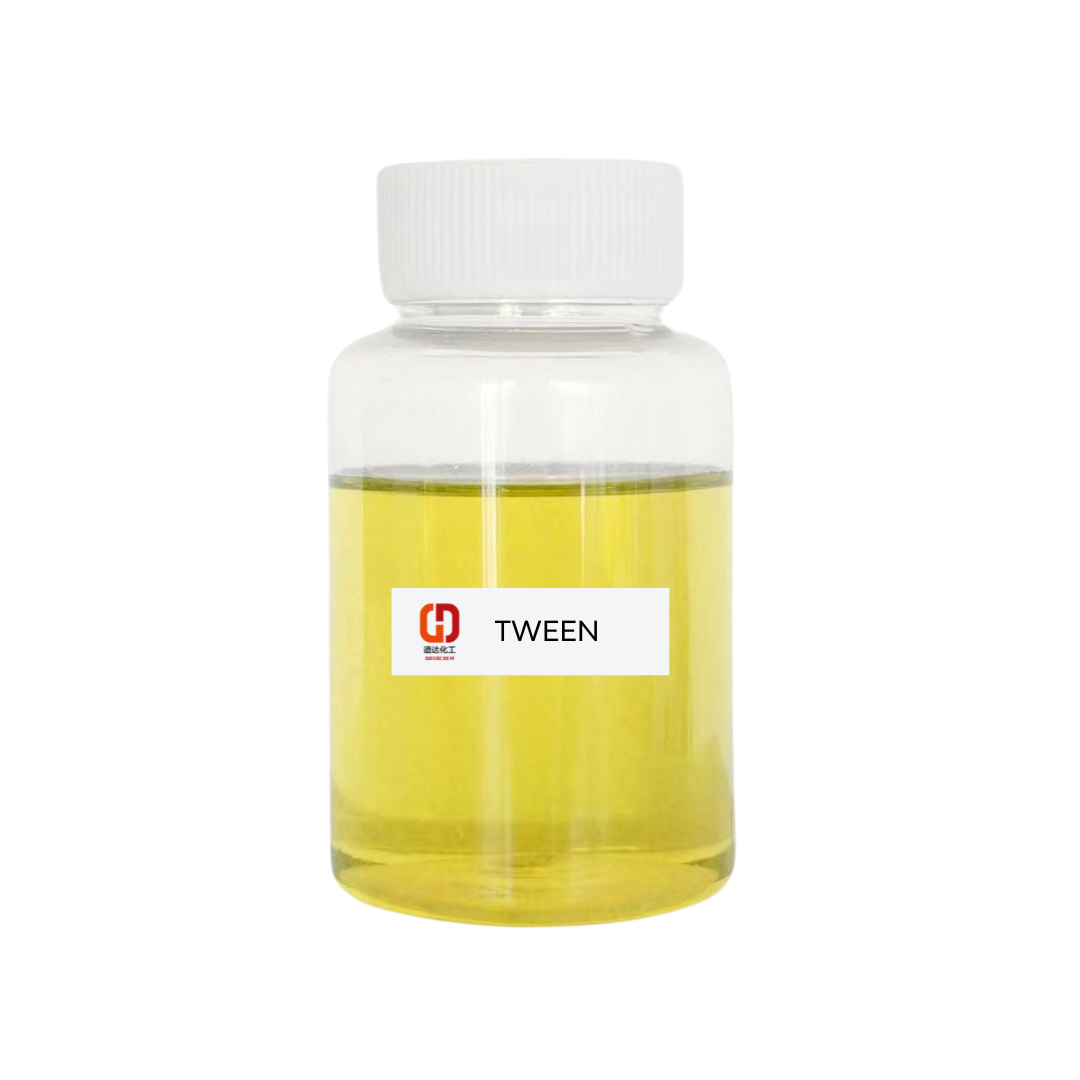
Surfactant technology plays a pivotal role in boosting product performance by modifying surface properties, leading to enhanced stability, absorption, and effectiveness across various applications. In the realm of personal care, surfactants help create rich lathers and improve cleansing efficacy, allowing formulations to remove impurities without stripping natural oils. This balance not only elevates user experience but also supports skin health, making products more appealing and reliable for everyday use.
Beyond cosmetics, surfactants are integral in industrial settings, where they optimize processes like emulsification and dispersion, resulting in more efficient and durable products. For instance, in agricultural formulations, surfactants ensure uniform pesticide coverage, increasing crop protection and reducing environmental impact. This versatility underscores their ability to tailor performance to specific needs, driving innovation and competitive advantage in diverse markets.
Emerging advancements in surfactant chemistry, such as biodegradable and sustainable variants, further elevate product performance by aligning with eco-conscious trends. These developments not only improve functionality but also address consumer demands for greener alternatives, showcasing how surfactant technology continues to evolve and refine product outcomes in a dynamic landscape.
From Pharmaceuticals to Agrochemicals: Versatile Applications
The groundbreaking advancements in chemical synthesis and molecular design are increasingly transcending traditional boundaries, enabling technologies to migrate seamlessly from one industry to another. Pharmaceuticals have long been at the forefront of innovation, but the knowledge and processes developed there, such as targeted drug delivery and bioactive molecule creation, are finding exciting new applications in agrochemicals. This versatile application transforms how we address complex challenges, from curing diseases to enhancing crop yields, showcasing the power of cross-industry adaptation.
In agrochemicals, this versatility means leveraging sophisticated formulations and delivery mechanisms originally designed for medical treatments to protect plants more effectively. For instance, encapsulation techniques that ensure controlled release in pharmaceuticals can now be applied to pesticides, reducing environmental impact and improving efficiency. This not only boosts agricultural sustainability but also opens up opportunities for precision farming, where tailored solutions meet specific crop needs, much like personalized medicine addresses individual patient conditions.
Beyond direct applications, this synergy fosters innovation by encouraging collaboration between scientists in pharmaceuticals and agrochemical sectors. By sharing insights on molecular interactions and formulation science, researchers can develop hybrid solutions that tackle global issues like food security and plant health. Ultimately, the versatile transition from pharmaceuticals to agrochemicals exemplifies how interdisciplinary approaches can drive progress, making industries more resilient and adaptive in a rapidly changing world.
Stability and Solubility Advantages in Complex Mixtures
When dealing with complex mixtures, ensuring stability isn't just about preventing degradation—it's about creating a harmonious environment where each component can thrive without interfering with others. This often involves innovative approaches like tailored encapsulation techniques or controlled release mechanisms that maintain integrity over time, even as conditions fluctuate. Think of it as a delicate dance where every ingredient is perfectly balanced, allowing products to deliver consistent performance from start to finish.
Solubility, on the other hand, transforms how these mixtures interact in real-world settings. By enhancing dissolution rates and bioavailability, we can unlock hidden potentials in formulations that were previously overlooked. For instance, using advanced surfactants or molecular tweaks can turn stubborn substances into readily soluble assets, ensuring optimal absorption and effectiveness without compromising safety or stability. It's about making every element work seamlessly together, much like a well-orchestrated symphony where each note contributes to the overall harmony.
Combining these advantages doesn't just add value—it creates a synergy that elevates entire product lines. In industries ranging from pharmaceuticals to cosmetics and food science, this integration leads to formulations that are not only more robust on the shelf but also more efficient upon application. By prioritizing both stability and solubility, developers can craft solutions that stand out for their reliability and superior performance, offering tangible benefits that resonate with users and set new benchmarks in quality.
Sustainable Production and Environmental Considerations
Sustainable production isn't just a buzzword; it's a fundamental shift in how industries operate, weaving environmental stewardship into the very fabric of business processes. This approach goes beyond mere compliance, emphasizing resource efficiency, waste reduction, and the integration of renewable energy sources to minimize ecological footprints.
From sourcing raw materials responsibly to designing products for longevity and recyclability, every stage of the supply chain is scrutinized. Innovation in green technologies, such as water-saving methods in manufacturing or biodegradable packaging, plays a crucial role in achieving these goals, ensuring that economic growth aligns with planetary health.
Moreover, this focus on sustainability fosters resilience against regulatory changes and market demands, while building trust with communities and consumers who increasingly prioritize eco-friendly practices in their purchasing decisions.
Innovative Uses in Emerging Industrial Sectors
In emerging industrial sectors, innovative applications are reshaping traditional boundaries, from sustainable energy solutions in green tech to advanced automation in logistics. These sectors, such as biotechnology and smart manufacturing, leverage cutting-edge technologies like AI and IoT to drive efficiency and create new market opportunities.
Beyond efficiency, these innovations foster resilience and adaptability, as seen in precision agriculture where drones and sensors optimize crop yields. They also enable collaborative ecosystems, where startups and established companies co-develop solutions, accelerating growth and reducing time-to-market for novel products.
Looking forward, the convergence of sectors like fintech and healthcare is unlocking personalized services, while ethical considerations guide responsible innovation. This dynamic landscape ensures that emerging industries not only thrive but also contribute to global challenges, making innovation a cornerstone of economic transformation.
FAQ
TWEEN esters primarily act as surfactants, emulsifiers, and stabilizers, enhancing the mixing of immiscible liquids like oil and water in various industrial processes.
It's widely used in industries such as pharmaceuticals for drug delivery systems, food processing to improve texture, cosmetics for lotions, and agriculture as a wetting agent in pesticides.
Its structure combines hydrophilic polyoxyethylene groups and lipophilic fatty acid chains, allowing it to form stable emulsions by reducing surface tension between different phases.
TWEEN is generally considered safe and biodegradable, but proper handling guidelines should be followed to minimize exposure and ensure compliance with regulatory standards.
It provides excellent solubility, low toxicity, and versatility across a wide pH range, making it a preferred choice for cost-effective and efficient formulations.
Yes, it can be tailored by adjusting the chain length of fatty acids or the degree of ethoxylation to optimize properties like HLB value for targeted applications.
Conclusion
The article "TWEEN Polyoxyethylene Sorbitan Fatty Acid Ester: A Key Ingredient for Industrial Applications" highlights the multifaceted role of TWEEN esters as indispensable surfactants across various industrial sectors. Their unique chemical structure, characterized by polyoxyethylene chains and sorbitan fatty acid esters, underpins exceptional versatility in formulations, enabling effective emulsification, dispersion, and wetting properties. This chemistry is crucial for enhancing product performance, particularly in pharmaceuticals and agrochemicals, where TWEEN esters ensure stability and solubility in complex mixtures, improving efficacy and shelf-life. By integrating surfactant technology, industries leverage these advantages to optimize processes and outcomes, from drug delivery systems to pesticide formulations, demonstrating the esters' broad applicability and reliability in demanding environments.
Beyond traditional uses, TWEEN esters are increasingly important in sustainable production and emerging industrial sectors, addressing environmental considerations through eco-friendly processes and innovative applications. Their adaptability spans from enhancing biodegradability in cosmetics to enabling advanced materials in nanotechnology, showcasing a forward-looking impact. The article underscores how TWEEN esters not only drive current industrial success but also pave the way for future innovations, making them a cornerstone ingredient that balances performance, versatility, and sustainability in a rapidly evolving global market, ultimately reinforcing their status as a key component in industrial advancements.
Contact Us
Contact Person: Levi
Email: [email protected]
Tel/WhatsApp: +86 532 84688720
Website: https://www.polykem-intl.com