

TUV Class 0 Oil-Free Air Compressor Supplier: Delivering Certified Pure Air for Critical Industries
2026-08-10
When air quality is non-negotiable, even a trace of oil can compromise entire processes. That’s why leading critical industries turn to Seize Air for TUV Class 0 oil-free air compressors—the gold standard in certified purity. But certification alone isn’t enough; true reliability comes from engineering that anticipates your toughest demands. In this post, we explore what sets a genuine Class 0 solution apart and how the right supplier can safeguard your most sensitive operations.
The Hidden Risks of Contaminated Compressed Air
Many manufacturers underestimate just how much trouble a tiny impurity in their compressed air stream can cause. Beyond the obvious threat of corrosion inside pipes, moisture and oil aerosols can quietly degrade pneumatic tools, leading to sluggish performance, increased wear, and unplanned downtime. Even fine particulates, invisible to the naked eye, can clog precision components or scratch delicate surfaces during air-assisted processes. The real danger lies in these effects accumulating over weeks and months, making root-cause diagnosis a frustrating ordeal when final product quality starts slipping or maintenance costs inexplicably rise.
In sectors like food packaging or pharmaceuticals, the risks leap from operational headaches to serious health and compliance issues. A single colony of microorganisms thriving in damp, tepid air lines might find its way onto a product surface, sparking a recall that damages both finances and reputation. Meanwhile, oil carryover from aging compressors can taint batches of candy or injectables with off-flavors or chemical contaminants, violating strict purity standards. The hidden nature of these threats means staff often only realize something is wrong after a customer complaint or a failed audit, long after the damage has spread through production.
The financial toll isn't limited to scrap or immediate repairs. Fluctuating pressure caused by water buildup forces systems to work harder, ramping up energy bills month after month without any obvious warning sign. Over time, corroded piping can develop pin-hole leaks that silently waste thousands of cubic feet of air, further draining profitability. Even more unsettling is the safety angle: in certain applications, weakened lines might rupture or discharge contaminated air into breathing apparatus or cleanroom environments. Ignoring the purity of your compressed air is like ignoring a slow leak in your roof—you'll only notice the real cost once the ceiling caves in.
Why 'Oil-Free' Isn't Always Enough: The Case for TUV Class 0
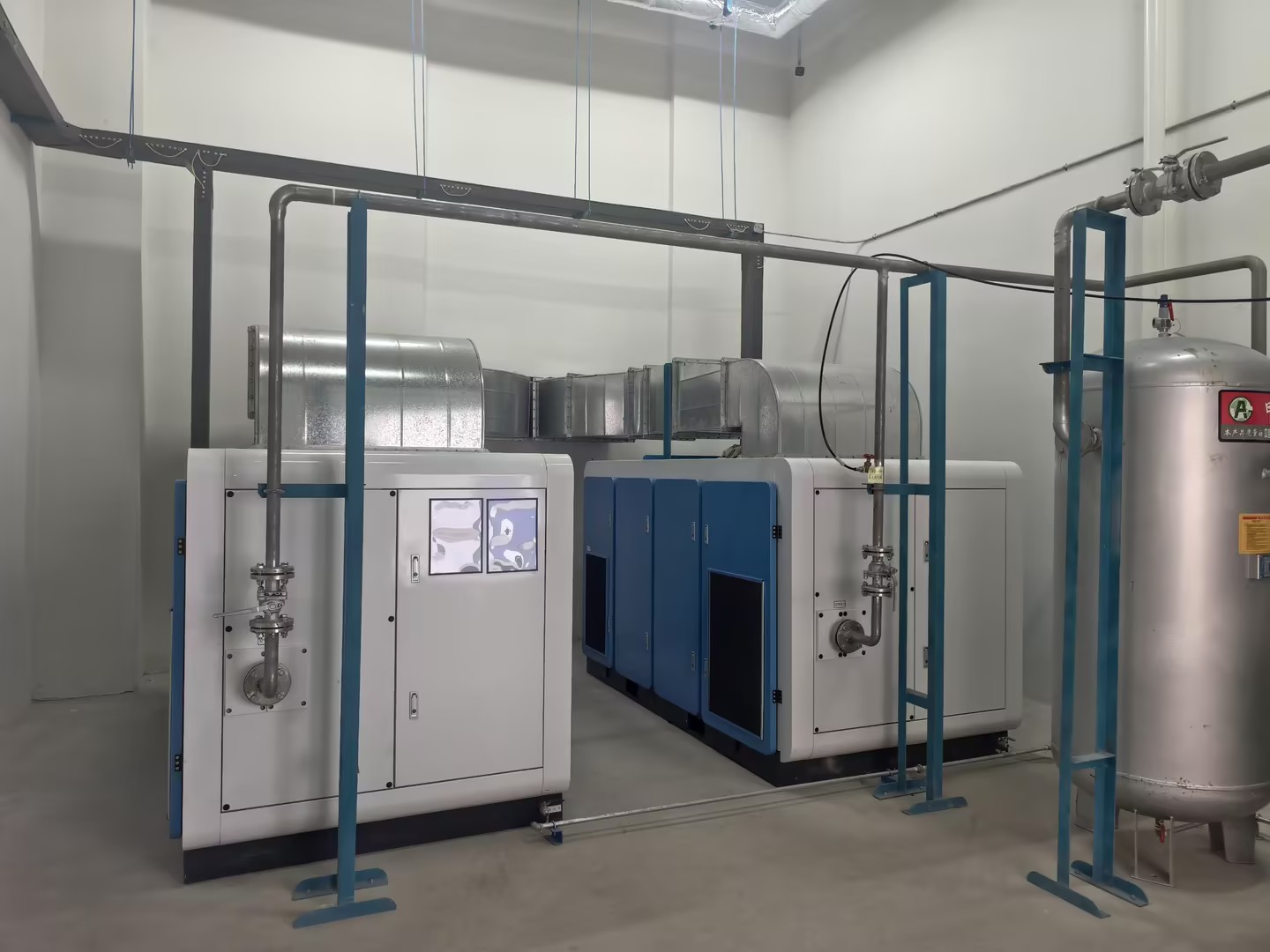
Many manufacturers assume that an 'oil-free' compressor is a guarantee of oil-free air, but the reality is more nuanced. Standard oil-free compressors can still introduce trace oil vapors from ambient air or internal components, which may not meet the stringent requirements of sensitive applications. In industries like pharmaceuticals, food and beverage, or electronics, even microscopic oil contamination can lead to product recalls, equipment damage, or health hazards. That's where TUV Class 0 certification steps in—it provides a quantifiable, third-party validated standard that ensures compressed air is technically oil-free, measuring contaminants down to the parts per billion level.
TUV Class 0 goes beyond manufacturer claims by testing the entire compressor system under real-world operating conditions. While 'oil-free' is a generic term often used loosely, Class 0 is the only certification that mandates strict limits for all forms of oil: aerosols, vapors, and liquids. This comprehensive approach eliminates the guesswork, giving end-users absolute confidence that their air supply won't compromise product integrity or process safety. For businesses where purity is non-negotiable, relying solely on an 'oil-free' label is a gamble that can cost far more than investing in certified equipment.
From Pharma to Food: Where Certified Pure Air Matters Most
In pharmaceutical manufacturing, a single airborne particle can compromise an entire batch of life-saving drugs. Cleanrooms with certified pure air aren't just a regulatory checkbox—they are the silent guardians of product integrity. Stringent ISO classifications demand continuous monitoring and control of particulates, ensuring that injectables, vaccines, and sterile compounds remain free from contamination from mixing to packaging.
The food and beverage industry is waking up to a similar truth, especially in aseptic processing and sensitive packaging lines. Whether it's extending shelf life without preservatives or preventing microbial growth in dairy and liquid products, certified air systems reduce risks that traditional filtration often misses. The subtle shift from reactive quality checks to proactive air purity management is quietly reshaping how brands protect both consumers and their reputation.
Beyond obvious clean zones, certified pure air now reaches into unexpected corners like tea packing rooms, edible oil bottling, and even craft breweries. Companies investing in tailored air purification aren't just avoiding recalls—they're gaining a competitive edge by delivering cleaner, more stable products. As supply chains tighten and consumer scrutiny intensifies, the pursuit of certified air is becoming less of a luxury and more of a baseline for trust across industries.
Inside the Engineering: How True Oil-Free Compression Is Achieved
Achieving true oil-free compression isn't just a matter of removing lubricant from the compression chamber. It demands a fundamental rethinking of materials and tolerances. The core challenge lies in the fact that metal-on-metal contact generates friction, heat, and inevitable wear without some form of lubrication. Engineers have solved this by turning to advanced composite materials and permanent surface treatments. For example, self-lubricating polymers, such as PTFE-based compounds, can be used for piston rings and rider bands, allowing them to slide against a cylinder wall with minimal friction. These materials transfer a microscopic film onto the counter-surface, creating a dry lubricating layer that eliminates the need for oil entirely.
Beyond material selection, precision engineering plays a decisive role. The internal clearances must be meticulously calculated to allow for thermal expansion while preventing any metal contact. In rotary screw compressors, for instance, a thin yet durable coating—often a composite of molybdenum disulfide or a polymer blend—is applied to the rotors. This coating acts as a sacrificial wear surface and a permanent solid lubricant. The timing gears, which are housed separately and sealed off from the compression zone, are typically made from hardened steel and run in an oil bath that is strictly isolated. This ensures that the oil never reaches the air stream, while still protecting the gears from wear.
Temperature management further separates true oil-free systems from their lubricated counterparts. Without oil to absorb and carry away heat, these machines rely on intercoolers and aftercoolers to manage thermals. The engineering must ensure that even during extended operation, temperatures never approach the threshold where coatings degrade or components distort. Some designs integrate liquid cooling jackets around the compression chambers, especially in high-pressure stages. This thermal strategy, combined with the choice of materials and precision assembly, enables oil-free compressors to deliver air that is uncontaminated—a critical requirement for industries like pharmaceutical manufacturing, food and beverage processing, and electronics production.
Choosing a Supplier: Beyond the Brochure
When evaluating potential suppliers, it's easy to be swayed by glossy brochures and polished sales pitches. But real reliability reveals itself in the details that don't make it onto the page. How quickly do they respond when something goes wrong? Do they ask thoughtful questions about your needs, or just push a one-size-fits-all solution? The best partnerships are built on transparency and a willingness to tackle problems together, not just a list of impressive specs.
Dig deeper than the official case studies. Ask for references, but don't stop at the names they provide—look for independent reviews or reach out to former clients through your own network. Pay attention to how they handle mistakes: a supplier that owns up to an error and moves heaven and earth to fix it is worth ten that never admit fault. Visit their facility if you can, not just the showroom; the way a shop floor is organized, or how employees interact, tells you far more than any brochure ever could.
Ultimately, choosing a supplier is about aligning values, not just capabilities. A provider who invests in sustainable practices, continuous training, and fair labor standards is more likely to be a stable, long-term partner. Look for signs of a learning culture—do they innovate when no one is forcing them to? Are they curious about your industry’s future? The right supplier won’t just deliver goods; they’ll help you anticipate challenges and grow smarter over time.
Future-Proofing Your Operations with Certified Air
Integrating certified air systems lays a resilient foundation that adapts to tightening regulations without constant overhauls. By prioritizing air purity that exceeds current standards, your facilities inherently stay ahead of legislative curves—sidestepping disruptive retrofits and aligning with sustainability benchmarks long before they become mandates. This forward-looking stance transforms compliance from a reactive scramble into a quiet, built-in advantage.
Beyond mere rule-following, certified air fortifies your operational rhythm against market fluctuations and resource scarcities. Consistent air quality preserves sensitive equipment, minimizes yield-sapping contamination, and extends maintenance cycles—turning a utilities cost into a performance stabilizer. In practice, this means fewer unexpected stoppages and a leaner, more predictable production flow that appeals to partners who value reliability.
The intangible payoff lies in brand trust: clients and collaborators increasingly scrutinize environmental stewardship as part of due diligence. Certified air acts as a verifiable proof point, quietly differentiating your operation in bids and reviews. Rather than chasing trends, you’re anchoring your value proposition in a tangible asset that grows more relevant, creating a subtle moat around your market position as standards evolve.
FAQ
TUV Class 0 certification guarantees that the compressed air is entirely free of oil contamination, meeting the highest purity standards. This is essential for industries where even the tiniest trace of oil could compromise product quality or safety.
Sectors like pharmaceuticals, food and beverage processing, electronics manufacturing, and healthcare rely on this level of air purity. In these fields, oil-free air prevents product spoilage, equipment damage, and regulatory non-compliance.
Modern oil-free compressors use advanced materials like coated rotors and precision engineering to minimize friction and wear. Water or air cooling, along with smart monitoring, ensures long-term durability without oil.
A dedicated supplier provides end-to-end support including system design, installation, and compliance documentation. They also offer tailored maintenance plans and rapid access to genuine parts, keeping downtime minimal.
Not every application needs Class 0. For less sensitive uses, lower purity grades may suffice. However, in critical processes where contamination risk is unacceptable, nothing less than Class 0 ensures absolute safety and audit confidence.
Filters can reduce oil content but never eliminate it entirely. Over time, filter replacement, energy loss, and the risk of filter failure add up. A true oil-free compressor eliminates these ongoing costs and the danger of accidental contamination.
Insist on seeing the official TUV certificate and test reports. The documentation should clearly state the compressor model and confirm zero oil carryover under all operating conditions, not just at ideal lab settings.
Regularly check and replace air intake filters, inspect cooling systems, and monitor vibration and temperature trends. Following the manufacturer's service intervals exactly helps prevent premature wear and preserves air quality over the machine's lifetime.
Conclusion
In critical industries, contaminated compressed air isn't merely a nuisance—it's a direct threat to product quality, safety, and regulatory compliance. Standard oil-flooded compressors can silently inject oil vapor and particles into processes, causing everything from spoiled food batches to invalid pharmaceutical trials. While the market is flooded with 'technical oil-free' claims, these often conceal trace oil levels that still harm sensitive applications. This is where TUV Class 0 certification makes the difference: it's the only independent verification that ensures zero oil carryover, providing genuinely pure air. Achieving this demands engineering excellence—truly oil-free compression chambers, water-injected or dry-running technologies, and robust filtration trains. Without this benchmark, contamination risks remain dangerously hidden, waiting to undercut your operations.
When choosing a supplier, checklists and brochures are just the starting point. You need a partner who understands the stakes beyond the spec sheet—one that offers scalable systems, thorough application analysis, and responsive support that keeps your processes running without compromise. The right TUV Class 0 oil-free air compressor supplier becomes an integral part of your quality assurance, from pharmaceutical filling lines to semiconductor cleanrooms. As industries face tightening purity standards and sustainability goals, certified air becomes a strategic asset. It reduces long-term costs through energy-efficient, durable equipment and shields your brand from contamination scandals. Ultimately, investing in true oil-free compression isn't about buying a machine—it's about embedding confidence into every product that leaves your facility.
Contact Us
Contact Person: Mia
Email: [email protected]
Tel/WhatsApp: +86 19821985894
Website: https://www.seize-air.com