

Top Expanded Graphite Applications and Benefits
2026-09-02
Most people underestimate graphite. But expand it, and you get a material that can stop fires, store energy, and insulate like nothing else. At X.X.F.R, we work with expanded graphite daily—and we're constantly surprised by new uses. Here's a look at the applications that matter most, and the benefits you can't ignore.
Heat-Cycled Joints: Why Graphite Foil Outlasts Standard Gaskets
Repeated heating and cooling puts enormous strain on bolted flange joints. Standard gaskets—typically compressed fiber or PTFE-based—lose resilience after just a few dozen thermal cycles. The material hardens, creep sets in, and the bolt load drops until leakage becomes unavoidable. Maintenance crews often mistake this for improper installation, but the real culprit is the gasket's inability to recover from thermal expansion mismatches between pipe and flange.
Graphite foil approaches the problem differently. Its layered crystalline structure acts like thousands of microscopic springs. When a joint heats up and the flange faces shift, the graphite compresses slightly without taking a permanent set. As the system cools, those layers push back, maintaining a tight seal even after hundreds of cycles. Unlike standard gaskets that rely on a single crush point, graphite foil distributes stress across the entire sealing surface, preventing localized burnout and blowout.
Field data from steam and heat transfer fluid systems shows graphite foil gaskets retaining over 80% of their initial bolt load after 500 thermal cycles, while standard gaskets often fall below 40% within 100 cycles. That difference translates directly to fewer unplanned shutdowns, lower fugitive emissions, and a seal that doesn't need retorquing every month. For any joint that sees temperature swings, graphite foil isn't just a better gasket—it's the only gasket that behaves like it belongs in a dynamic system.
Thin Thermal Spreaders for Compact Power Electronics
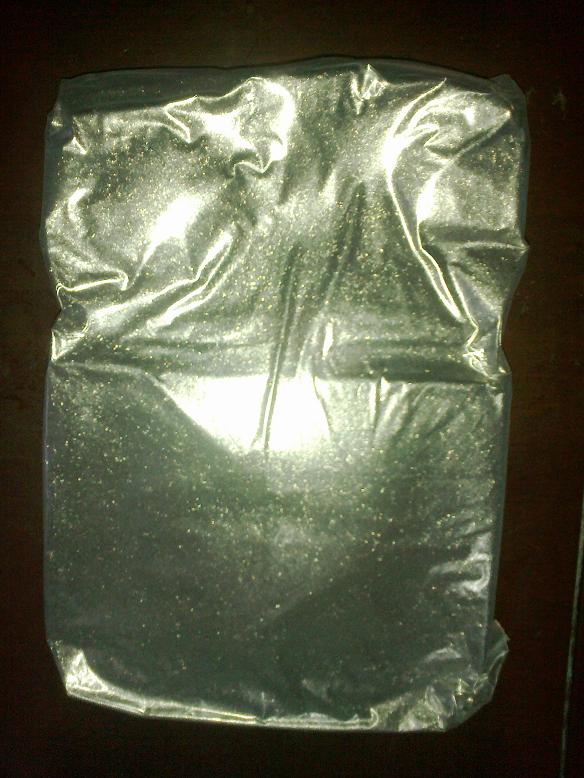
In compact power converters, hot spots can push junction temperatures beyond safe limits even when average heat flux seems manageable. Thin thermal spreaders—such as flexible graphite sheets or ultra-slim vapor chambers—help move heat laterally away from concentrated sources before it reaches a heat sink or enclosure wall. This reduces thermal resistance across small contact areas and allows more of the available surface to participate in heat rejection.
Material selection matters. Annealed pyrolytic graphite offers in-plane conductivity above 1500 W/m·K at thicknesses under 100 µm, which is useful when vertical space is tight. In contrast, flattened heat pipes or vapor chambers can spread heat with lower density but need careful wick design to avoid dry-out at high tilt angles. Many designs pair a graphite spreader with a thin layer of phase-change material or gap filler to fill surface unevenness without adding excessive thermal resistance.
Integration is not simply a matter of inserting a sheet. The spreader must be cut, laminated, or bonded without cracking the graphite, and electrical isolation often needs an additional thin dielectric. Despite these constraints, properly selected spreaders can lower hot-spot temperatures by 10–20°C in dense DC-DC modules, which translates directly into higher current ratings or longer capacitor and semiconductor life.
Polymer Conductivity Without the Usual Brittleness Trade-Off
Conductive polymers have long struggled with a stubborn compromise: the rigid, planar backbones that allow efficient charge transport also make films crack under modest strain. This brittleness shows up in practical devices as microcracks that grow with repeated bending, eventually severing conductive pathways. Instead of accepting this as an unavoidable cost of high conductivity, recent molecular designs are starting to uncouple electron mobility from mechanical failure.
One way around the trade-off is to keep the conjugated core short and locally ordered while inserting flexible linkages or bulky side groups that lower the glass transition temperature. These structural changes let polymer chains slide and reorient without disrupting the percolation network for charges. Dynamic crosslinks, such as hydrogen bonds or metal-ligand coordination, further allow stress to be dissipated reversibly, so stretching no longer causes permanent damage to the conduction paths.
The practical outcome is a class of conductors that can be folded, twisted, and stretched to several times their original length while maintaining sheet resistances suitable for electrodes and interconnects. In wearable sensors, e-skin, and soft robotics, this means designers no longer have to pick between electrical performance and mechanical durability. Conductivity and flexibility are no longer competing priorities but compatible features of the same material.
Fire Barriers That Flex With the Building Envelope
A fire barrier that cannot move with the structure will fail long before any flame reaches it. Curtain walls and cladding systems expand, contract, and drift under everyday loads, and those small movements concentrate at joints. Rigid firestopping or stiff board products tend to crack or pull away from the substrate, leaving a path for smoke and heat even when the assembly still looks intact.
Flexible fire barrier systems address this by allowing continuous, reversible movement without sacrificing the fire rating. Intumescent strips, coated mineral wool, and elastomeric spray-applied membranes are common, often combined with a backing material that compresses instead of tearing. At the slab edge or behind a spandrel panel, the barrier stays attached and deforms with the facade, then recovers when the building returns to its original position.
Specifying the right system means looking beyond the test certificate to the joint's movement class. A barrier rated for ±25% compression may work for thermal movement but be useless under seismic drift. Early coordination with the facade engineer can determine actual movement demands, and mock-ups that simulate both positive and negative cycles will reveal whether the barrier truly flexes with the envelope or just stretches until it splits.
Lightweight Battery Cooling: A Smarter Use of Graphite
Most battery cooling systems lean on metal plates or liquid loops, adding weight that electric vehicles can ill afford. Graphite offers a quieter path: its high thermal conductivity moves heat away from cells without the bulk. Because graphite can be shaped into thin, flexible sheets, it hugs irregular battery modules and spreads thermal load evenly across the pack.
The real advantage shows up at the pack level. Instead of running coolant lines through every gap, designers can bond graphite layers directly to cell casings or between modules. That trims the parts count and removes the need for heavy thermal interface materials. Less mass means more range, and the simpler layout cuts assembly time on the line.
Graphite also tolerates the constant swelling and shrinking of lithium-ion cells better than rigid metal counterparts. It flexes microscopically without losing contact, so hot spots don't develop over hundreds of cycles. For engineers chasing every kilogram, swapping conventional cooling hardware for graphite is less a novelty and more a practical trade.
Handling Aggressive Chemicals at Extreme Temperatures
Working with corrosive media at very high or cryogenic temperatures demands a different approach to materials than what works at ambient conditions. A 316 stainless steel fitting might handle dilute acid at room temperature without complaint, but push that same system past 150°C and the corrosion rate can jump by an order of magnitude. For hot concentrated acids, alloys like Hastelloy C-276 or titanium often become necessary, while fluoropolymer linings (PTFE, PFA) offer broad chemical resistance up to around 260°C provided the mechanical support is designed to handle thermal expansion. At the other end of the scale, many polymers turn brittle below -40°C, so designs for liquid ammonia or cryogenic chlorine need metallic or specialized composite components that retain toughness.
Thermal cycling introduces mechanical stresses that can rapidly undo a chemically sound system. Bolted flanges with standard gaskets may weep after a few cycles between hot and cold because the gasket material takes a compression set at high temperature and then fails to rebound when the system contracts. Using spring-loaded seals or bellows expansion joints in critical runs helps absorb the movement. It is also wise to bring the system to temperature gradually rather than shocking it, especially when switching from steam-out to a cold reagent feed; sudden differential expansion can crack glass-lined vessels or ceramic pump internals.
Personal protection and emergency response need to be reconsidered when the chemical hazard is combined with thermal hazard. A splash of room-temperature acid is already bad, but a splash of 200°C acid will burn through standard chemical gloves in seconds and can cause severe thermal burns before the chemical damage even registers. Face shields should be rated for high-temperature impact, and emergency showers must be positioned close enough to reach quickly but not so close that steam or hot liquid could pool around them. In cryogenic service, ordinary rubber boots and aprons can freeze solid and crack, so insulated chemical-resistant gear is required. Run regular drills that account for both the chemical spill and the temperature extreme, because the usual response of “strip and rinse†may need to be adapted when the contaminant is also a frostbite or scald agent.
FAQ
Its natural ability to conform to uneven flange surfaces creates a tight seal under fluctuating pressures and temperatures. Unlike rigid materials, it doesn't creep or relax significantly over time, so gaskets stay reliable without frequent retorquing.
Thin sheets of expanded graphite spread heat laterally away from hotspots, acting as lightweight heat spreaders. They offer high thermal conductivity in the plane of the sheet while remaining electrically insulating enough for use near sensitive components.
When exposed to fire, expanded graphite expands rapidly and forms a charred, insulating layer that blocks heat and oxygen from reaching the underlying material. This intumescent behavior makes it valuable in construction panels, cable jacketing, and upholstery.
It handles a much wider temperature range than elastomers or PTFE, from cryogenic conditions up to several hundred degrees Celsius, while resisting most chemicals. Its self-lubricating nature also reduces wear on mating surfaces and simplifies installation.
Yes, it serves as a conductive additive or substrate in battery electrodes, improving electron pathways and buffering volume changes during charge cycles. Its high surface area and chemical stability help extend cycle life in lithium-ion and next-generation cells.
It reflects and dissipates radiant heat effectively while adding very little weight. The material also withstands vibration and thermal cycling without cracking, which helps protect nearby components and keeps cabin temperatures stable.
Because it resists aggressive acids, solvents, and oxidizing agents, gaskets and packings made from expanded graphite last longer between shutdowns. Its resilience under temperature swings means fewer leaks and less unplanned downtime.
Conclusion
Expanded graphite earns its reputation in the harshest industrial settings by solving problems standard materials simply cannot. In heat-cycled joints, graphite foil maintains a reliable seal long after conventional gaskets harden, crack, and leak—thanks to its natural resilience under repeated thermal swings. The same material, rolled into thin thermal spreaders, pulls heat away from compact power electronics without adding bulk, keeping densely packed components cooler than aluminum or copper alternatives. When blended into polymers, expanded graphite creates conductive pathways without the brittleness that plagues traditional carbon-filled plastics, so connectors and housings stay both electrically functional and mechanically tough. Even fire barriers benefit: graphite-based intumescent strips flex with a building's everyday movement, then expand to seal gaps when temperatures rise, offering passive protection that rigid boards cannot match.
Beyond these structural and safety roles, expanded graphite shines in energy-dense applications. Lightweight battery cooling plates made from compressed graphite dissipate heat across large surfaces while adding far less mass than metal heatsinks, extending pack life without compromising vehicle range. In chemical processing, graphite's inherent resistance to aggressive acids, solvents, and molten salts at extreme temperatures means gaskets, linings, and seals survive where elastomers degrade and metals corrode. The common thread is versatility: a single material that adapts to thermal, electrical, mechanical, and chemical demands—configurable as foil, sheet, powder, or composite—while retaining its core advantages of stability, conformability, and long service life. That is why expanded graphite continues to replace legacy materials across such diverse fields, from EV powertrains to architectural firestopping.
Contact Us
Contact Person: Guohua Wang
Email: [email protected]
Tel/WhatsApp: 8613003442895
Website: https://www.xxflameretard.com