

Top 10 Solar Channel Roll Forming Machine Manufacturers Worth Partnering With
2026-11-17
Most roundups of solar channel roll forming machine manufacturers read like the same brochure with the logos swapped. This one doesn’t. We looked past booth size and catalog gloss to focus on what actually keeps a solar mounting line profitable: profile consistency across long runs, how quickly a supplier responds when a PLC fault stops production, and whether the equipment still holds tolerance after a few years of daily use. Among the names that kept surfacing in field conversations, Beenew stood out for its quiet emphasis on frame rigidity and after-sales follow-through rather than brochure claims. Here are ten manufacturers we would actually put in a room for a serious project discussion.
How Leading Manufacturers Remove Bottlenecks Before They Reach Your Site
The most capable factories don't wait for a shipment to arrive before discovering that a subcomponent was delayed. They map every handoff in advance and assign a named owner to each one, so a lag in raw material delivery or a sudden tooling change surfaces in a daily standup rather than in a port inspection. When a supplier misses a tolerance window, the best teams don't just expedite the part; they replay the sequence that created the miss and adjust buffer stock or alternate routing before it can cascade downstream.
This preemptive habit often relies on live data pulled from the production floor instead of weekly reports. A slight drift in cycle time or a rising scrap rate triggers a review while there is still slack in the schedule. In practice, that means a plant might reroute a batch to a less-loaded cell or pull forward a scheduled maintenance task without ever letting the bottleneck become visible to the customer.
The result is not a perfect forecast but a faster feedback loop. Leading manufacturers treat every near-miss as a chance to tighten their handoffs, so by the time an order reaches your dock, the usual friction points have already been smoothed out or bypassed entirely.
Tighter Tolerances That Make Field Assembly Less Painful
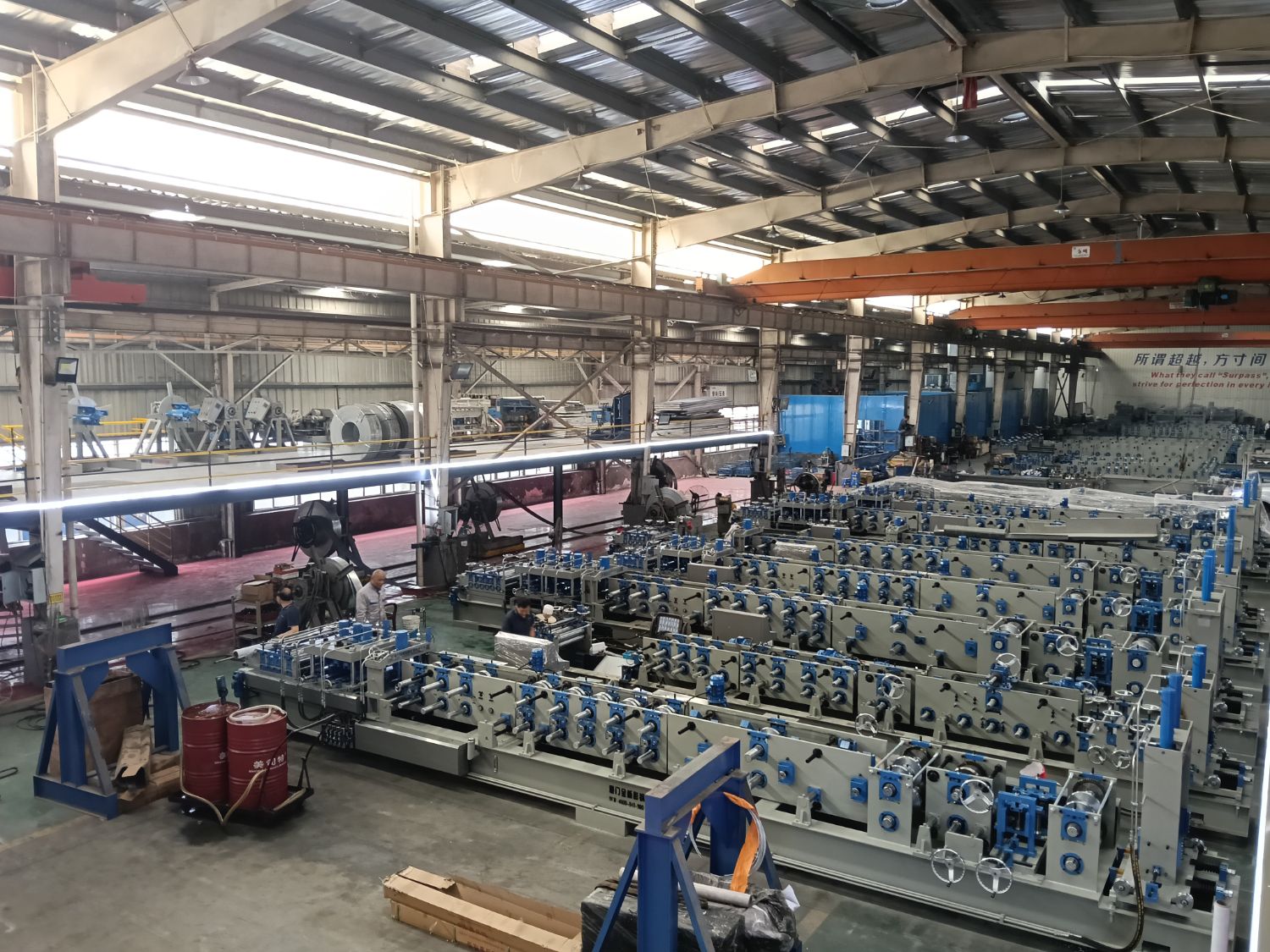
Field assembly gets miserable when parts that look right on paper refuse to line up on site. A bracket that should slip over two studs ends up needing a pry bar, and a flanged connection that ought to close with hand pressure suddenly demands extra gaskets and longer bolts. Tighter tolerances remove that guessing game before it starts. When hole positions, edge breaks, and mating surfaces are controlled more precisely, the first dry fit tends to be the actual fit. That means fewer crews standing around a partially assembled frame trying to figure out which hole to ovalize.
The less obvious benefit is how much field rework disappears. In the old routine, someone on site becomes an unplanned machinist with a grinder, a file, and a box of shims. With tighter tolerances, those improvised corrections drop away because the stack-up of small errors never reaches a level that causes binding or misalignment. Fasteners seat evenly instead of pulling one side tight while the other side fights back. The result is less physical effort, fewer damaged threads and coatings, and a much lower chance of a component going together stressed in a way that shortens its service life.
None of this requires making every dimension impossibly tight. The real difference comes from identifying the few features that create the worst assembly headaches and holding those to a predictable range. A little more control on hole spacing, flatness, or slot width can remove the need for field adjustments that are expensive, inconsistent, and hard to inspect after the fact. When the pieces drop into place without persuasion, the team can spend its time on the actual installation instead of fighting the geometry.
Custom Solar Profiles Without the Prototype Price Hike
A custom solar profile usually starts with a painful jump in cost because someone has to draft new tooling and build a prototype. Here, that jump doesn't exist. The configurator pulls from pre-approved cell layouts, rail lengths, and junction box positions, so changing a panel's width or output stays within what the production line already handles.
You still get the oddball specs—short runs, angled edges, unusual wattage bands—but they're assembled from a kit of tested parts rather than invented from scratch. The quote updates as you tweak the profile, and the figure on screen reflects actual material and labor, not an assumption about "custom" being expensive.
That approach removes the usual waiting game between design and sample approval. Engineers aren't redrawing every layer, and buyers aren't paying a premium just to see if an idea works. If the profile fits the guardrails, it goes into the normal queue at a standard price.
Material and Coating Choices That Outlast Harsh Site Conditions
Abrasive dust, salt spray, and freeze-thaw cycles tend to find the weakest link in material selection within a few months, not years. On sites like these, cast iron and thick structural steel often hold up better than thin-gauge fabrications, but only when the surface profile is right. A coating applied over mill scale or a light film of oil will peel no matter how expensive the topcoat is. For areas that see constant scraping or impact, it is worth moving beyond standard carbon steel and looking at work-hardening alloys, duplex stainless, or at the very least a heavier wall thickness that leaves some sacrificial margin.
Coating systems work best when they are treated as a pair rather than a single barrier. A zinc-rich primer or hot-dip galvanizing deals with corrosion at scratches, while a tough polyurethane or epoxy topcoat handles UV, chemical splash, and abrasion. The failure point is usually the interface, not the coating itself. Sharp edges, threaded fasteners, and field welds often end up with thinner coverage, so touch-up materials need to match the original system instead of being chosen from whatever is on the truck. A two-coat system that is applied well will outlast a three-coat system that is rushed between rain showers.
No single surface lasts everywhere. Coastal salt air, acidic runoff, and solvent exposure create very different corrosion mechanisms, and the fix for one can accelerate another. In a marine environment, 316 stainless or a sealed duplex coating may be worth the price because chlorides will attack standard galvanizing over time. In a chemical plant, an epoxy phenolic or a fluoropolymer lining may handle what stainless cannot. The trick is to match the material and the coating to the most aggressive condition on the actual site, then make sure the edges, joints, and repair zones get the same attention as the open faces.
Why Some Production Timelines Stay Calm Under Heavy Order Loads
A quiet production floor rarely means empty order books. Often it signals that the team has learned to separate the noise of incoming orders from the actual flow of work. Instead of reacting to every email or rush request, planners hold demand at a visible intake point and release it only when capacity is genuinely available. This buffering feels counterintuitive because it delays the start of some jobs, but it prevents the stop-start chaos that turns a heavy load into a frantic scramble.
The calm also comes from treating variability as normal rather than as an exception. Teams that stay composed under pressure tend to predefine how they will handle hot orders, missing materials, or machine breakdowns. They keep small reserves of time and skill deliberately unassigned, not as slack to waste but as shock absorbers for the inevitable surprises. When a customer changes a spec late or a supplier slips, the ripple does not cascade through the whole schedule because the system already has a designed response.
Perhaps most importantly, calm timelines rely on short, honest feedback loops between the people making promises and the people doing the work. Daily huddles focus on what actually moved yesterday and what is blocked today, not on heroic targets. Supervisors ask which orders are at risk before they become late, and salespeople update customers early when dates shift. That level of trust reduces the constant firefighting and rumor-driven urgency that usually accompanies overload. The load is still heavy, but the response is measured.
Support That Shows Up When a Roll Forming Line Stops
A roll forming line rarely gives much warning before something goes wrong. One minute the metal is feeding smoothly through the stands, and the next the whole line is down because a guide roller seized, a sensor tripped, or a hydraulic hose let go. What separates a minor interruption from a full shift lost is not just spare parts on a shelf—it is having someone who can walk onto the floor, read the actual fault, and make a judgment call without waiting on a corporate approval chain.
That kind of support looks different from a generic service contract. It means a technician who knows how a flying cutoff behaves after 400,000 cycles, who can hear a bearing starting to gall before the vibration alarm confirms it, and who keeps a mental map of every quick-disconnect and PLC input on your specific model. When the line stops, the first call should not begin with a ticket number. It should begin with a conversation about what you saw, what you heard, and what the controller showed in the last three seconds before the e-stop dropped.
We tend to make that conversation short: a phone or video call first, remote access to the HMI if that helps, and a truck rolled only when the problem is clearly mechanical. Even then, the person who arrives usually brings more than a toolbox—harnesses, shims, a known-good encoder, and the sort of hard-won notes that never make it into a manual. The aim is not to be heroic. It is to get the rolls turning again fast enough that nobody in the front office has to explain a blank scheduling board to a customer.
FAQ
The difference usually shows up in how they handle profile changes and tooling wear. A dependable builder will talk about roll pass design, material springback compensation, and what happens when coil thickness varies, rather than just quoting output speed. They tend to offer detailed setup documentation and stay involved during trial runs instead of disappearing after delivery.
China remains the largest base, especially around manufacturing clusters with long histories in roll forming and aluminum processing. Turkey and India also have capable workshops, often serving nearby markets with shorter delivery times. The key is not the country alone but whether the factory routinely produces solar-specific profiles rather than adapting general purlin lines.
Speed only matters when the line can hold profile tolerance at that pace. Some suppliers advertise high meters-per-minute figures that assume perfect coil and ideal tooling. A more useful conversation is about stable running speed with the actual aluminum grade and coating you plan to use, and whether the cutoff and punching stations keep up without jamming.
Not if the manufacturer already has a library of solar channel profiles and modular tooling. Custom roll sets for a new cross-section do add design time, but an experienced builder can often reuse side roll stands, guides, and drive components. The risk rises when a supplier treats a custom solar profile as a one-off project instead of a repeatable product family.
Expect remote commissioning support, clear electrical and mechanical drawings, a recommended spare parts list, and a straightforward path to replacement rollers. Strong partners also ask for sample profiles before shipment so they can test tooling in their own workshop. If the vendor pushes all responsibility to the customer after the machine leaves the factory, that is a warning sign.
Solar mounting channels often need holes, slots, or embossments at precise intervals for fasteners and grounding clips. When these operations are poorly integrated, the profile can stretch or shift slightly, making hole positions inconsistent. A line built around the punching sequence and material feed tends to hold position accuracy far better than a machine with add-on tooling bolted at the end.
Look for foundation drawings, utility requirements, roll tooling layouts, control logic descriptions, and maintenance intervals. Useful suppliers also include troubleshooting guides for common faults and a bill of materials for wear parts. If you have to repeatedly request basic documentation, that often reflects how difficult the relationship will be later.
Regional suppliers can make sense when local service speed, spare parts availability, or electrical standards are major concerns, and when the order size does not justify the logistics cost of importing. Overseas manufacturers become more attractive when you need specialized solar profile experience, broader customization, or lower capital cost at comparable quality, provided you have the team to handle international coordination.
Conclusion
Working with the right solar channel roll forming supplier changes how installation teams actually experience a project. The better manufacturers have learned to catch bottlenecks long before delivery, adjusting coil feed speeds, tooling setups, and run sequences so that material arrives on site without hidden delays. That operational discipline is matched by dimensional control. Instead of accepting loose channel profiles that force crews to shim, ream, or field-cut brackets, these firms hold tighter tolerances across the full length of each run, which takes much of the pain out of assembly. The same practical mindset shows up in custom work. Rather than treating every non-standard solar channel as a costly one-off with inflated prototype fees, leading partners reuse modular roll sets and adjust stations quickly, so a custom geometry stays affordable even at lower volumes. This combination of process control and flexible tooling is usually what separates a dependable line from a source of recurring site friction.
Then there is the longer view. Galvanized, Galvalume, or specialized organic coatings are not chosen generically by the stronger manufacturers; they are matched to coastal humidity, high UV exposure, or corrosive soils, which means the channels keep their structural role well past the point where cheaper stock would begin to degrade. That focus on longevity also shows in scheduling. Under heavy order loads, the best suppliers do not simply promise fast turnaround. They use realistic capacity planning, staged raw material sourcing, and buffer capacity to keep production timelines calm rather than chaotic. When equipment does stop, the partnership matters most. A manufacturer with local service reach or remote diagnostic support can walk a maintenance team through a drive fault or sensor issue without days of downtime, and that responsiveness protects the installation schedule. Across these areas, the top ten names tend to share a common trait: they treat the roll forming line as part of the project, not just a one-time purchase.
Contact Us
Contact Person: Sophie
Email: [email protected]
Tel/WhatsApp: 8615959271231
Website: https://www.beenew-rollformer.com/