

Stainless Steel Fasteners Exporter Shares Quality Control Secrets
2026-11-02
What if the real difference between stainless steel fasteners that last decades and those that fail early isn't the alloy, but the exporter's refusal to cut corners? BOYIKUN, a stainless steel fasteners exporter known for demanding clients, breaks the silence on the quality control steps most suppliers keep hidden—from raw material batch tracing to salt spray testing and go/no-go gauges. If you've ever wondered why identical-looking bolts behave differently under load, the answers start here.
What Mill Certificates Don't Tell You About Stainless Steel
A mill certificate lists chemical composition and tensile strength, but it won't whisper a word about how that stainless steel behaves after it leaves the controlled lab environment. Real-world factors like surface finish, residual stress from forming, or exposure to chloride-rich atmospheres can quietly undermine even a 'certified' 316 grade. The certificate confirms the alloy met a standard at one moment in time; it says nothing about weeks of salt spray or a poorly passivated weld seam.
There's also the gap between batch consistency and field reality. Two heats with identical certificates can differ noticeably in machinability, polish response, or susceptibility to pitting once fabrication starts. Inclusions, grain structure, and trace element variations that officially fall within spec still influence how the material cuts, welds, or resists crevice corrosion. If you've ever wondered why one order of 'the same' stainless performs beautifully while the next fights you at every step, the mill certificate is where the trail goes cold.
Thread Inspection Tricks We Use Before Shipping
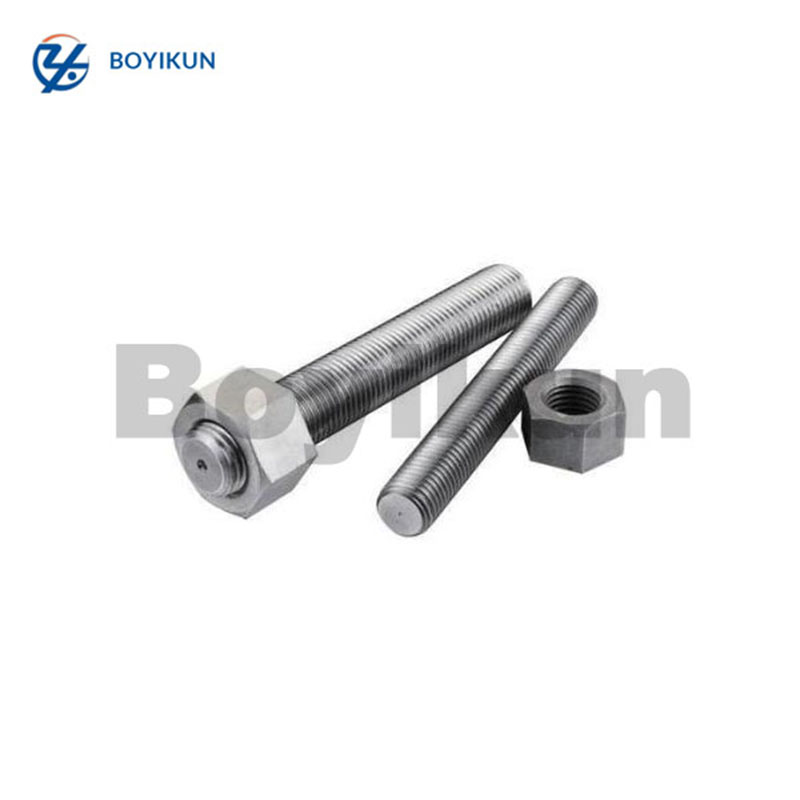
Before any batch leaves our floor, we pull a handful of parts and run them through a few checks that never made it into the formal inspection sheet. One of the most reliable is the 'dry twist' test—threading a mating component by hand with no lubricant. If the engagement feels gritty or wants to bind halfway, that tells us more about the thread form than a go/no-go gauge ever will.
We also angle a bright LED across the thread crests and look for tiny glints that signal rolled-over burrs from the cutting tool. A small burr can pass a ring gauge but still chew up a customer's mating part on first assembly. When we spot glints, we hit the thread with a brass brush and a quick compressed-air blast, then re-run the test.
Finally, we keep a set of 'used' gauges—slightly worn from months of use—next to the new ones. If a part passes the new gauge but fights the worn gauge, we know the thread is at the edge of tolerance. That margin check has stopped more borderline batches from shipping than any polished procedure.
Why Salt Spray Tests Mislead Fastener Buyers
Salt spray testing gets treated like a universal verdict on corrosion resistance, but it rarely reflects what happens to fasteners in actual service. The test blasts parts with a constant, warm saline fog that accelerates one specific failure mode: surface rust. Real installations, however, involve wet-dry cycles, temperature swings, and contact with dissimilar materials. A fastener that fails a salt spray test at 96 hours might outlast one that passes 1,000 hours in a coastal or industrial environment.
The deeper issue is that the test measures the wrong thing. Most salt spray evaluations count hours until red rust appears on the un-plated or lightly plated surface. Buyers often confuse this with the life of the zinc coating or the base steel. In reality, white corrosion products from the sacrificial coating can appear early without any meaningful loss of structural integrity. Passing or failing based on cosmetic white rust pushes buyers toward thicker, more expensive coatings that add no functional benefit.
Another disconnect comes from OEM testing shortcuts. Many specifications use salt spray hours as a proxy because it is fast and repeatable, not because it predicts field performance. This creates a purchasing bias for heavily plated fasteners that look impressive in a test chamber but may perform worse in cyclic humidity, road salt splash, or acidic rain. Until buyers ask for cyclic corrosion tests or real-world exposure data, they will keep paying for misleading numbers.
The Tolerance Checks That Save Clients From Customs Rejections
Customs rejections rarely come down to a single glaring error. More often, they stem from small mismatches: a weight listed as 12.5 kg on the invoice but 12.4 kg on the packing slip, or a country-of-origin code that differs between the commercial documents and the carrier manifest. Tolerance checks act as a pre-clearance safety net, catching deviations before authorities take a second look.
A practical approach is to set thresholds for the most common trouble spots. For example, if the invoiced quantity and the shipped quantity differ by more than 0.5% or two units, that shipment gets flagged for manual review. The same logic applies to declared value versus insured value, or net weight versus gross weight after packaging adjustments. By codifying these tolerances, you avoid the back-and-forth of last-minute corrections while the goods sit idle at the border.
The real payoff shows up in repeat trade lanes. Once a tolerance rule prevents a rejection for a particular product or partner, reuse it. Build a short checklist per shipment: verify unit of measure, confirm HS code consistency across documents, cross-check part numbers against the purchase order. These checks take minutes, but they save clients from demurrage fees, expedited courier costs, and the quiet damage of a flagged importer record.
Coating Failures We Caught Before They Left the Factory
A batch of aluminum housings came off the powder line with a subtle haze that the naked eye could miss under bright shop lights. We ran a crosshatch adhesion test on a sample and watched the coating peel away in clean strips along the score lines. The root cause turned out to be a contaminated wash stage, not the powder itself. We quarantined the lot, stripped and re-coated every part, and recalibrated the pretreatment bath before the next run started.
On another order, a dark bronze finish looked flawless until we checked the dry film thickness on the inside corners. The spray guns had been set to cover large flat faces efficiently, but the Faraday cage effect left the recesses at less than half the spec. We caught it during in-process inspection, adjusted gun voltage and powder flow, and pulled a fresh sample from the line. That batch went out only after every corner met the minimum thickness on our gauge.
There was also the time a customer requested a low-gloss textured black. The first panels matched the approved swatch exactly, but the second shift's humidity levels had crept up overnight. The texture became rougher and the sheen dropped two points. Our shift supervisor flagged the difference before the rack reached the oven. We held the entire pallet, rechecked the environmental log, and dialed the booth conditions back to the validated window. No bad coating left the dock that day.
How We Pack Stainless Fasteners to Arrive Flawless
Stainless fasteners show every scuff and ding, so we never let them tumble loose inside a box. Each order is sorted by diameter, length, and finish, then placed into individual compartments cut from closed-cell foam or corrugated board. Fine-thread screws get their noses tucked into soft polyethylene caps, while larger bolts rest in fluted trays so the threads never bear weight against one another.
Once the parts are settled, we add a layer of low-chloride VCI paper and a small desiccant pouch before sealing the inner liner. That keeps humidity and handling oils from causing water spots or tea staining during long cross-border hauls. For polished or mirror-finish items, we slip a sheet of acid-free tissue between every row, because even micro-vibration can leave visible rub marks over thousands of miles.
The outer carton gets a double-wall build with reinforced corners, and we use custom-sized dividers instead of crumpled paper or foam peanuts. Nothing shifts, nothing rattles, and the box can take a conveyor drop without transferring the hit to the threads. Before the flap is taped, one more weigh-and-count check against the packing slip catches any missing piece—so the only surprise on your dock is how clean they look.
FAQ
We check the mill certificate against the heat number on every coil. If the chemistry doesn't match the grade we ordered—say 316 versus 304—we reject it before it even hits the production floor. A quick spark test can also catch mixed grades, but the cert is the main gate.
Passivation is non-negotiable for us. We run a nitric or citric acid bath after machining to remove free iron from the surface. Some smaller shops skip it to save cost, and that's exactly why their parts show tea staining in a few weeks. We also avoid carbon steel tools touching finished stainless parts.
They focus on price per piece and ignore thread fit. A cheap M8 bolt might pass a visual check but fail a go/no-go gauge test. We've had buyers send back entire pallets because the threads were cut with worn dies. Always ask for a thread profile report or at least a sample gauge test.
Salt spray testing is standard, but we prefer a cyclic corrosion test for coastal applications. It cycles wet and dry, which mimics real weathering better than a constant fog. We also do a pitting potential test on the surface to catch weak spots from cold working.
We use CNC Swiss lathes for diameters under 12mm because they hold ±0.01mm without secondary grinding. For larger parts, we do a first-article inspection on three pieces from different positions in the batch, then lock the tool offsets. Over-grinding is usually a sign of trying to fix a bad setup with abrasives.
Mixed thread sizes in the same box. It sounds obvious, but we've seen import shipments where M6 and M8 nuts are jumbled together because the line worker grabbed the wrong bin. We use color-coded bin labels and weigh each sealed bag to catch count errors before they go into the carton.
Every batch gets a lot number that ties back to the raw material heat number, the machine operator, and the date. If a customer reports a failure, we can pull the inspection records for that exact lot in under an hour. That's saved us from recalling thousands of parts more than once.
Ask how often they calibrate their measuring equipment and whether they have an in-house lab or outsource testing. If they outsource, ask to see the last third-party test report for your specific grade. A lot of exporters will show a generic certificate that's years old and doesn't match the product you're actually buying.
Conclusion
Mill certificates give you chemistry and a few mechanicals, but they rarely reveal what happens after the heat number leaves the melt shop. We have pulled plenty of 316 lots where the cert looked perfect, yet the threads burred under a ring gauge or the pitch diameter drifted just enough to seize on site. So before anything ships, our guys run every batch through go/no-go thread checks and hand-inspect the first article from each die set. Salt spray hours also get quoted like a badge of honor, but a 1,000-hour report means little if the parts were passivated poorly or stored wet. We watch for the real-world failure modes instead: crevice attack under bolt heads, cross-threading from rough starts, and dull passivation lines that look fine until they hit a coastal job.
The less glamorous work is what keeps clients out of customs trouble. We check tolerances against the actual drawing, not just the standard, because a few microns on a shoulder or underhead radius can trigger a rejection at the port. Coating failures are caught before they leave: we have rejected entire pallets for uneven wax, skipped patches, or plating that flaked under a tape pull. Packing gets the same scrutiny. Stainless fasteners are dense and unforgiving, so we separate sizes, use VCI paper, and brace cartons to stop thread impact during transit. It is not flashy, but the boxes arrive the way the QC report promised, and that is the whole point of exporting without surprises.
Contact Us
Contact Person: Xianchen Hu
Email: [email protected]
Tel/WhatsApp: 86-13248645200
Website: https://www.hexnb.com/