

Segment LCD Display Wholesaler: How to Choose a Reliable Supplier for Your Product
2026-11-02
Finding a segment LCD display wholesaler who won't let you down is easier said than done—too many suppliers cut corners on glass quality, contrast, or lead times, and you only discover it after your product hits the market. This guide walks you through the practical checks that separate dependable partners from costly mistakes. Whether you're comparing specs, MOQs, or after-sales support, we'll help you make a confident call. And if you'd like to see how an established manufacturer approaches these challenges, take a look at Jingda-Display before you decide.
Start with a spec sheet your supplier can actually quote from
A spec sheet that a supplier can actually quote from needs to read less like a wish list and more like a set of measurable commitments. Instead of saying "stainless steel," specify the grade, finish, and thickness tolerance—304 stainless, brushed finish, 1.5 mm ±0.1 mm. Include the exact dimensions, critical-to-function areas, and any industry standards the part must meet. When every parameter is pinned down, suppliers no longer have to pad their quotes to cover unknowns, and you can compare bids line by line.
Don't stop at geometry. Add testing requirements, packaging specs, delivery condition, and minimum order quantities, because these details shape cost just as much as raw material does. A clear note on surface defects, hardness range, or required certifications can prevent a supplier from quietly substituting a cheaper process. Treat the sheet as a working document that removes ambiguity before it reaches a quote desk—this is the fastest way to avoid a long back-and-forth over email.
If a parameter is still undecided, say so with a provisional range instead of leaving a blank. A supplier looking at missing information will often price in worst-case assumptions, and you'll end up with inflated numbers or a quote that falls apart during production. Write the spec sheet as if you're handing it to someone who has never seen your product before and needs to make it without asking a single question.
Separate real manufacturers from trading companies early
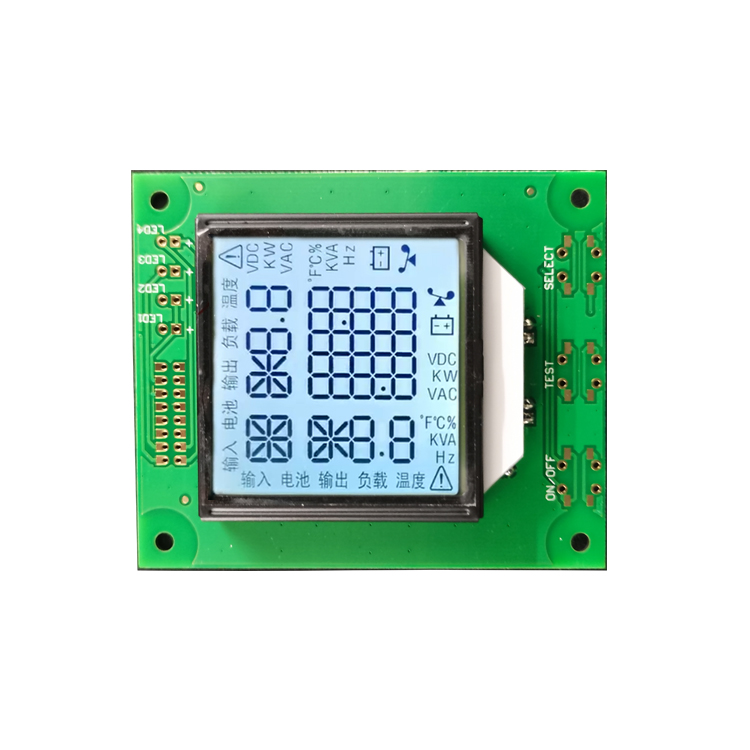
In the early stages of sourcing, many buyers end up with trading companies without even realizing it. They look at a polished website, a quick response, and assume they are dealing with a factory. The truth is, trading companies often present themselves as manufacturers because it gives them more control over the negotiation and a bigger margin. If you want to build a long-term supply chain and avoid hidden markups, you need to separate the two before you commit to any serious discussions.
One of the most reliable ways to verify a manufacturer is to check their business license and export records. Real factories typically have a narrow product range and a physical production floor, while trading companies tend to list everything from electronics to textiles. Ask for a video tour of the production line, not just the showroom. If they hesitate or give you photos that look like stock images, that's a red flag. You can also request to see their quality control process or ask which processes they outsource. A genuine factory will be proud to walk you through their workshop, even if it's messy.
Separating manufacturers from traders early saves you from inflated pricing, communication delays, and quality issues that come from a middleman who doesn't control production. It also helps you negotiate better terms, because you're talking directly to the people who set the real cost. Don't be afraid to ask tough questions up front. The time you spend verifying a supplier before placing an order is nothing compared to the cost of discovering the truth after a shipment arrives with defects.
Test samples under conditions that mimic your product’s worst day
Your product’s worst day won’t be a 72°F lab bench or a smooth, padded test fixture. It’ll be the back of a delivery van in Phoenix in August, a power grid that dips to 90 volts while the motor is stalling, or a loading dock where condensation drips onto the enclosure just before someone hits the start button. So stop writing test plans around the average. Build them around the edge cases you’d rather not imagine—temperature swings of 40°C within an hour, fine conductive dust packing into every vent, and water sprayed from an angle nobody thought to seal.
The samples that pass ideal-condition tests are often the same ones that fail in the field two weeks later. To catch that, pair stressors in ways that feel unfair because that’s what the real environment does. Run the unit at full load while it’s still warm from thermal shock. Cycle the power on and off during a salt fog exposure. Vibrate it on a shaker table that’s been deliberately unbalanced, then immediately ask it to boot and communicate. Nobody will write you a thank-you note for designing a test that breaks three prototypes in a day—but those broken prototypes will teach you more than a hundred clean runs.
A “worst day” test isn’t about torture for its own sake. It’s about closing the gap between the lab and the loading dock. Pull failure reports from actual customers or field service calls, and convert the top five ugliest stories into repeatable stress sequences. Then run every pre-production sample through those sequences before it earns a serial number. If it survives, you didn’t just test it—you gave it a fighting chance.
Map out the full supply chain before you sign anything
Before you put your signature on any agreement, trace every layer of the supply chain, not just the vendor in front of you. Secondary suppliers, raw material sources, freight routes, and warehousing handoffs all matter. A contract can look airtight while a single upstream bottleneck quietly makes it unworkable.
List each node's lead time, inventory buffer, alternate source, and payment terms. If one small workshop is the only place a certain component gets made, or if every shipment has to pass through a port that routinely backs up, that risk belongs on the table before signing. Ask for the supplier's upstream roster and backup plans, and treat vague verbal assurances as a red flag.
Hidden costs tend to live deeper in the chain. Sub-supplier price hikes, rerouted logistics, compliance holds, and last-minute customs delays often stay invisible until after you sign. Run a simple what-if disruption test against the penalty and liability clauses to see if they actually cover those scenarios. If a counterpart resists showing you their own supplier map, the problem is not the paperwork. It is the risk you are about to inherit.
Compare quotes with a total landed cost lens
A low sticker price can hide a dozen downstream costs that quietly eat your margin. Freight, customs duties, port handling, insurance, and currency conversion—each one changes the real number on your balance sheet. Instead of comparing supplier quotes in isolation, line them up side by side with every landed cost factored in. That means asking each vendor for Incoterms clarity, container loading details, and who bears risk at each transfer point. Only when you see the full journey from factory floor to your warehouse door can you spot which quote is genuinely cheaper.
The gap between two unit prices often shrinks or flips entirely once you add in the real-world expenses. One supplier might quote $0.80 per piece but requires you to arrange and pay for ocean freight from a remote inland port. Another quotes $0.95 but covers freight to your nearest port and handles customs brokerage. Run the math with actual freight quotes, tariff codes, and average demurrage times from your own shipment history. Use a landed cost template that breaks down every fee line by line—don't let a vendor's "estimate" stand in for your own calculation.
Finally, remember that landed cost isn't just a one-time snapshot. Fuel surcharges, seasonal port congestion, and currency swings can shift the comparison between quotes over a six-month contract. Build a small buffer into your comparison, or ask for two scenarios: best case and worst case. That way you're not just picking the cheapest quote on paper—you're picking the one that holds up when the supply chain moves.
Evaluate how fast they solve problems, not just how fast they reply
A quick first reply often gets treated as a win, but it says little about whether the actual problem is moving toward a fix. Two-minute acknowledgements can mask days of confusion if nobody is testing a solution or checking back with the person who reported the issue. The more honest measure is the gap between the first message and the moment the problem stops interfering with someone's work.
Real speed appears in the quality of the follow-up. Teams that solve problems quickly tend to ask sharper questions up front, pull in the right person on the first try, and confirm the fix rather than assuming silence means success. A slower initial response that ends the thread in one exchange beats a fast auto-reply followed by a long chain of “just checking in.”
So when you compare options, look past the timestamp on the first email. Track how many touches it takes to reach a resolution, how often the same issue bounces back, and whether the people involved treat closing the loop as part of the job. That pattern reveals more about actual pace than any response-time dashboard ever will.
FAQ
Check their actual production facility rather than relying only on website claims. Ask for past client projects or physical samples, confirm whether they can customize the segment layout and pin assignment, and request datasheets for the glass, polarizer, and connector materials they use.
Request independent reliability test reports such as high temperature and humidity exposure, thermal cycling, and electrostatic discharge results. If possible, run a small pilot batch and check contrast, viewing angle, and response time consistency across multiple units instead of relying only on certificates.
An unusually low quote can indicate recycled glass or skipped process steps. Watch for suppliers who avoid technical questions, cannot give a clear delivery schedule, or show sample quality that differs from mass production. Be cautious if they demand full payment upfront without a clear quality agreement.
It is critical because segment LCDs usually need to match your product enclosure and display content. A good supplier should help with electrode layout design, drive mode selection, and quick sample iterations. If they only offer standard off-the-shelf panels, they may not fit a differentiated product.
Ask about the normal production cycle, whether rush orders are feasible, if they keep common glass and polarizer stock on hand, and how they handle order fluctuations. A reliable supplier will give a phased timeline with clear milestones instead of a vague promise.
During the inquiry stage, raise specific technical questions such as how drive voltage, duty cycle, and operating temperature affect display contrast. See if they respond with detailed professional answers within 24 hours and whether they are willing to join circuit design discussions rather than only pushing a sale.
Yes, but do not judge only the sample itself. Ask for the sample's test data and the tolerance range between samples and mass production. If possible, request two samples from different production batches to check consistency in display quality and dimensional accuracy.
Batch variations or occasional defects can happen during mass production. Confirm whether the supplier provides failure analysis, a replenishment mechanism, and continuous improvement plans. Strong after-sales support reduces the risk of production line stoppages and keeps long-term costs predictable.
Conclusion
Finding a dependable segment LCD display wholesaler rarely comes down to a single smart decision. It starts before you ever request pricing: put together a spec sheet with actual tolerances, pin counts, polarizer options, and expected voltage ranges—anything vague will get you quotes nobody can stand behind. At the same time, ask direct questions about factory ownership, tooling, and in-house testing. If the supplier hesitates to name their production line or keeps pointing to "our partner factory," you are probably dealing with a trading company. That isn't automatically a deal-breaker, but it changes how hard you need to push on traceability and quality control.
Once samples arrive, don't just power them on a bench in a comfortable room. Run them through heat, humidity, low voltage, and extended duty cycles that match your product at its worst. A display that works fine in an air-conditioned office can wash out or fail entirely on a humid loading dock. While you are testing, map every tier of the supply chain—glass, polarizer, pins, conductive adhesive—and confirm who holds the liability if a batch drifts out of spec. Pricing matters, but compare quotes using total landed cost: freight, duties, inspection fees, and the cost of a rejected shipment. Finally, watch how the supplier behaves when something goes wrong. A fast reply that says "we will check" is worthless next to a slower reply that includes a root cause summary and a corrective action plan. Reliability is built from those moments, not from the initial sales pitch.
Contact Us
Contact Person: Vincent
Email: [email protected]
Tel/WhatsApp: 86 135 5485 1379
Website: https://www.jda-display.com/