

OEM M12 Connector Selection Guide for Reliable Industrial Systems
2026-11-16
Every dropped signal on a factory floor carries a cost that no maintenance schedule can fully predict. Choosing the right M12 connector is less about catalog specs and more about matching real operating conditions—washdowns, vibration, temperature swings, and tight panel space. This selection guide walks through the practical tradeoffs behind reliable industrial systems, with field-focused insight from REUNION to help you move from datasheet uncertainty to a confident connector decision.
M12 Coding in the Field Rarely Matches the Catalog
Anyone who has chased a signal through an M12 trunk line knows the catalog diagram is often closer to a wish than a record. A machine that left the factory with one vendor's tee may get repaired with another brand that fits the same key but places the brown and white leads on different contacts. What appears as a standard D-coded layout on paper then carries power where the drawing still shows a data pair.
Custom builds account for a large share of the drift. Integrators quietly reassign unused pins for a specific valve manifold or photoelectric sensor, and those field decisions rarely make it back into the as-built schematic. Between shift changes, faded wire labels and substitute cables, the original encoding becomes unreliable. The only consistent fix is to meter the device end before connecting anything new.
Even with untouched installations, not every supplier follows the same internal wire colors for an identical connector profile. Two cables can look correct on a shelf and still behave differently once power is applied. The catalog works best as a rough guide, not as a promise about what is actually on the other end of the line.
Pin Counts, Current Draw, and the Contact Face Nobody Checks
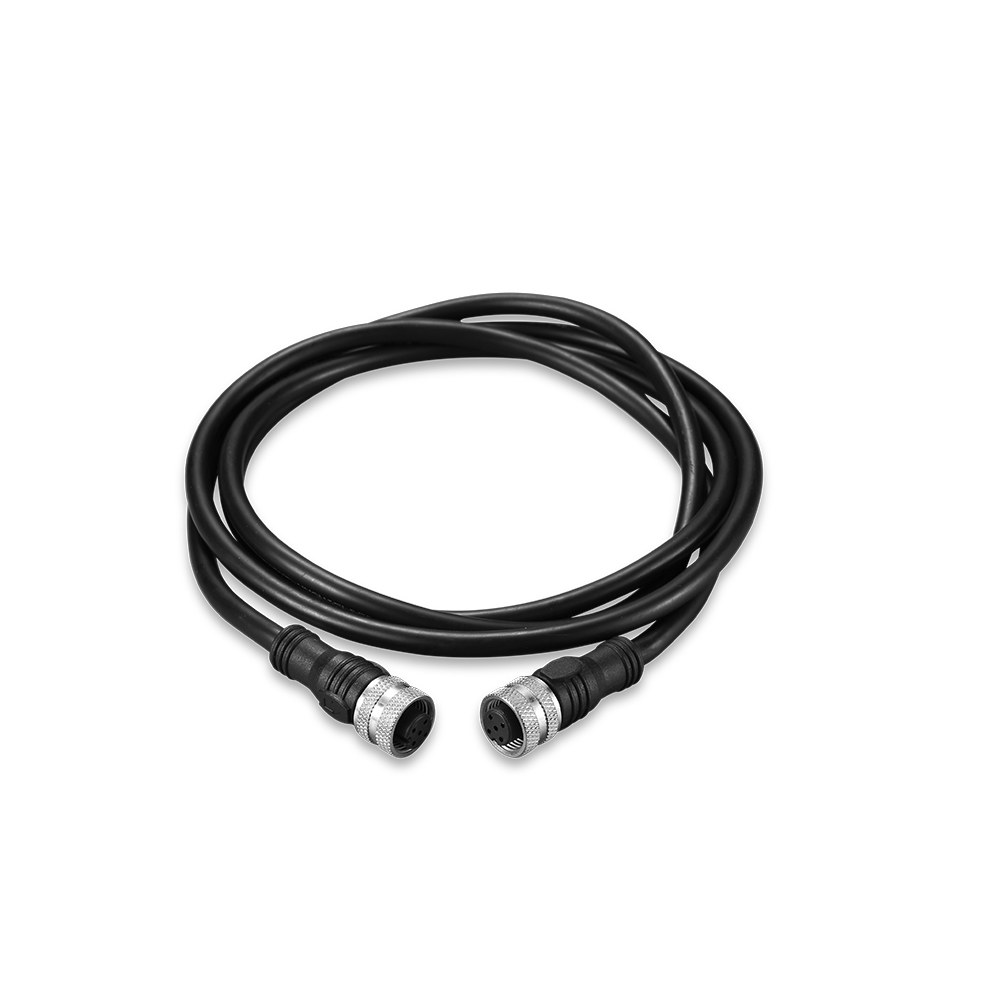
A high pin count looks like headroom until the current map says otherwise. Adjacent contacts loaded simultaneously create heat that a single-contact rating never captures. The derating curve is not a formality; it is the gap between a clean bench test and a cramped enclosure after three hours of operation.
What rarely gets checked is the contact face after mating cycles. Plating can be worn thin at the wipe edge while the center still looks untouched. Micro-motion from vibration or thermal expansion leaves fretting debris that raises resistance before any discoloration is obvious. A dull contact face may be fine, but a polished streak across only part of the pad usually means uneven normal force.
The useful measurement is voltage drop under the actual load, not a continuity beep. If the drop changes after the connector is disturbed, reseated, or warmed up, the contact face is telling you something. That kind of check catches margin loss long before a pin count or a printed current rating becomes the problem.
Shielding Is Only as Good as the Ground Path
A shielded enclosure might look solid, but its real performance is decided by the route that stray currents take back to the reference point. If that route is long, corroded, or loosely fastened, the shield stops behaving like a barrier and starts acting like an antenna.
Ground connections need to be low-impedance across the frequencies that matter, not just at DC. A thin drain wire or a single oxidized screw can introduce enough impedance to turn a well-designed shield into a radiating element.
In practice, this means keeping bonds short, wide, and clean. The shield should be connected in a way that gives induced currents a direct path to the same ground reference used by the rest of the system, otherwise the shield only creates a false sense of protection.
Washdown Ratings, Vibration, and the Gaps in IP67 Claims
IP67 is often treated as a blanket ruggedness credential, but the test itself is narrow: 30 minutes in still water at one meter. It says little about hot water, detergent, or a high-pressure spray hitting a seal from varying angles. Washdown lines introduce exactly those conditions, often while the housing is warm from operation, so thermal expansion and chemical exposure start working on the seal materials in ways the IP67 dunk never captures.
Vibration widens the gap further. A static seal can hold well in a lab, but mount the same enclosure near a motor, pump, or conveyor and the gasket surfaces begin moving against each other in tiny cycles. Micro-motion wears the sealing interface, loosens fasteners, and gradually opens capillary paths that allow moisture to migrate inward. The enclosure may still pass a fresh IP67 test after weeks of service, yet fail in the environment that actually matters.
That is why washdown ratings and vibration tolerance should be evaluated together. Certifications such as IP69K address spray pressure and temperature, but they still need to be paired with good sealing mechanics, inspection access, and realistic mounting conditions. If the equipment vibrates or gets cleaned with hot water, a static immersion certificate alone leaves too many unanswered questions.
Thermal Cycling Turns Tiny Contact Wear into Downtime
Each time the equipment warms up and cools down, the metal expands and contracts by just a few micrometers. That tiny motion works like a slow file across the surface of every electrical contact, gradually shaving away the plating until the base material begins to show through. What starts as a minor surface scuff quietly develops into a localized hotspot, altering resistance in ways that no one notices until a signal starts flickering at three in the morning.
The real trouble is that the wear pattern isn't uniform. Some connectors see dozens of cycles per hour while others stay relatively stable, so the first signs of failure rarely line up with the maintenance schedule. A contact that looks fine under static inspection can fail mid-shift once thermal expansion pushes the mating surfaces apart by a fraction of a hair. By the time the intermittent dropouts are traced back to their source, the original scratch has already widened into a pitted groove that demands a full replacement.
Most field technicians learn to distrust connectors that feel too smooth after years of service. A properly worn contact should show an even, matte finish, not a polished mirror or a blackened edge. When the color shifts from bright silver to dull gray with faint blue rings near the crimp, it's usually a sign that thermal cycling has been concentrating stress at one point. Replacing those parts before they harden into brittle points costs less than chasing random resets across a whole control cabinet.
What to Put on the M12 Shortlist Before Procurement Does
Before procurement takes it over, the M12 list should reflect hard operational trade-offs instead of a wish list. Include vendors that can absorb your actual data volume, work within regional or compliance limits, and avoid pricing models that quietly turn expensive as usage climbs. Drop any option that only looks good in a demo but introduces friction during provisioning, support handoffs, or quarterly reviews.
It helps to run a lightweight scoring pass with the people who will use the tool daily. Capture notes on implementation effort, security review requirements, and whether the contract can flex if headcount or usage shifts. That keeps the shortlist narrow enough for procurement to negotiate with clear boundaries rather than reopening discovery from scratch.
FAQ
Start with the electrical needs and the environment, not just the pin count. Look at current per contact, voltage drop across the mating cycle, temperature swings, washdown exposure, and whether cables will see constant flexing. Once those are clear, coding and shielding choices become much easier to settle.
A-coded handles sensors, actuators and low-power DC signals. B-coded is common for Profibus and fieldbus wiring. D-coded is what you want for industrial Ethernet at 100 Mbps, while X-coded supports Gigabit Ethernet up to 10 Gbps with better signal integrity. Choosing the wrong code often means the device cannot even mate, which is an early design check.
Field-wireable versions give service teams flexibility for custom lengths and repairs on site, but they add assembly time and require skilled termination. Overmolded cables are more repeatable and usually hold up better under vibration. For OEM production builds, overmolded is often cheaper at volume; for retrofits and prototypes, field-wireable can save time.
A proper shield path needs full 360-degree contact between the cable braid, connector body, and the mating receptacle. Gaps or pigtail grounds can create impedance changes and let noise into Ethernet or encoder feedback lines. For reliable motion and high-speed data, test shield continuity and transfer impedance under real installation conditions.
IP67 is usually the baseline for dust-tight and temporary immersion. IP68 covers longer submersion, but you have to check the depth and duration from the manufacturer. IP69K is relevant for high-pressure washdown. Mating and unmated ratings also differ: some connectors are only sealed when mated, which can be a problem if panels are cleaned while cables are disconnected.
PVC is cost-effective but can become stiff in cold temperatures and may not resist oils well. PUR offers better flex life, abrasion resistance, and tolerance to many cutting fluids. For food and beverage areas, look for materials that withstand aggressive cleaning agents and consider hygienic connector designs that minimize crevices.
Use connectors with anti-vibration locking mechanisms or additional mechanical support near the mating point. Avoid long unsupported cable lengths that act as levers. Specify gold-plated contacts and verify the recommended torque on threaded housings. Intermittent faults often trace back to loose shells, worn plating, or cable strain relief that was never actually secured.
Conclusion
Selecting an M12 connector for OEM equipment usually begins with a catalog, but the coding stamped on drawings rarely matches what is actually on the shelf. A-coded, B-coded, and D-coded plugs look similar enough that a mismatched pair can be forced together during a service call, leaving the wrong contacts open or twisting a keyway until it cracks. The contact face creates a second blind spot. A part rated for four pins and 4 A may look fine on paper yet struggle with inrush from a small motor or valve, while thin gold flash over nickel wears through faster than expected once mating cycles add up. Shielding is equally easy to misread because a braided cable shield only helps when the connector body and panel provide a continuous ground path; any break at the housing turns the shield into an antenna.
Washdown ratings and IP67 claims cover more than they protect. Dust and water tests do not reproduce vibration, thermal expansion, or repeated connection under load. Small fretting movements across contacts grow into intermittent signals after enough temperature cycles, and a sealed front face can still leak at the rear if the cable gland or strain relief is treated as an afterthought. For a reliable industrial system, the shortlist should specify actual coding, pin count, current draw per contact, plating thickness, shield grounding route, and washdown exposure before procurement locks the bill of materials. That kind of detail prevents a connector that looked acceptable on paper from becoming the reason a line stops at three in the morning.
Contact Us
Contact Person: Hayley Liang
Email: [email protected]
Tel/WhatsApp: +86 13480625451
Website: https://www.reunion-china.com/