

OEM Carbonated Beverage Production Line Maker: Your Ultimate Guide to High-Quality Equipment
2026-07-02
The carbonated beverage market is bubbling with opportunity, but scaling production demands precision engineering and dependable partnerships. Choosing the right OEM production line maker can make or break your brand’s consistency and efficiency. That’s where INTOP Machinery steps in, blending industrial expertise with tailored solutions. In this guide, we’ll unpack what sets world-class equipment apart—and how to secure a line that keeps your cans and bottles fizzing perfectly from day one.
Inside the Craft of Carbonated Drink Machinery
The heart of any carbonated drink machine lies in its precision gas blending system. Carbon dioxide is metered into chilled water under carefully controlled pressure, creating that familiar effervescent texture. What sets exceptional machinery apart is the ability to maintain consistent carbonation levels even during high-volume production, adjusting in real-time to fluctuations in temperature and flow rate. The interplay between saturation vessels and back-pressure regulation valves reads almost like a living process—too little gas and the drink falls flat; too much and it overwhelms the palate.
Beyond gas infusion, the physical pathway the liquid travels is engineered for minimal agitation. Pumps with gentle impeller designs and polished stainless steel conduits prevent the premature release of dissolved CO₂. Fillers synchronize with the container handling to avoid splashing, often using long-tube or counter-pressure filling technologies that keep the liquid under a gas blanket until the very moment the seal is applied. It's this obsessive attention to maintaining equilibrium that keeps the finished bottle lively from the first sip to the last.
Cleanability and material resilience are the quiet heroes of this field. Every wetted surface must tolerate acidic syrups and frequent sanitization cycles without corroding or imparting off-flavors. The best designs incorporate sloped piping, minimal dead legs, and quick-access panels, making thorough washdown a swift, almost intuitive part of the production rhythm. When you watch a well-maintained system hum along, it becomes clear that the true craft is not just building the machine but engineering a partnership between precise mechanics and human upkeep.
What Shapes a Reliable Production Line
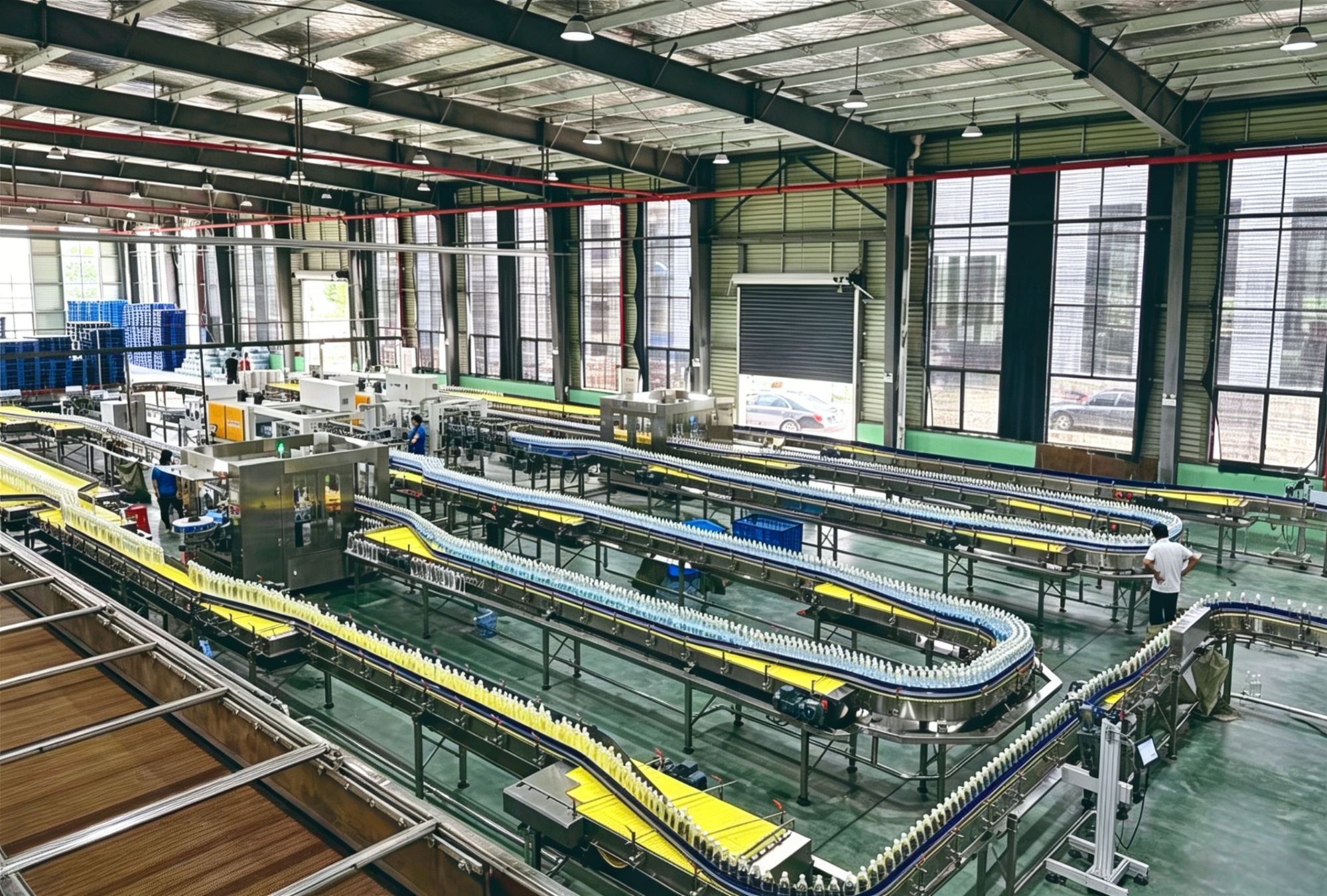
A production line's reliability doesn't happen by chance—it's the result of deliberate design choices and a culture that values consistency. Most people focus on machinery, but the real foundation is the integration of process controls. When each step has clear tolerances and feedback loops, small deviations get caught before they become breakdowns. The best lines I've seen treat reliability as a feature that's built in from the start, not something bolted on later with extra inspections and ad-hoc fixes.
Another overlooked factor is how the team interacts with the system. Even the most robust equipment fails if operators aren't empowered to speak up when something feels off. In a reliable line, there's a shared understanding that stopping the line to investigate a subtle change is better than pushing through and risking a cascade of defects. It's about creating an environment where maintenance isn't a reactive scramble but a rhythm of small, proactive adjustments. That shift in mindset often does more for uptime than any machine upgrade.
Custom Engineering for Diverse Beverage Brands
Every beverage brand carries its own story, taste profile, and production demands. Off-the-shelf equipment rarely fits the unique dance of ingredients, temperatures, and textures that set a drink apart. That’s where true custom engineering steps in—not just tweaking existing machinery, but building from the ground up to match the precise vision of each client. From cold-brew coffee systems that delicately extract flavor without bitterness to carbonated soft drink lines that balance effervescence with speed, the machinery becomes an extension of the brand itself.
The process starts long before metal is cut. Engineers immerse themselves in the brand’s ethos, collaborating closely with brewmasters, flavor scientists, and production managers. They map out workflows, study peak output requirements, and even account for future scalability. Whether it’s a small-batch herbal tonic needing gentle pasteurization or a high-volume energy drink requiring ultra-hygienic filling, each solution is handcrafted. Control systems are programmed with nuances—agitation rates, holding times, temperature curves—that become the secret sauce behind consistent, signature tastes.
What sets this apart is the refusal to accept compromise. A winery expanding into canned spritzers shouldn’t have to force its process into a generic canning line. The engineering team might design a multi-purpose filler that handles both still and carbonated wines with quick changeovers, or integrate nitrogen dosing for delicate aromatics. The result is equipment that feels like it was made by the brand’s own team—because, in a way, it was. Every valve, sensor, and conveyor run reflects a deep understanding of what makes that beverage irreplaceable.
From Raw Ingredients to Fizz-Filled Bottles
The whole thing starts with water—filtered and purified until it’s as clean as possible, because any off-taste here will show up later in every sip. Then comes the sweetener: cane sugar, high-fructose syrup, or an alternative, carefully measured and blended in large stainless-steel tanks. Flavors get added next; these might be natural extracts, fruit juices, or carefully guarded concentrate formulas that give each brand its signature kick.
Once the liquid base is ready, carbonation is the step that turns a still beverage into something lively. Chilled water and syrup are pumped into a carbonator where carbon dioxide is injected under pressure, creating millions of tiny bubbles. The temperature and pressure have to be just right—too warm and the gas won’t dissolve fully; too much pressure and the bottle might struggle downstream. This is where the “fizz” personality really takes shape.
Bottling is a high-speed ballet of machines and quality checks. Bottles or cans get rinsed, filled, capped, and labeled in a continuous flow, often within seconds. A final inspection scans fill levels and cap seals before the products are packed into cases. From raw ingredients to that satisfying pop and sparkle, the whole process is a careful collision of art, chemistry, and logistics—right up until the bottle lands in your hand.
Maintaining Peak Performance Over Time
Sustained excellence isn’t about occasional bursts of effort; it’s a steady rhythm that you build into the fabric of your daily life. The real challenge lies in protecting your energy from the slow leak of complacency and the sudden drains of unnecessary urgency. I’ve found that the most resilient performers don’t just push harder—they design their days, weeks, and months to include intentional recovery, varied challenges, and moments of reflection that recalibrate their internal compass.
One often-overlooked aspect is how you negotiate your commitments. Every yes is a no to something else, and saying no to good opportunities to make room for great ones is a skill that separates the perpetually busy from the truly effective. Over time, I’ve learned to treat my attention like a finite budget: I audit my obligations regularly, cut what doesn’t align with my core goals, and fiercely guard the space needed for deep work. This isn’t just about productivity—it’s about ensuring that what you do today doesn’t quietly undermine your capacity to perform tomorrow.
Finally, remember that peak performance is a moving target. The strategies that worked at one stage of your journey may become anchors later on. Staying at the top demands the humility to keep learning, the courage to experiment with new methods, and the wisdom to listen to feedback from your own body and mind. I periodically step back and ask: What am I optimizing for? If the answer doesn’t excite me or align with a broader purpose, I know it’s time to pivot. That kind of honest self-audit is what keeps the engine running smoothly year after year, without burning out.
Navigating Compliance and Future Trends
Staying ahead in today's regulatory landscape demands more than just a checklist approach. Companies are weaving compliance into the fabric of their operations, treating it as a dynamic, ongoing conversation rather than a one-time fix. This shift is driven by the realization that rules evolve, and so must the systems designed to uphold them. Forward-thinking organizations are embracing agile frameworks that allow them to pivot quickly, turning potential roadblocks into opportunities for building trust and resilience.
Technology is quietly reshaping how compliance is managed, with automation and data analytics playing a growing role in spotting risks before they escalate. Rather than relying solely on periodic audits, businesses are adopting real-time monitoring tools that offer a clearer, more immediate view of their standing. This proactive stance not only reduces exposure but also frees up teams to focus on strategic initiatives, fostering a culture where compliance feels less like a burden and more like a natural part of decision-making.
Looking ahead, we see a convergence of global standards and a stronger emphasis on ethical responsibility. The future isn't just about avoiding penalties—it's about proving integrity in a way that resonates with customers and partners. Companies that embrace transparency and invest in continuous education will be better positioned to navigate upcoming shifts, from environmental mandates to data privacy reforms. The key is to stay curious, adaptable, and always a step ahead of the curve.
FAQ
They design and manufacture complete production systems that handle everything from water treatment and syrup mixing to carbonation, filling, and packaging. Instead of selling pre-built machines off the shelf, they custom-engineer lines to match your specific production capacity, bottle type, and layout constraints.
Standard machines force you to adapt your process to their limitations. An OEM line is built around your needs—whether that means integrating a unique filler valve design, fitting into an oddly shaped facility, or scaling up seamlessly as your brand grows. You get a cohesive system where every component works together without compromise.
Look beyond the spec sheet. Visit their existing installations if possible, talk to their engineering team about your specific challenges, and pay attention to how they handle after-sales support. A good partner will ask about your water source, target shelf life, and even your future flavor plans before quoting anything.
Inline carbonation meters, automatic syrup proportioning, and multi-stage filtration are non-negotiable. But the real differentiators are things like high-speed reject systems that detect underfilled caps, oxygen monitoring inside the filler bowl, and CIP systems that actually reach every crevice without manual intervention.
Absolutely, but the key is quick-change tooling and smart conveyor design. Some systems let you switch from 330ml cans to 250ml glass bottles in under 30 minutes with minimal manual adjustments. Just make sure the filler turret accommodates both formats and the rinser can handle fragile materials.
Today’s lines often include vacuum pump-based carbonation that reduces CO₂ waste, closed-loop cooling systems that reclaim heat, and air rinsers that slash water usage by 90% compared to traditional bottle washers. Always ask for utility consumption projections per thousand bottles—solid manufacturers provide these upfront.
Plan on six to nine months for a moderately complex line, but this can stretch longer if you require specialized robotic palletizers or custom labelers. Pre-assembly and factory acceptance testing in the builder’s workshop can shave weeks off site installation time.
If you care about reducing unplanned downtime and tuning your process for consistency, then yes. Modern lines can track vibration signatures on motors, predict when a bearing will fail, and alert you the moment a filler spring starts drifting outside tolerance—all from your phone. It turns maintenance from reactive into proactive.
Conclusion
Building a high-quality carbonated drink starts with the machinery behind every fizz. This guide opens the door to what truly matters in an OEM production line—where precision engineering meets the art of crafting refreshing beverages. It explores the inner workings of carbonation systems, from tank configurations to filler integration, and breaks down the critical factors that make a line dependable day in and day out. Rather than a one-size-fits-all approach, you'll see how custom engineering adapts to the unique needs of different brands, whether they're launching a niche sparkling water or scaling a global cola formula.
The journey from raw ingredients to finished bottles is equally essential, covering mixing, carbonating, filling, and capping with seamless efficiency. This guide walks through each stage, highlighting how thoughtful design minimizes waste and preserves the perfect carbonation level. Looking beyond installation, it also addresses long-term performance—practical maintenance routines and real-world troubleshooting that keep the line running at its peak. On the horizon, staying ahead of evolving regulations and sustainability trends becomes part of the equation, and the guide offers a forward-looking perspective on innovation without losing sight of what works today.
Contact Us
Contact Person: Laura
Email: [email protected]
Tel/WhatsApp: +86 13957758832
Website: https://www.intopmachinery.com