

International Customs Data Business: Unlocking Global Trade Opportunities
2026-07-12
Every shipment that crosses a border tells a story—what's inside, who's sending it, who's buying it, and how often. For businesses, that story is gold. International customs data isn't just numbers; it's a real-time map of global demand, competitor moves, and untapped markets. But raw data alone isn't enough. You need a way to turn billions of trade records into clear, actionable insight. That's where Tendata comes in. We strip away the noise and give you a direct line to the buyers, suppliers, and trends that matter. Whether you're a seasoned exporter or just stepping into international trade, understanding customs data can unlock opportunities you didn't even know existed. Ready to see what the world is buying—and how you can be the one selling it? Let's dive in.
The Hidden Power of Customs Data in Global Trade Strategy
Customs data is often dismissed as a bureaucratic byproduct, a mere trail of shipment declarations and tariff payments. Yet, beneath this procedural surface lies a granular, transaction-level record of global commerce. Every container, commodity code, and port of entry tells a story about who is buying what, from whom, and at what price. For companies willing to look, this data functions like a live seismograph of market demand and supply-chain movement, capturing shifts long before they appear in quarterly reports or industry headlines.
When woven into strategic planning, customs records become a lens for spotting vulnerabilities and openings that traditional market research misses. A sudden surge in specialized machinery imports through a minor port can signal a competitor's new production line, while a year-long decline in component shipments from a specific region may reveal a brewing supplier crisis. Trade teams use this granularity to adjust sourcing routes, validate potential distributors by their actual import volumes, and even model tariff-engineering scenarios where minor changes in product classification or assembly location unlock duty savings that redraw margin calculations.
Long-term advantage, however, comes from connecting customs data with other operational layers—weather patterns, shipping lane congestion, or regional energy costs. This synthesis turns reactive monitoring into anticipatory decision-making. For instance, blending customs flows with satellite-derived port inventories can project commodity price swings weeks in advance. Similarly, tracing the customs declarations of key innovators over time reveals the true pace of technology adoption across markets, offering a real-world check against inflated marketing claims. The hidden power is not in the data points themselves, but in the ability to read the underlying narrative of global trade as it unfolds, draft by draft.
Turning Trade Data into Competitive Intelligence
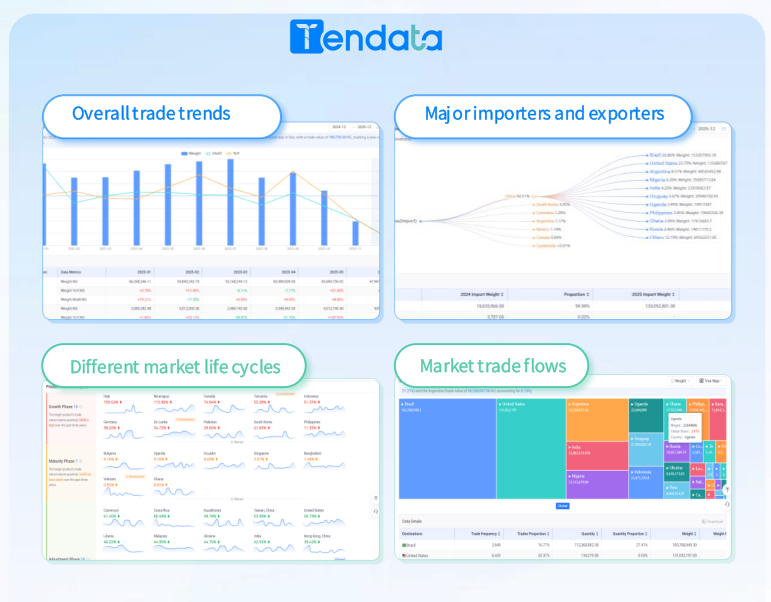
Raw trade data rarely tells the full story on its own. The real value emerges when you connect seemingly isolated shipment records to larger patterns—spotting a competitor's sudden pivot toward a new supplier, or mapping the exact moment a buyer begins diversifying away from their usual sources. Every customs filing holds clues about volume fluctuations, pricing shifts, and lead time changes that, when pieced together, reveal strategic moves your rivals would rather keep hidden.
The leap from data to intelligence requires looking past the obvious numbers. It’s not enough to know what got shipped and when; you need to interpret the “why” behind the transactions. A surge in mid-quarter imports might signal a product launch, while a quiet drop in a key component’s incoming volume could hint at a production problem. By rebuilding supply chains from public trade records, you gain a view of your market that most competitors only get through expensive consultants or insider leaks.
What separates average analysis from true competitive intelligence is the ability to anticipate, not just observe. When you track how a rival’s sourcing geography evolves over quarters, you can often forecast their next cost-cutting round or quality shift before it hits the market. This kind of foresight turns shipping manifests into a tool for preemptive strategy, giving you the space to adjust pricing, refine your own supplier mix, or target their most vulnerable accounts while they’re still reacting to last quarter’s problems.
Navigating Cross-Border Compliance with Real-Time Insights
Cross-border trade often brings a maze of shifting regulations, where a single oversight can stall shipments or incur steep fines. Real-time insights cut through this complexity by surfacing regulatory changes the moment they happen, from updated tariff codes to new import restrictions. Teams can then act on granular, location-specific data without wading through stale documentation or relying on periodic manual checks.
Instead of reacting after a compliance breach, organizations harness continuous monitoring tied directly to their supply chain workflows. Live dashboards flag anomalies, such as a sudden change in permissible materials for a destination country, letting compliance officers and logistics managers collaborate in context. This transforms compliance from a periodic audit exercise into an always-on operational capability.
The real value emerges when the insights are linked to automated actions: triggering holds on non-compliant shipments, generating updated customs paperwork, or notifying local partners before a shipment departs. By embedding real-time intelligence into daily operations, businesses not only avoid penalties but also build trust with customs authorities and end customers who depend on consistent, lawful delivery.
Uncovering New Market Opportunities Through Impexp Records
Most businesses still rely on lagging indicators to gauge market demand, but import-export records offer a real-time lens into shifting trade flows. By tracking the volume and frequency of specific product categories entering different countries, you can spot underserved regions where local production can't keep pace with import reliance. This granular view reveals gaps that traditional market reports often overlook—like a sudden spike in specialized machinery imports signaling an infrastructure boom that hasn't yet attracted major suppliers.
Beyond broad trends, these records let you dissect opportunities at the product-code level. You might find that while a market appears saturated for standard consumer electronics, a related niche component is consistently imported in high volumes due to fragile local supply chains. Mapping supplier concentration also exposes dependencies—if a single exporting country dominates, even minor disruptions there create immediate openings for alternative sources. This kind of intelligence helps you bypass crowded sectors and position yourself where actual transaction data shows persistent demand.
Another overlooked angle is the strategic signal hidden in re-export patterns. When goods flow through intermediary hubs, the final destination often reveals latent demand in markets that aren't directly accessible through official statistics. By connecting these dots, you can preempt competitors in building distribution networks for regions poised for growth. It's not about predicting the next big market—it's about reading the tangible trade footprints that most analysts ignore.
Mitigating Supply Chain Risks with Predictive Analytics
Supply chains today face an expanding array of threats, from sudden demand fluctuations to geopolitical disruptions. Relying solely on historical data and manual monitoring often leaves companies reacting too late. Predictive analytics shifts this dynamic by scanning live data streams—weather patterns, supplier financials, social sentiment—and flagging anomalies before they escalate into full-blown crises. This forward-looking lens empowers teams to reroute shipments, adjust inventory buffers, or qualify backup suppliers with enough lead time to keep operations humming.
The real power lies in translating raw signals into actionable foresight. Machine learning models can now assign risk scores to every node in the supply network, factoring in variables like port congestion trends, political instability indices, and even subtle shifts in a supplier’s payment behaviors. Rather than drowning in dashboards, decision-makers get prioritized alerts that are tied to specific mitigation steps—such as locking in alternative logistics lanes or pre-negotiating flexible capacity with secondary sources. This strips away the guesswork and turns risk management into a continuous, automated rhythm.
Yet the technology is only as effective as the collaboration around it. Companies that treat predictive insights as cross-functional assets—shared instantly between procurement, logistics, and finance—see faster and more aligned responses. Over time, the feedback loop of successful interventions and occasional misses strengthens the models themselves, making the supply chain not just reactive but genuinely adaptive. In a climate of accelerating uncertainty, building this intelligence layer isn’t a luxury; it’s quickly becoming the backbone of resilient supply ecosystems.
Building Smarter Trade Partnerships Using Data-Driven Decisions
Relying on gut instinct to choose trade partners often leaves money on the table. When you bring data into the room, patterns start to surface that you’d otherwise miss—supplier reliability trends, shifting demand signals, or hidden cost risks across regions. It’s not about replacing human judgment, but giving it a sharper lens. A quick dive into historical performance metrics and real-time market feeds can highlight which relationships are actually delivering value and which ones are coasting on past reputation.
Smart partnerships thrive on shared visibility. By letting data flow between your systems and your partners’—inventory levels, production schedules, quality metrics—you stop guessing and start aligning. This two-way transparency turns transactional arrangements into strategic collaborations. Both sides can spot bottlenecks early, adapt to disruptions faster, and even co-invest in improvements where the numbers point to mutual gain. It’s a practical shift from negotiating against each other to problem-solving together, using the same set of facts.
The real edge comes from treating partner selection as an ongoing evaluation, not a one-time decision. Set up lightweight feedback loops: did the shipment arrive on time? Were the goods up to spec? How smoothly did communication flow? Aggregate these signals over time and you’ll have a dynamic scorecard that reflects actual performance, not promises. Over time, this weeds out underperformers and naturally deepens relationships with those who consistently prove their worth—making your entire supply network more resilient and responsive.
FAQ
International customs data comprises detailed shipment records filed with customs authorities when goods cross borders. It includes information like importer and exporter names, product descriptions, HS codes, quantities, values, and ports of origin and destination. This data is collected directly from official customs declarations, bills of lading, and manifests, typically sourced from government agencies or authorized data aggregators.
By analyzing shipment records, companies can spot active traders of specific products. For instance, if you need a supplier of electronic components, customs data reveals which factories are exporting those items and to whom. You can assess shipment volumes, frequency, and partners to gauge reliability and market presence, then reach out directly with a tailored proposal.
Unlike surveys or industry reports, customs data provides real, transactional evidence of trade flows. You see actual volumes, pricing trends, and competitor supply chains instead of estimates. This lets you benchmark your performance, spot underserved markets, and react faster to shifts, such as a rival abruptly changing suppliers or a new tariff altering sourcing patterns.
In most countries, basic shipment details are public records intended to facilitate trade transparency. However, sensitive information like unit prices or contract terms is often redacted. Reputable providers anonymize personal data and comply with local laws. Businesses should use the data for market intelligence, not for invasive profiling, and verify the provider’s compliance with regulations such as GDPR.
Many data platforms now offer modular subscriptions or pay-per-use plans tailored for SMEs. Instead of purchasing global datasets, a small business can focus on a specific product category or trade lane. The key is to start with a clear question—like 'Who is importing organic tea into Germany?'—and use the data to pinpoint potential partners or verify a market's size before committing resources.
It helps vet trading partners by revealing their shipment history, such as whether they consistently deal in sanctioned goods or have sudden gaps in activity. Compliance teams can cross-check declared classifications and values against norms to flag potential mispricing or illegal transshipment. This proactive screening reduces the risk of fines, shipment delays, or reputational damage.
Yes, by tracking import volumes and declared values over time, analysts can spot emerging demand patterns or price fluctuations before they become widely known. For example, a steady rise in imports of solar panels from a new origin might signal a supply shift or price drop. Combining this with seasonal patterns helps businesses time their procurement more strategically.
One major pitfall is taking trade values at face value, as they may not reflect open-market prices due to transfer pricing in related-party transactions. Also, product descriptions can be vague or misclassified. To avoid errors, cross-reference multiple data points like weight, quantity, and HS code consistency, and supplement with on-the-ground intelligence or samples before making large commitments.
Conclusion
Every shipment that crosses a border carries more than goods—it carries a story of supply, demand, and strategic intent. International customs data transforms those stories into actionable intelligence, allowing businesses to peer into competitor supply chains, track real-time commodity flows, and spot emerging market gaps long before they become obvious. Instead of relying on delayed trade statistics or costly market surveys, firms can now dissect actual transaction records—importer names, HS codes, country of origin, shipment volumes—to unearth hidden supplier relationships and benchmark their own sourcing performance. This raw transactional layer becomes the foundation for competitive strategy, where a food importer might discover that a rival has quietly shifted procurement to a cheaper Vietnamese mill, prompting a recalibration of their own pricing and logistics.
Yet the value extends far beyond market intelligence. Customs data acts as an early warning system for supply chain vulnerabilities: a sudden drop in shipments out of a key port might signal production hiccups or geopolitical friction, giving proactive companies weeks to reroute orders and avoid stockouts. On the compliance front, real-time tracking of regulatory changes—tariff adjustments, sanction updates, or new documentation requirements—can be hardwired into a firm’s trade compliance engine, slashing clearance delays and penalty risks. Moreover, these data streams fuel lasting trade partnerships. By sharing sanitized demand signals with overseas suppliers, companies co‑create more resilient logistics plans and negotiate better terms based on verified purchasing patterns rather than wishful forecasts. In essence, the customs data business isn’t just about reporting what has moved; it’s about illuminating the entire global chessboard, so players at any scale can make faster, sharper, and more collaborative trade decisions.
Contact Us
Contact Person: Grace
Email: [email protected]
Tel/WhatsApp: +86 18721992033
Website: https://www.tendata.com