

Export Used Road Rollers: Your Comprehensive Guide to International Markets
2026-05-28
Taking used road rollers across borders isn't just about logistics—it's about finding value where others see surplus. From navigating shifting regulations to pinpointing demand in emerging markets, the export game rewards those who prepare. At JILIANG CHI, we've seen how the right machine, at the right time, can reshape a fleet overseas. This guide distills hard-won insights to help you turn asphalt assets into international opportunities—without the usual guesswork.
Spotting High-Demand Markets for Used Road Rollers
Identifying regions with active infrastructure expansion often reveals promising opportunities for used road roller sales. Look into government transportation budgets, ongoing highway projects, and urban development plans—these are tangible indicators of sustained demand. Regions experiencing a construction boom, whether in emerging economies or areas recovering from natural disasters, frequently have a strong appetite for reliable, cost-effective compaction equipment. Pay attention to local contractor networks and equipment rental companies, as their purchasing patterns can signal market health long before official statistics catch up.
Another angle is to monitor the replacement cycles within large-scale agricultural or industrial operations. Farms with extensive private road networks or factories expanding their facilities often seek used rollers for land leveling and foundation work. Seasonality plays a role too: in temperate climates, demand spikes before the ground freezes, while in tropical regions, the dry season sees a surge in earthmoving activities. Tracking online auction trends and import/export data for heavy machinery can also unveil hotspots where supply isn’t keeping pace with localized needs.
Don’t overlook the indirect signals, such as rising cement and steel consumption in a country, or an upswing in commercial real estate permits. These forward-looking metrics can point to future demand for compaction equipment. Building direct relationships with dealers in target territories gives you a granular view of which models are moving fast and which are stagnating. Sometimes, a market becomes attractive not because of high absolute demand, but because competitors have overlooked it, leaving a gap you can fill with well-maintained used rollers at the right price point.
What to Check Before Buying an Export-Ready Road Roller
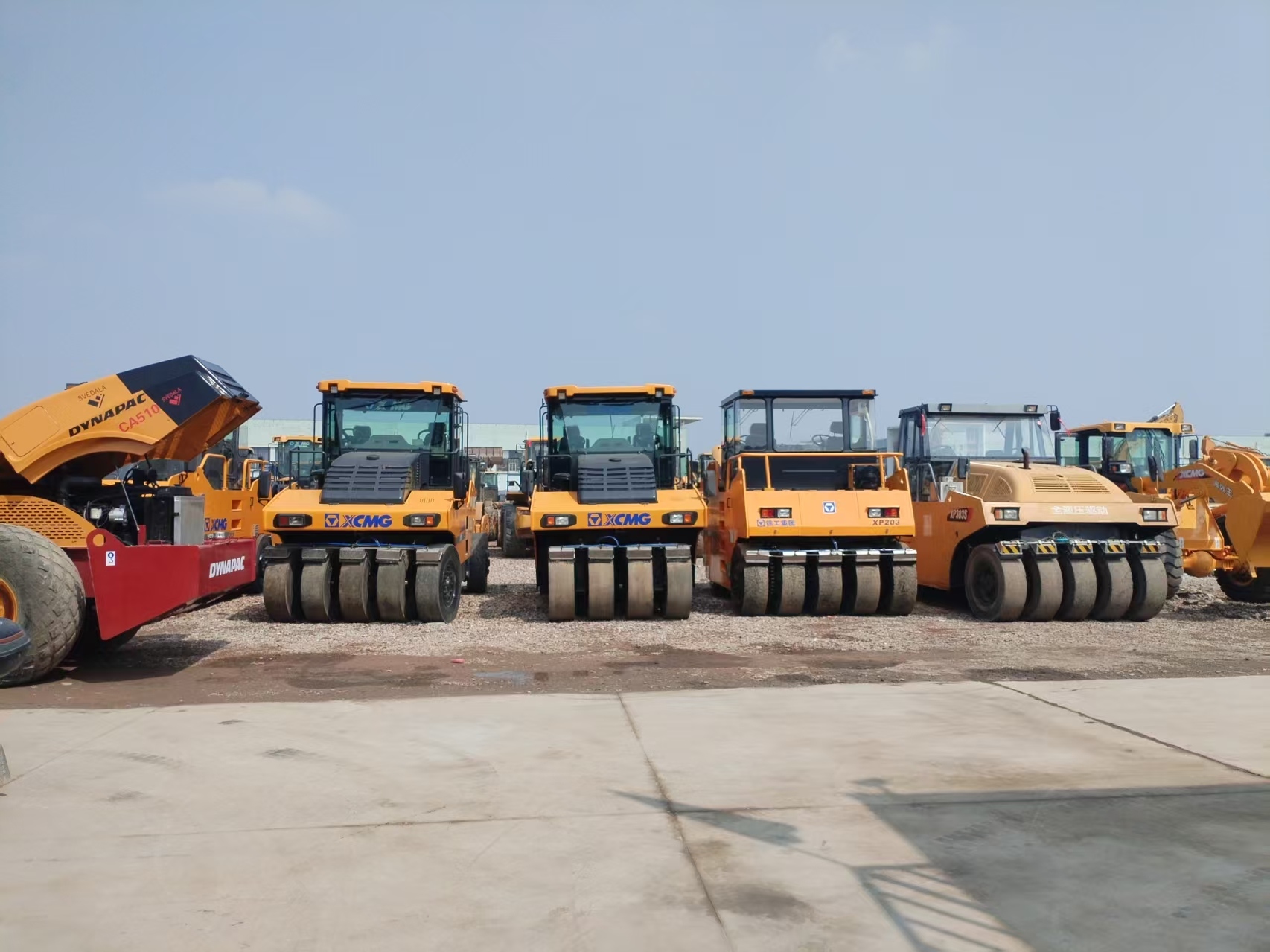
Before you commit to a purchase, it’s worth digging into the specific regulations of the destination country. Emission standards, noise restrictions, and safety certifications can vary widely, and a machine that’s perfectly compliant at home might need expensive modifications before it can legally operate abroad. Ask the seller or manufacturer for documentation that proves the roller meets local requirements — don’t just take a verbal assurance.
Don’t overlook the physical preparation for export. A road roller that’s going to spend weeks at sea needs more than a quick wash and a coat of paint. Check that the manufacturer applies proper corrosion protection, drains fluids where necessary, and secures loose components. Look for details like reinforced tie‑down points, protective coverings for vulnerable hydraulics, and a robust shipping frame. These aren’t just niceties; they can be the difference between a machine that rolls off the ship ready to work and one that needs immediate, costly repairs.
Finally, make sure the paperwork stack is complete and genuine. Beyond the bill of lading and commercial invoice, you’ll want proof of origin, a detailed packing list, and any certificates of conformity or CE marking documents if heading to Europe. It’s also smart to confirm that the machine’s serial numbers match across the engine, frame, and documents — a mismatch can cause headaches at customs. And ask about after‑sales support: is there a local distributor, or does the warranty cover you internationally? A few extra questions up front can save a lot of hassle down the road.
Navigating International Shipping and Customs for Heavy Equipment
Moving heavy equipment across borders involves a maze of regulations that can easily delay projects and inflate costs if not handled with care. Each country imposes its own set of import duties, required documentation, and safety certifications, which often vary depending on the machinery's age, purpose, and even its engine type. For instance, some nations demand a pre-shipment inspection or proof of fumigation for wooden packing materials, while others restrict the import of used construction gear altogether. Relying on a generic checklist will rarely cut it; success hinges on researching destination-specific rules weeks before the shipment date.
Beyond paperwork, the physical logistics demand equal attention. Oversized loads frequently require special permits and route surveys to avoid low bridges or weight-limited roads. Port selection can make or break your timeline: a less congested terminal might add a day of inland transport but save a week of waiting at customs. Partnering with freight forwarders who have on-the-ground experience at both origin and destination ports helps anticipate hurdles—like sudden tariff adjustments or port strikes—that generic carriers might miss.
Finally, a common overshoot is ignoring the total landed cost, which blends freight, duties, inspection fees, and even storage charges while equipment awaits clearance. Smart shippers often stage equipment in a free-trade zone to defer duties until a buyer is secured, or use temporary import bonds for machinery needed only for a specific project. Building a buffer into both your budget and schedule for these soft costs and regulatory hiccups turns what could be a logistical nightmare into a manageable—and predictable—routine.
The Hidden Costs of Exporting Used Construction Machinery
When dealers ship used excavators, bulldozers, or loaders across borders, the sticker price rarely reflects the full financial picture. Beyond the initial purchase and freight charges, a cascade of less obvious expenses quietly erodes margins. These range from mandatory emissions retrofits demanded by destination countries to unpredictable demurrage fees when customs documentation hits a snag. Without factoring in these variables, what looks like a profitable deal can quickly turn into a break-even scenario—or worse.
Regulatory misalignment is another major culprit. A machine that meets Tier 3 standards in its home market may require an expensive engine overhaul to comply with Stage V rules overseas. Then there are the softer costs: hiring local agents to navigate opaque import procedures, translating manuals and safety decals, and even repainting equipment to satisfy aesthetic or branding expectations abroad. Each step adds layers of expense that aren't obvious on the balance sheet until invoices start arriving.
Currency fluctuations and warranty obligations further complicate the math. A sudden dip in the exchange rate can wipe out projected gains between the quote and final settlement, while honoring a warranty in a foreign country often means stocking parts in a distant warehouse or paying third-party mechanics at premium rates. Savvy exporters track these hidden costs obsessively, building buffer percentages into their pricing that account for everything from port strikes to sudden tariff changes.
How to Build Trust with Overseas Buyers of Road Rollers
Trust doesn't come automatically when you're selling heavy machinery across borders. Overseas buyers of road rollers are often dealing with a whole set of unknowns—shipping logistics, equipment quality, and whether the supplier will actually stand behind their product. I've found that the fastest way to put their mind at ease is to be unnervingly transparent from the first email. That means sharing real photos of the machine, not stock images, and offering live video inspections where they can request to see any weld or hydraulic hose up close. It also helps to be upfront about delivery timelines, even when there's a potential delay. Buyers appreciate that kind of honesty far more than a flowery sales pitch.
Another overlooked piece is giving them someone they can hold accountable. I'm not talking about a generic info@ email address, but a direct contact who knows the road roller's build sheet inside and out. When a buyer from Ghana or the Philippines asks about roller drum thickness or oil filter cross-references, a quick, technically accurate reply goes a long way. Pair that with a small library of customer testimonials from similar markets—not staged PR quotes, but short video clips or voice notes from actual operators—and you've just made a much stronger case than any glossy brochure ever could.
The real test, though, comes after the machine ships. Overseas buyers are terrified of getting stuck with a two-ton paperweight. A clear, contract-backed plan for parts supply and technical guidance in their local time zone can close a deal that's been stalling. Even something as simple as offering a spare filter kit tossed into the shipping container, or a promise to have an engineer on a WhatsApp video call if something goes sideways during assembly, shows that you're in it for the long haul. That's what turns a one-off transaction into a relationship where they come back for their next road roller, and the one after that.
Common Pitfalls When Selling Used Rollers Abroad — and How to Avoid Them
Selling used rollers overseas can open up profitable markets, but it’s easy to stumble over regulatory hurdles. Many sellers assume their machinery meets international standards simply because it’s compliant at home, only to face costly rejections at customs. Emissions rules, safety certifications, and age restrictions vary wildly—what’s acceptable in one country might be banned in another. A quick fix is to hire a local trade consultant or tap into industry forums where fellow exporters share up-to-date requirements.
Logistics tend to be another underestimated beast. Without careful planning, you might end up paying more for freight than the roller’s actual worth, or worse, see the machine damaged because it wasn’t properly secured for sea freight. Always get quotes from at least three freight forwarders who specialize in heavy equipment, and insist on full container loading (FCL) for extra protection. It also pays to photograph every inch of the machine before it leaves your yard—this visual proof can be a lifesaver if a dispute arises later.
Then there’s the human side of the deal: misreading the buyer’s intent. Scams are rife when dealing across borders, and even legitimate buyers may exploit your ignorance of local business norms. Never ship a roller before receiving a confirmed, irrevocable letter of credit from a reputable bank, and verify the buyer’s track record through independent references. Taking a little extra time to build rapport—a video call, for instance—goes a long way in spotting red flags you’d otherwise miss in an email exchange.
FAQ
Exporting used road rollers can be quite lucrative because many developing countries are ramping up infrastructure projects but have limited budgets for brand-new machinery. Well-maintained used rollers offer a cost-effective alternative, and sellers can tap into high margins if they source wisely and understand regional needs.
Regions like Southeast Asia, Africa, and South America consistently top the list. Countries such as Vietnam, Nigeria, and Brazil are investing heavily in road construction and often prefer proven, affordable used equipment from reliable exporters.
It varies by destination, but common requirements include CE marking for Europe, EPA emissions compliance for certain countries, and safety inspections like the ones by the Kenya Bureau of Standards. Always check the importing country’s specific mechanical and emissions standards before shipping.
A thorough inspection is key. Check the engine hours, hydraulic systems, drum wear, and overall maintenance records. If possible, run a vibration test and examine the undercarriage. Hiring an independent inspector who knows heavy machinery can save you from costly surprises later.
One of the biggest headaches is improper crating or container loading, leading to damage during transit. Also, misunderstanding port fees and demurrage charges can eat into your profits. It’s wise to partner with a freight forwarder specializing in heavy equipment.
You’ll need a bill of lading, commercial invoice, packing list, and a certificate of origin. Some countries require an inspection certificate from a recognized agency. Working with a customs broker familiar with used machinery in both the export and import countries can streamline the process.
Names like Caterpillar, Dynapac, and Hamm usually command strong resale value. Buyers often seek models with simple mechanics and easy parts availability—so vibratory tandem rollers and pneumatic tire rollers are perennially popular.
Beyond direct payment or wire transfers, options include trade finance from export credit agencies, leasing arrangements, or supplier credit. Some exporters also work with local banks in the buyer’s country to facilitate installment plans, which can expand your customer base.
Conclusion
Expanding your used road roller business into international markets opens up fresh demand in regions where infrastructure projects are booming, but success hinges on spotting the right opportunities. Look beyond sales figures to countries with massive road-building investments or those where local manufacturing doesn't keep pace with demand—like parts of Southeast Asia, Africa, and South America. Understanding each market's technical requirements for compaction equipment matters, as does knowing which roller types (single-drum, tandem, or pneumatic) suit the typical soil and asphalt conditions there. Once you've identified a promising market, inspect every machine rigorously before buying for export: check engine hours, hydraulic integrity, drum wear, and service records to ensure the roller can withstand shipping and meet overseas expectations without costly post-sale disputes.
The operational side of exporting brings its own hurdles, from navigating complex customs paperwork and port regulations to factoring in hidden costs like fumigation, inland transport, and compliance modifications that eat into margins unless planned for. Building trust with distant buyers often means going beyond a simple listing—offer detailed inspection reports, transparent maintenance histories, and even video walkarounds to bridge the distance. At the same time, stay aware of common missteps: overlooking currency fluctuations, misjudging a machine's resale value in a different market, or assuming one freight forwarder fits all situations. By weaving together market research, thorough preparation, and genuine communication, you can turn the export of used road rollers from a risky venture into a steady, profitable channel.
Contact Us
Contact Person: Sally Xiao
Email: [email protected]
Tel/WhatsApp: 086-18221477398
Website: http://www.shjiliangchi.com/