

DETDA Supplier Evaluation Tips for Polyurethane Producers
2026-11-02
Sourcing diethyltoluenediamine (DETDA) for polyurethane systems often feels like a gamble—batch inconsistencies, hidden supply chain risks, and vague technical support can derail your production overnight. Yet many producers still rely on outdated checklists that miss what actually separates a transactional vendor from a true extension of your R&D team. In this guide, we cut through the generic advice and focus on five evaluation angles most suppliers hope you never ask about. From lot-to-lot amine value drift to emergency logistics during peak season, these are the tips that separate resilient operations from costly downtime. At Fortune, we’ve seen how the right DETDA partner turns a raw material spec sheet into a competitive advantage—so let’s explore what your current evaluation process might be missing.
Why Your DETDA Purity Test Might Be Missing the Real Problem
A routine purity check on DETDA often focuses on a single number—the percentage of main amine by GC or HPLC. But that figure can hide a lot. The reactive behavior of this curative depends heavily on the ratio of its two major isomers, 2,4- and 2,6-diethyltoluenediamine. A batch that passes a 98% total purity spec might still have drifted far from the optimal isomer balance, leading to slower gel times, softer cured parts, or unexpected exotherms. If your test only reports total amine content, you could be approving material that behaves nothing like the reference standard.
Moisture and trace impurities rarely move the purity needle, yet they can wreck a production run. Even 0.05% water in DETDA reacts with isocyanates to form CO2, creating bubbles or weak interfacial layers in polyurea coatings and elastomers. Similarly, leftover intermediates from incomplete alkylation or oxidation byproducts may not show up as contaminants in a purity assay, but they can act as catalyst poisons or shift the cure profile enough to cause surface defects. A purity certificate that ignores these micro-level actors gives a false sense of control.
Storage history matters more than a fresh-sample purity test suggests. DETDA slowly darkens and forms trace oligomers over months, especially if stored warm or with repeated headspace exposure. These changes often leave the nominal purity percentage unchanged, yet they raise viscosity, alter mixing ratios on the line, and can generate haze or brittleness in the final product. Batch-to-batch consistency demands a broader fingerprint—isomer ratio, water content, color, and viscosity—rather than a single purity number that was never the real problem in the first place.
The Amine Value Drift: Spotting Subtle Quality Shifts Before They Alter Cure Profiles
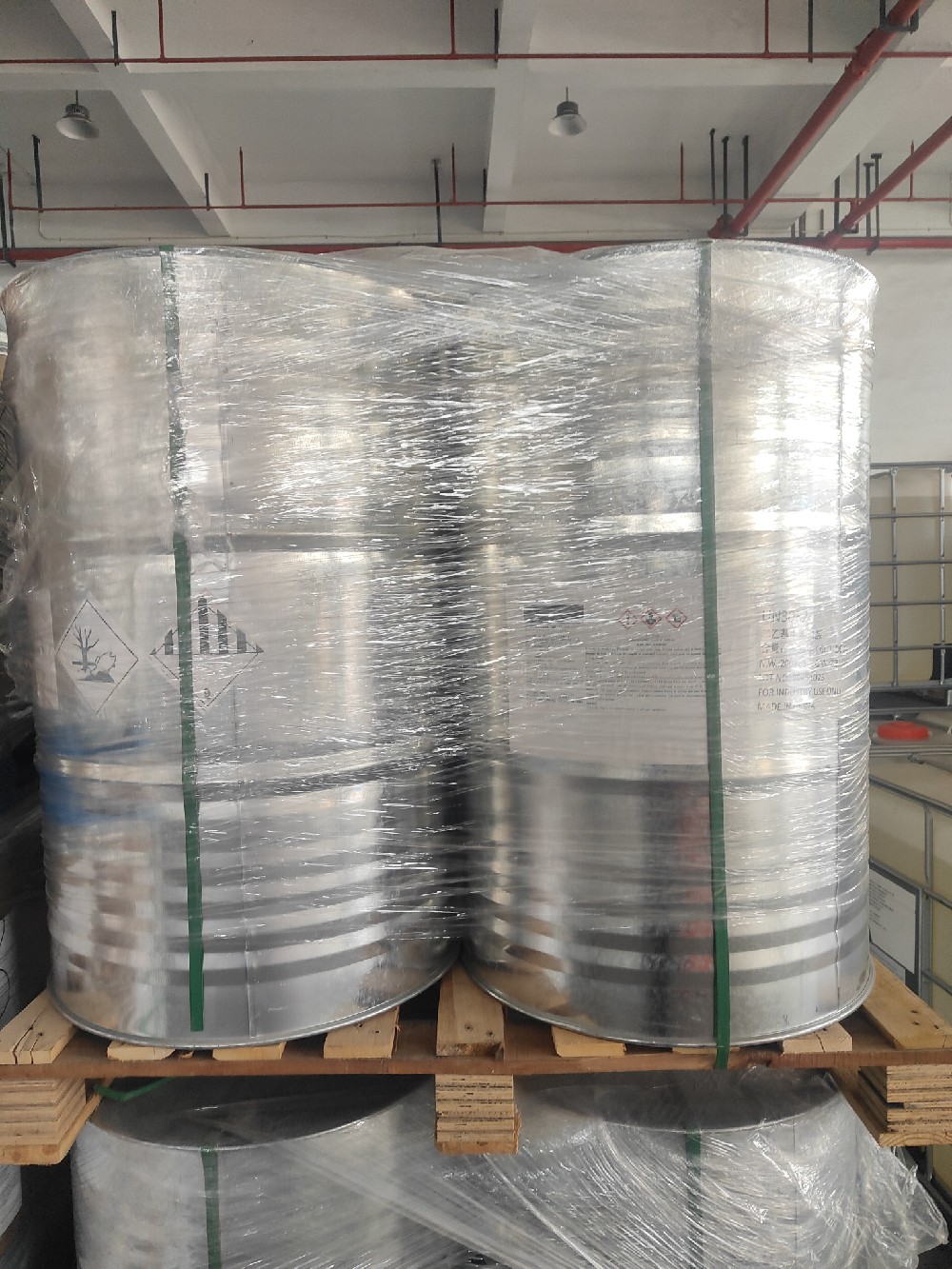
Amine value rarely drops overnight. More often it slides a few points across several shipments while everyone reassures themselves that the titration is “close enough.” That quiet drift shows up later as a longer induction period, a softer exotherm, or a tacky surface after the scheduled cure. Once those symptoms appear, the batch is already compromised, so the only real defense is tracking the number before it becomes a problem.
One of the more overlooked causes is gradual carbamation from exposure to humid air. Amine absorbs carbon dioxide and moisture, tying up active hydrogens in a form that still titrates oddly depending on the method. If your lab switches indicators, changes solvent, or doesn’t control the sample temperature, the reported amine value can drift even when the chemistry hasn’t. That kind of measurement noise hides the genuine shifts you’re trying to catch.
Keep retained samples from every lot, label them with the date and supplier, and run a monthly check against the current inventory. When the amine value drifts down by more than a couple of points from your baseline, adjust the stoichiometry before the resin hits the shop floor. Watch the trend line rather than any single result, because a slow downward slope across three or four lots is a much clearer warning than one outlier.
Supplier Audits That Focus on Storage Conditions, Not Just Paperwork
Most supplier audits still revolve around checking boxes on quality manuals and batch records. But a factory can have impeccable paperwork while its warehouse tells a very different story. Temperature-sensitive raw materials stacked beside a heat vent, open bags of powder attracting pests, pallets leaning against damp walls—these are the kind of issues that never show up in a PDF.
A meaningful audit walks the floor before it opens a file. Look at how goods are actually stored: are there segregated zones for rejected or expired materials? Is the cold chain unbroken from receiving to dispatch? Check the data loggers, yes, but also feel the air when you step into a storage room. Count the rodent bait stations and ask when they were last serviced. Watch whether staff handle materials with the same care the SOP describes.
When auditors spend real time in the warehouse, hidden risks surface. A supplier might claim FIFO rotation, but you see older batches buried behind newer ones. A beautifully maintained temperature chart can mask a sensor that was moved away from a hot spot. These observations lead to tougher conversations and, ultimately, a more reliable supply chain. Paperwork audits give you comfort; condition audits give you confidence.
When Lower DETDA Prices Mask Higher Rejection Rates in Polyurethane Lines
Procurement teams often jump at a lower DETDA quote without realizing how quickly the savings disappear on the line. Differences in amine value, moisture content, or isomer distribution between suppliers can shift the reaction profile enough to cause bubbles, soft segments, or surface defects in elastomer and coating batches. Rejection rates climb not because operators suddenly lost their touch, but because the incoming amine is no longer matching the narrow window the formulation was built around.
Once rejections start, the few cents saved per kilogram get eaten by rework, scrap disposal, downtime for line cleaning, and customer complaints. Line parameters get tweaked repeatedly to chase the cheaper material, and quality control turns into firefighting rather than verification. The real danger is the borderline product that passes inspection but leaves the plant with reduced hardness, poor weathering, or latent cure issues that surface later in the field.
Evaluating DETDA on purchase price alone misses the point. When rejection rate, reaction efficiency, and final part performance are folded into total cost, the low bid rarely holds up. Suppliers that provide batch-to-batch consistency data are doing more for a polyurethane line than any aggressive discount ever will. The rejection log tells a more honest story about amine cost than the invoice does.
How to Verify a Supplier's Claim of 'Equivalent' DETDA Without Running Full Production Batches
A supplier claim of “equivalent” DETDA means little until you compare the material's chemical fingerprint against your incumbent product. Request a full certificate of analysis that includes amine value, moisture content, color (APHA), and—most critically—the ratio of 2,4- to 2,6- isomers. Many manufacturers overlook isomer distribution, yet it drives reactivity and final network density. Run an FTIR overlay of the new sample with your reference; even subtle shifts in the N-H stretching region can indicate a different amine blend or unreacted precursors. GC-MS is also worth the bench time if you suspect the supplier swapped in a cheaper aromatic amine.
Small-scale reactivity checks can expose differences that a COA misses. Mix roughly 5 grams of the candidate DETDA with your standard isocyanate at the production ratio in a disposable cup and track gel time, peak exotherm temperature, and viscosity rise over 10 minutes. A DSC scan on the same mixture gives you onset temperature and total heat of reaction—two numbers that directly affect cure schedule and part performance. If the equivalent material shows a gel time shift of more than 15-20% or a lower exotherm, it’s not truly drop-in, regardless of what the sales data says.
Look past the single sample. Ask for batch-to-batch data across at least five production lots, and check whether the supplier’s manufacturing site or raw material source has changed recently. A sudden improvement in price often comes with a shift in feedstock that alters trace impurities. Store a small sealed aliquot at 40°C for two weeks and re-check color and amine value; real DETDA tends to darken slightly, but a large drift suggests poor stabilization or a different backbone. These steps cost a few hours of lab time and no full batches, but they’ll tell you whether the equivalence claim holds under your conditions.
Creating a DETDA Contingency Plan Before a Force Majeure Hits
Most procurement teams treat force majeure as a rare, external shock—something that happens to other companies. But if your formulations rely on DETDA, that assumption is a liability. A contingency plan built before any disruption gives you time to test alternatives, not just identify them. Start by mapping every point where DETDA enters your process, including secondary suppliers and tolling partners, then run a "no DETDA for 90 days" simulation across production, quality, and logistics. The goal isn't to predict the exact trigger; it's to make the absence of DETDA a solvable problem rather than a panic.
The most overlooked part of DETDA contingency planning is the qualification burden. Swapping in a different aromatic amine curative can shift gel times, color stability, or mechanical properties in ways that only show up after weeks of testing. So pre-qualify at least one alternative under worst-case process conditions, not just standard lab conditions. Work with your R&D team to create a decision matrix that defines thresholds for acceptable performance drift, and have your legal team review force majeure clauses in supplier contracts to ensure "raw material shortage" or "allocation" actually triggers the remedies you expect. Without these pieces, a plan is just a wish list.
A DETDA contingency plan also needs a communication rhythm. Don't wait for a crisis to loop in production managers, quality leads, and key customers. Schedule a twice-yearly tabletop exercise where you walk through a simulated supply cutoff—who gets informed in the first 24 hours, how you allocate remaining inventory, and which product lines get priority. After each exercise, update the plan with real data from your suppliers, including their own force majeure triggers and inventory buffers. That kind of routine pressure-testing turns a static document into a living safeguard, and it often reveals hidden dependencies, like a single port or logistics lane that both your primary and backup suppliers share.
FAQ
Amine value near the lower spec limit, moisture creeping up, darker color than typical, and a shift in the 2,4/2,6 isomer ratio are common warning signs. Track these on a control chart instead of judging a single certificate of analysis.
Keep a retained sample from every approved lot, write clear quality clauses into the supply agreement, and run a fast incoming check like amine titration or infrared on each drum. If a lot drifts outside agreed limits, return or deduct without long negotiations.
The headline price may exclude nitrogen-blanketed packaging, proper drum liners, freight, or small-lot handling. Payment terms, minimum order quantities, and who pays for off-spec disposal can erase the apparent savings.
Put a change-notification clause in the contract and require a written declaration when upstream intermediates change. Periodic audits and a consistent fingerprint from GC or HPLC data also make silent substitutions harder to hide.
For fast-cure RIM, spray polyurea, or coatings, yes. Even a few percentage points of shift can alter gel time, hardness build, and surface tack. If your process tolerates wider variation, you may test every third batch, but do not skip it entirely.
Buy the smallest pack size, then run the new material side by side with your current DETDA on the same production line. Record exotherm profile, demold time, tear strength, and surface appearance before scaling up.
Ask for a certificate of analysis, SDS, technical data sheet, REACH or equivalent regulatory status, residual solvent and heavy metals data, packaging compatibility, and batch traceability records that link drums to production dates.
It can, but only if the key parameters stay stable over multiple lots and the material passes your own aging and stress tests. A lower price based on looser quality control usually costs more in scrap and line downtime later.
Conclusion
Polyurethane producers often lean on a DETDA purity certificate as if it were the whole story, but that single number rarely captures what actually trips up a production line. A batch can pass 99% purity yet still carry an off-spec isomer distribution or a trace impurity that poisons catalyst activity. Instead of chasing purity alone, track the amine value over time—a slow drift can signal oxidation or moisture uptake long before gel times shift. When you audit a supplier, walk the warehouse, not just the file cabinet. Storage temperature swings, drum sealing practices, and even how long material sits before shipment tell you more about batch-to-batch consistency than any ISO certificate.
Price pressure is real, but a cheaper drum of DETDA that forces a 3% rejection bump on your PU line is no bargain. Ask suppliers for small-scale reactivity data or a side-by-side DSC cure profile against your incumbent material—this can reveal whether that 'equivalent' claim holds without burning a full production run. And don't wait for a force majeure to test your backup plan. Pre-qualify a second source, lock in a shared specification for critical impurities, and agree on a notification window for process changes. The producers who stay ahead are the ones who treat DETDA supply as a process variable, not a purchasing afterthought.
Contact Us
Contact Person: WANG SIHAI
Email: [email protected]
Tel/WhatsApp: +86-13815295628
Website: https://www.fortunechemtech.com/index_en.html