

Custom Double Hook Shot Blasting Machine Solution for Your Surface Preparation Needs
2026-11-02
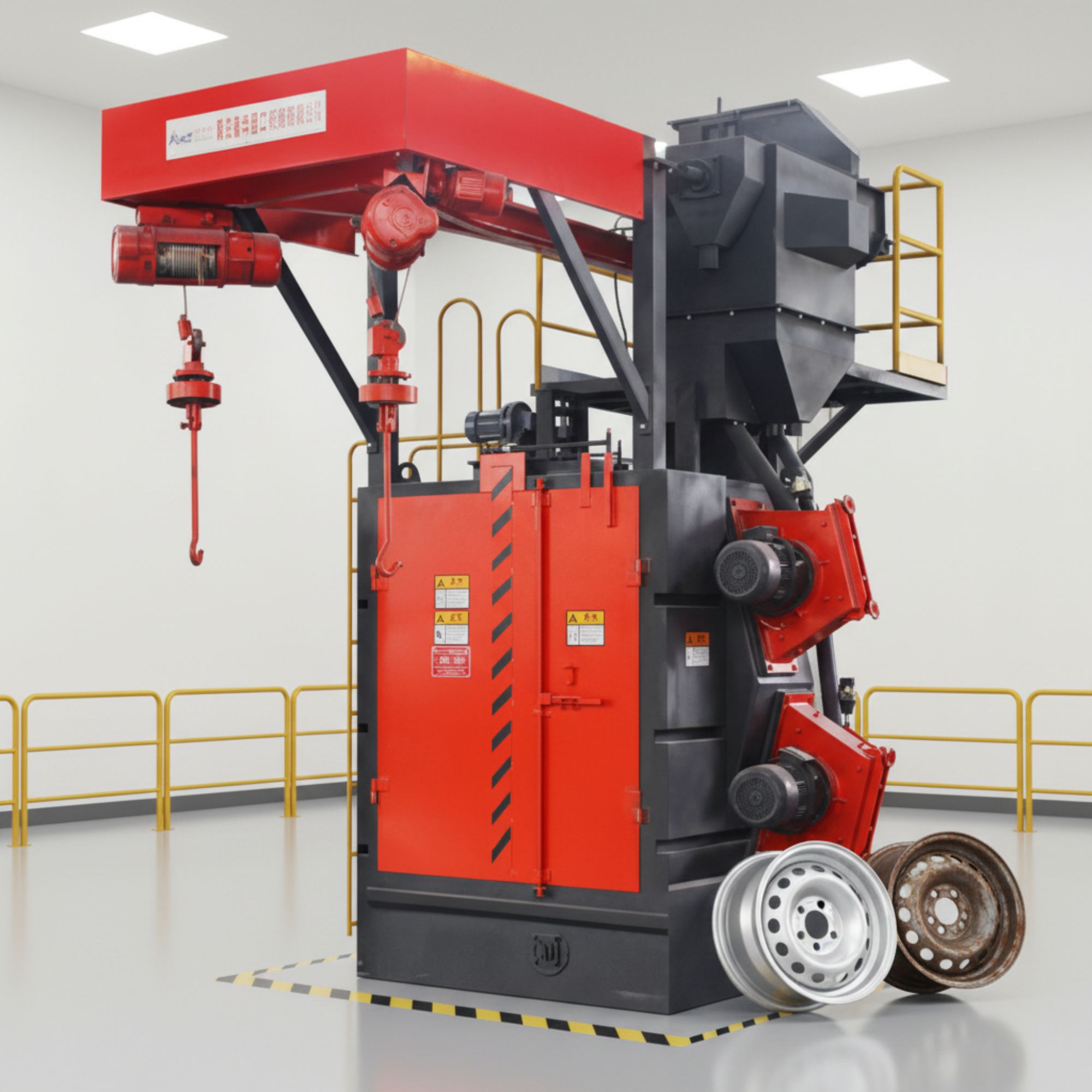
When surface preparation demands precision, off-the-shelf shot blasting machines often fall short. At PuHua, we believe your cleaning process deserves more than a one-size-fits-all approach. This custom double hook shot blasting machine is engineered around your specific workflow—whether that means handling irregular components, maximizing throughput in tight spaces, or meeting strict surface profile standards. Here’s how a tailored solution from PuHua can transform your surface preparation from a bottleneck into a competitive advantage.
Matching Hook Spacing to Your Rack Dimensions
Getting the hook spacing right starts with measuring the actual distance between your rack's upright slots, not the overall frame width. Most racks fall into standard increments, but powder-coated or welded models can drift by a few millimeters, so a quick check with a tape measure saves you from buying hooks that either jam sideways or leave a sloppy gap. Once you know the slot pitch, pick a hook length that lets each hanging item breathe—usually 2 to 4 inches of clear space between neighboring hooks keeps bulky coats, tool bags, or retail merchandise from tangling while still using the vertical rail efficiently.
For deeper shelves or racks with a back panel, extend that spacing logic to the hook's reach. A shallow rack with tight spacing works fine for slim hangers and cables, but if you are storing power tools or thick winter gear, increase the gap or switch to staggered double hooks so items hang at slightly different depths. This small adjustment prevents the all-too-common problem of every hook being occupied but half the rail being unusable because adjacent items press into each other.
Finally, match the hook's throat opening to the rack's wire or slot thickness. A hook that is too narrow will scrape the finish or refuse to seat fully, while an oversized throat lets the hook tilt under load and eventually deform the rail. Test one hook with a realistic weight before filling the whole rack—if it shifts or clicks when you pull down, adjust your spacing or add a rubber shim to lock the fit. This kind of fine-tuning keeps the rack looking clean and prevents the slow sag that comes from uneven load distribution.
The Dual-Hook Rotation That Reaches Hidden Faces
Most facial tools spin on a single axis, so they flatten out when you try to follow the inward curve near the nose or the tucked plane under the jaw. The dual-hook rotation changes that by letting two independently pivoting heads swing around their own arcs. Instead of forcing your wrist into an awkward tilt, the hooks settle into the hollows and keep rotating while the contact angle adjusts itself.
What makes the reach feel different is the counter-rotation between the two hooks. As one hook pulls along the contour, the other braces against the opposite edge, which stops the tool from skipping sideways. You can guide it slowly along the hidden fold beside the ear or under the brow ridge, and the heads stay engaged without extra hand pressure.
That consistency shows up most in areas where a standard roller tends to lift off: the crease around the nostrils, the upper cheek hollow, and the soft pocket near the temple. Because the hooks don't lose contact, the treatment isn't just wider in coverage but steadier in depth.
Setting the Right Blast Angle for Recessed Surfaces
Getting the blast angle right on recessed surfaces is less about brute force and more about geometry. Point the nozzle straight at a pocket or corner and you'll likely flatten the abrasive against the bottom while the side walls stay untouched. A slight tilt—usually 10 to 30 degrees off perpendicular—lets the media glance into the recess and sweep across the hidden faces. The exact angle depends on depth and width: deeper, narrower cavities need a steeper entry angle to avoid the nozzle body blocking the stream, while wide, shallow depressions respond better to a shallow sweep that scours the whole contour.
One trick that often gets overlooked is keeping the nozzle moving along the rim of the recess rather than hovering over the center. As you orbit the edge, the changing angle naturally hits both the floor and the vertical walls without you having to constantly re-aim. Watch the rebound pattern: if abrasive is bouncing straight back at you, you're too perpendicular. If dust builds up inside the cavity and visibility drops, you've gone too shallow and the media isn't escaping. That feedback loop matters more than any preset number.
Also pay attention to how the blast angle interacts with nozzle distance. Pulling the nozzle back a few inches gives the stream room to fan out, which can help cover a recessed floor even at a moderate angle. But for tight corners, a closer nozzle with a controlled, obliquely aimed stream often works better than a wider fan that just scatters off surrounding edges. Test on a scrap piece if you can—angle adjustments on recessed geometry rarely translate one-to-one from flat surface experience.
What a Custom Control Panel Changes for Your Operators
Most off-the-shelf panels make operators jump between screens just to compare one pump's pressure with another. A custom panel brings those numbers together on a single view, arranged the way your team already talks about the process. It removes the busywork of navigation and gives operators back the time they need to actually run the line.
When controls sit where operators expect them, the whole shift feels less reactive. A startup sequence can flow left to right, shutdown controls can sit in a group, and alarms can live in one corner with colors that match their severity. This means fewer missed steps, less dependence on memory, and a shorter learning curve for new hires. Even small custom touches, like a dedicated button for a frequently bypassed interlock, make everyday operations noticeably smoother.
Custom panels also change how fast your team catches problems. Instead of reading a generic alarm list, operators see a pressure trend right next to the pump it belongs to, so drift is noticeable before it becomes a shutdown. Status lights and readouts can mirror the physical layout of the plant, turning the panel into a live map of what is happening. That visual connection cuts response time and gives operators more confidence in their decisions.
Adapting the Machine Frame to Existing Floor Loads
Before a new machine is placed, the existing floor slab rarely matches the load assumptions in the original drawings. Checking the actual reinforcement layout and concrete condition often reveals hidden weak spots near old trenches or repaired cracks. Adapting the machine frame starts with mapping these areas and, where possible, shifting anchor points away from them rather than assuming uniform support.
A practical way to reduce local pressure is to widen the frame's base plates and add intermediate steel spreader beams beneath the main load-bearing members. This shifts the concentrated reaction into a broader footprint, which can bring a borderline slab back within safe working limits. In some plants, installing a continuous grout bed under the entire frame has proven more effective than isolated pads, especially when the machine runs with frequent starts and stops.
Vibration behavior changes once the support stiffness is altered. Tightening anchor bolts alone will not fix a floor that flexes under dynamic loads. It is often necessary to brace the frame diagonally against adjacent columns or to introduce tuned mass dampers at high-motion points. A short trial run under partial load can reveal whether the adapted frame actually reduces transmitted forces before full production begins.
Abrasive Recovery That Keeps Working When Others Clog
Most recovery systems promise smooth operation until the first batch of fine dust hits the filters. Then the real slowdown begins. This unit takes a different route: its abrasive path stays open through pulses, vibration, or a simple mechanical clearing action that doesn't wait for a full blockage to trigger. You can hear the difference – the motor pitch stays steady, and the media keeps flowing instead of piling up in dead zones.
The trick isn't one big feature but a series of small design choices that add up. Internal baffles are angled to shed debris before it settles, and the pickup throat has a wider taper than typical models, so larger particles pass through rather than bridging across the opening. Even the hopper walls have a textured finish that breaks the suction bond that usually causes clumping. Field tests on heavily contaminated steel shot and glass bead mixes show no loss of feed rate after six hours of continuous blasting.
Operators often notice the difference most when switching from a competitor's unit. There's no need to stop mid-job, open the cabinet, and dig out a compacted mass with a rod. The recovery stays consistent even with high humidity or oily residue present, which usually turns other systems into a solid plug within an hour. For shops that run long cycles or handle mixed media, that reliability translates directly to fewer interruptions and less time spent on maintenance.
FAQ
Customization goes far beyond adjusting the physical size. It involves tailoring every parameter to your specific workpieces, production rhythm, and workshop layout. That includes hook load capacity, the number of blast wheels, abrasive recycling setup, and dust extraction airflow, so the machine behaves like it was built for your floor.
With two hooks operating alternately, one side can be loaded and unloaded while the other is actively blasting. This overlap cuts idle time dramatically, which is particularly useful for high-volume batches of small to medium castings, forgings, or weldments.
The design works well for castings, forgings, welded structures, and heat-treated parts that need rust, scale, or old coatings removed. Complex shapes with recesses or internal cavities benefit too, because the blast angle and hook rotation can be adjusted to reach difficult areas.
Yes. You can control blast wheel speed with a variable frequency drive, select a finer abrasive type and size, reduce the blast cycle time, and change the angle of the blast stream. This prevents warping or surface damage on thin-walled or precision components.
Routine checks on blast wheel blades and liners are essential, along with removing broken abrasive and dust from the recycling system. Filter cartridges should be inspected and cleaned, and the hook rotation and travel mechanisms need regular lubrication. Small consistent maintenance prevents unplanned downtime.
A well-designed dust collector does more than keep the air clean. It stops fine particles from settling back onto the workpiece, which would hurt coating adhesion later. It also reduces abrasive contamination, so the shot lasts longer and cuts better.
Absolutely. Loading and unloading can be arranged with monorail sections, roller conveyors, or even robot handling. The inlet and outlet heights, direction of part travel, and cycle timing can all be matched to your current line, so the machine becomes a natural extension rather than a bottleneck.
Key items include interlocked doors or light curtains that stop operation when opened, emergency stop buttons at all operator stations, guarding around abrasive storage, explosion relief panels if there is any chance of combustible dust, and a lockout/tagout procedure for maintenance access.
Conclusion
A double hook shot blasting machine only earns its place on your floor when every dimension, rotation, and recovery path is shaped around the parts you actually run. Matching hook spacing to your existing rack layout removes the need for awkward rehanging or half-loaded cycles, while the dual-hook rotation isn't just a novelty—it throws abrasive into recessed pockets and behind flanges that a single pass would never touch. Setting the blast angle for those recessed surfaces matters more than raw turbine power; a few degrees of adjustment can mean the difference between a clean anchor profile and a shadowed area that fails coating adhesion later.
Operators notice the difference a custom control panel makes long before production metrics catch up. Instead of digging through generic menus, they get cycle starts tied to the actual rack code, fault readouts in plain language, and the ability to adjust dwell time without calling maintenance. Underneath that, the machine frame can be tailored to the floor's existing load limits—no expensive foundation cutting, no guesswork about deflection—so installation doesn't become a civil engineering project. And when abrasive recovery is designed with wider drop-outs and a sweep that tolerates fine dust and tramp metal, the system keeps running through the kind of contamination that clogs standard reclaimers. That's what a custom solution really buys: less time fighting the machine, more time blasting parts that come out right the first time.
Contact Us
Contact Person: Bruce
Email: [email protected]
Tel/WhatsApp: +86 15166629468
Website: https://www.povalchina.com/