

Corrugated Box Die Making Creasing Cutting Machine Factory Showcases Precision Engineering for Packaging Efficiency
2026-11-16
In the high-speed world of corrugated packaging, a weak crease or sloppy cut can stall an entire production line. That's why ADEWO has built its reputation on precision engineering—its die making, creasing, and cutting machines are engineered in-house to deliver repeatable accuracy and faster throughput. This factory showcase peels back the curtain on how ADEWO turns tight tolerances into packaging efficiency that box makers can actually feel on the bottom line.
What Happens When Crease Depth Is Off by a Millimeter
A single millimeter might seem negligible on a ruler, but in the context of a crease, it can alter the entire structural personality of a material. Paper that is meant to fold flat will suddenly resist, creating a bulge that throws off the alignment of every subsequent panel. In packaging design, that tiny discrepancy can mean the difference between a box that snaps together cleanly and one that requires force, leaving stress marks along the fold line.
The issue becomes more pronounced with thicker stocks or laminated surfaces, where the crease needs to account for the material's own memory. Too shallow, and the fibers on the outer layer stretch instead of compressing, causing the surface to crack or whiten. Too deep, and the structural integrity drops, making the piece prone to tearing after just a few cycles of opening and closing. Even consistent error across a run is often less damaging than variation, because slight shifts from piece to piece make automated assembly guesswork.
Experienced finishers often rely on a combination of pressure, channel width, and the directional grain of the substrate to hit that exact depth. When it's off, the failure isn't always immediate—sometimes it shows up as fatigue weeks later, or as a hinge that feels spongy rather than crisp. The lesson is that precision here isn't about aesthetics alone; it's about honoring the mechanical contract between the material and the fold it's asked to perform.
Inside the Factory: How Cutting Dies Get Their Edge
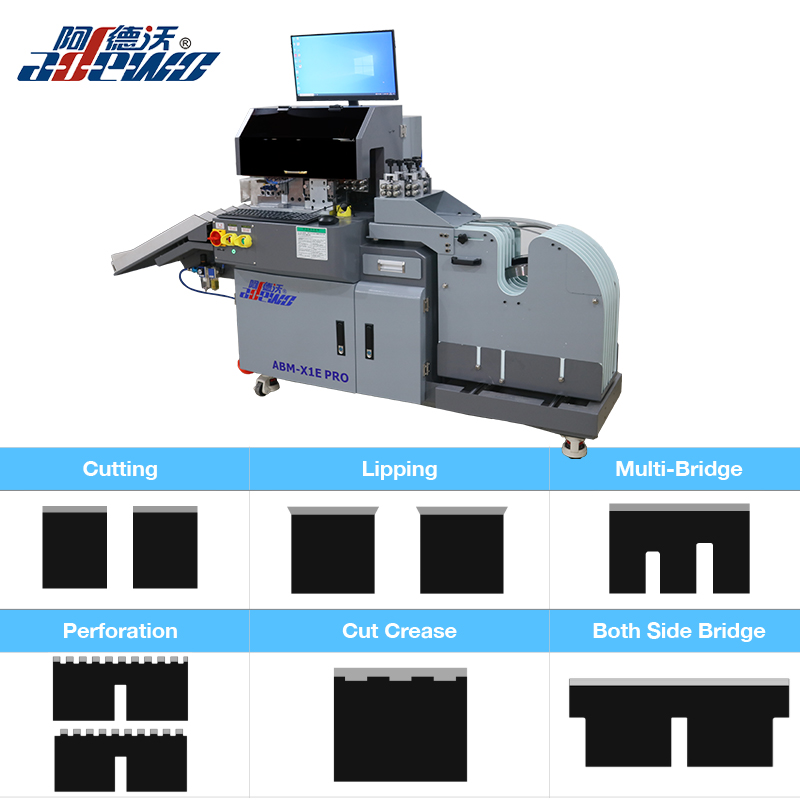
Walk onto the floor of a die-making facility and you'll notice the raw steel blanks stacked near the cutting stations. These blanks start out relatively soft, but they won't stay that way for long. After the basic outline is machined, each piece heads into a furnace where it's heated until it glows a dull cherry red, then quenched in oil. That violent temperature drop locks the crystalline structure into a harder state—this is where the edge begins to earn its bite.
Once hardened, the dies move to the grinding department. Here, operators work with surface grinders and cylindrical grinders, shaping the bevels that will eventually slice through paper, leather, or thin metal. It's a slow, deliberate process: the abrasive wheel makes pass after pass, removing only a few thousandths of an inch at a time. A skilled hand constantly checks the angle with a protractor or a laser gauge, adjusting the magnetic chuck until the geometry is dead-on.
The final stage often happens at a bench under bright task lighting. A veteran toolmaker may hand-strop the cutting edges with diamond paste, then test the die on a scrap of material. If the cut is clean and requires minimal pressure, the die gets signed off. If not, it goes back for a touch-up. That blend of automated grinding and human judgment is what separates a mediocre cutting die from one that holds its edge through thousands of cycles.
Why Faster Creasing Doesn't Have to Mean More Crushed Board
The link between creasing speed and crushed board often comes down to how force is delivered at the point of contact. A blunt, high-velocity hit compresses fibers before they have time to shift into the crease groove, leaving a flattened, weakened line. But if the creasing profile is designed to roll the board into the channel rather than stamp it, faster movement simply completes the same controlled fold in less time. The board sees less peak pressure, not more.
Tooling geometry plays a bigger role than line speed. Narrower, rounded crease rules paired with the right matrix depth allow fibers to delaminate cleanly along the intended line. When that alignment is correct, increasing machine speed doesn't change the fundamental mechanics—it just shortens the cycle. Many operators mistake higher throughput for added stress because they're comparing different tooling setups, not the same setup at different speeds.
The real culprit in most crushed crease problems is variability, not velocity. Boards with inconsistent moisture, caliper, or recycled content react differently to fast compression. Controlling those inputs, and adjusting the creasing gap in real time, does more to protect fiber structure than slowing the whole line down. Speed then becomes a matter of throughput, not a tradeoff against board quality.
A Simple Upgrade That Cut Die Wear on a High-Volume Line
The old carbide inserts were chewing through their corners every forty-eight hours, forcing two unscheduled line stops per week just to swap them out. Nobody wanted to redesign the die or re-engineer the stamping sequence, so the maintenance team tried something almost laughably basic: they rotated the insert orientation by fifteen degrees and added a shallow radius to the entry edge instead of the usual sharp break. That single geometry tweak meant the contact patch moved across a fresh section of carbide instead of hammering the same spot.
Within the first month, die wear dropped enough that inserts lasted nine shifts instead of six. The real kicker came from the reduction in micro-chipping along the shear face, which used to cause burrs that downstream deburring stations had to fight. By giving the metal a slightly longer, smoother slide into the cut zone, the upgrade also lowered peak tonnage by about eight percent, which took pressure off the press bearings and let the whole line run closer to its rated speed without the usual shudder.
What made the fix stick wasn't the cleverness of the angle or the radius; it was the fact that any operator could repeat it on the next tooling change without special fixtures or a CNC rework. The team documented the change on a single laminated card taped to the die cart, and that was enough. Now when a new insert batch arrives, the first thing they check is the entry edge profile, not the hardness certificate.
Matching Die Pressure to Flute Profiles for Cleaner Folds
The way a corrugated sheet folds depends heavily on the flute geometry sitting between the liners. A-flute’s taller profile absorbs more bending force before the liner creases, while E-flute responds to much lighter pressure. Setting one die pressure for every job almost guarantees split scores on heavy board or weak, springy fold lines on micro-flute. Start by measuring the actual caliper and flute height at the score location, not just the nominal board grade.
Once the flute height is known, match the scoring rule width and the matrix channel accordingly. For B- and C-flute, a wider female channel with a slightly deeper penetration keeps the inner flute from collapsing under the die. For EB or BC double-wall, step the pressure up in small increments and fold a sample after each adjustment. A clean fold should open to 180 degrees without the surface liner cracking or the inner flute crushing into a hard ridge.
Even with the right static setting, pressure drift across a long run changes fold quality. Check the ends of the die board and areas near nicks or slots, where pressure distribution tends to fall off. If your press allows pre-creasing or kiss-cutting before the main score, use that to compress the flute gradually rather than forcing the full depth in one hit. The goal is a fold line that bends where you intend, without telegraphing through the printed face.
How Precision Tooling Shortens Changeover on Short Runs
Short-run production thrives on flexibility, but every minute lost to tool changes eats directly into margins. Precision tooling attacks this problem from the setup side. Instead of fumbling with generic holders and re-indicating each cutter, shops use pre-set tool assemblies that drop into the spindle with repeatable accuracy. A tool probe or offline presetter records exact length and diameter offsets, so the CNC control pulls the right numbers without a manual touch-off. That single shift in workflow often cuts changeover from twenty minutes down to five.
The real gain comes from standardizing the interface. Quick-change toolholders, zero-point clamping plates, and modular tool bodies all lock into place with micron-level repeatability. A lathe turret or machining center can swap between a boring bar, a threading insert, and a grooving tool without realigning the workpiece. Operators no longer shim, tap, or guess—each insert seat and clamping wedge is machined to hold the cutting edge in the same position every time. This consistency means the first part after a changeover is often within tolerance, not a scrap test piece.
Precision tooling also shortens the invisible part of changeover: measurement and correction. With tool presetting data fed directly into the control, the machine knows exactly where the tip sits before the spindle even spins. Offsets update automatically, reducing the need for trial cuts and probing cycles. On short runs where you might switch jobs three or four times a shift, those saved minutes compound quickly. A shop that used to fight to keep machines running 60% of the time can push past 80%—not by working faster, but by removing the slop from every setup.
FAQ
The factory uses CNC-guided tooling and laser-calibrated alignment, holding cutting tolerances within a fraction of a millimeter. Every crease and cut lands exactly where designed, which reduces material waste and keeps box assembly smooth.
By combining cutting and creasing in a single pass, the machine eliminates extra handling steps. Operators can run higher volumes with fewer stops for adjustments, and the precise creases make folding faster downstream.
Yes, the factory equips the machine with automatic thickness sensing and adjustable pressure control. It adapts to single-wall, double-wall, and even triple-wall board while maintaining clean cuts and sharp creases.
Routine maintenance is straightforward: daily cleaning of cutting dies, weekly lubrication of guide rails, and monthly checks on blade sharpness and alignment. The factory also provides remote diagnostics to flag potential issues early.
Absolutely. They work from CAD files or physical samples and can produce custom dies for retail-ready packaging, heavy-duty shipping boxes, or unusual structural designs. Prototyping is done in-house to verify crease and cut accuracy before full production.
Less scrap from misaligned cuts, fewer rejected boxes from weak creases, and faster setup times all lower per-unit costs. The machine's durable construction also means less downtime for repairs.
It includes dual-hand controls, light curtains around the cutting zone, and an emergency stop on both sides. Guards prevent access to moving parts, and the control system monitors for irregular vibrations that could indicate a jam.
They provide on-site training for operators, a library of video tutorials, and a hotline for troubleshooting. Spare parts are stocked locally for fast shipping, and software updates are rolled out periodically to improve performance.
Conclusion
When you walk through a corrugated box die making and creasing cutting machine factory, the first thing that strikes you is how a single millimeter can make or break a run. Crease depth off by that tiny amount turns clean folds into cracked board, yet the machines here hold tolerances that seem almost obsessive. Operators talk about dialing pressure to match flute profiles—A-flute, C-flute, B-flute—each one demanding a different touch so the liners don't crush. And the cutting dies themselves? They're sharpened and set with a focus on edge retention that feels less like maintenance and more like craftsmanship. A simple upgrade on a high-volume line, something as unglamorous as a harder anvil or a micro-adjustable creasing rule, cut die wear dramatically without slowing output. That's the quiet engineering you don't see in brochures.
The same attention shows up in changeover. Short runs used to eat hours swapping dies and resetting pressure, but precision tooling with quick-lock systems and pre-set depth stops has shrunk that to minutes. It's not magic—it's geometry and repeatability. Faster creasing no longer means more crushed board because the feed, the dwell, and the release are synchronized to the flute structure, not just the sheet thickness. You see this mentality in every corner: reduce variation, respect the material, and packaging efficiency stops being a slogan. It becomes a measurable fact on the factory floor, where a box that folds cleanly on the first pass is worth more than any spec sheet.
Contact Us
Contact Person: KAELYN LEE
Email: [email protected]
Tel/WhatsApp: +86 15012673758
Website: https://www.china-adewo.com