

China Solar Pillar Light Choices That Elevate Your Outdoor Space
2026-11-16
When dusk settles, outdoor lighting stops being decorative and starts defining the space. China solar pillar light choices have quietly become one of the easiest ways to upgrade that definition—especially if you look beyond the generic listings. SRS has been refining this category with fixtures that balance clean design, weather resistance, and useful light output. If your current pillars feel more like afterthoughts than features, a few targeted swaps can change the entire nighttime view.
Where the Housing Disappears and the Glow Takes Over
The shift begins quietly: a corner storefront's metal grille comes down for the last time, a block of brick walk-ups is scaffolded and stripped, and then one morning the familiar outline is simply gone. What replaces it rarely announces itself with masonry or a new roofline. Instead, the glow arrives first, a wash of low amber light spilling across bare concrete, a soft halo behind frosted glass that never quite reveals what hums inside. These are the buildings that don't read as housing at all, no mailboxes, no curtains, no bicycles chained to railings, just humming vents and the faint scent of warm dust. They are counted differently on municipal ledgers, if they are counted at all.
At night the streetscape reorganizes around these new magnets. The old rhythms of porch lights and stairwell timers give way to a colder, steadier radiance, windowless walls glowing for machines rather than tenants. Walk past and you might feel the low vibration through your shoes, or catch a sliver of moving air that smells of hot metal and sealed rooms. The glow doesn't flicker with a family's argument or a late-night kitchen; it holds its breath in perfect, uniform intensity. That is how you know the housing has truly disappeared, when the light no longer behaves like someone is home.
Eventually the surrounding lots go quiet in a new way. Fewer names on buzzers, fewer shadows crossing blinds. What stays is a grid of amber rectangles floating in the dark, each one a small engine of storage and calculation, indifferent to the people who once leaned out those windows to check the weather. The neighborhood doesn't empty all at once, but it changes texture, becoming a place you pass through rather than a place you inhabit. And the glow, patient and even, takes over the job that light used to do: it tells you something is alive here, just not anyone you will ever meet.
The Finish You Notice Up Close, Not Just in Photos
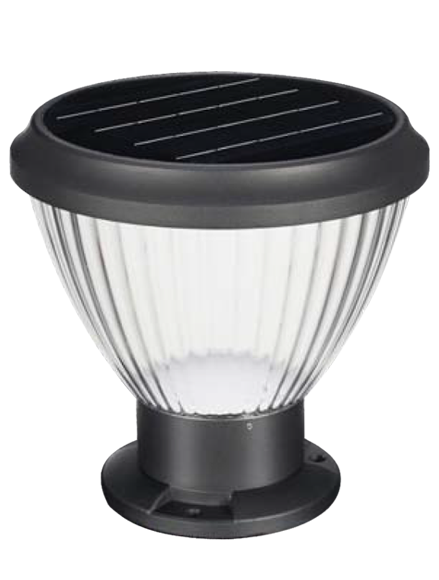
Most product photos flatten the surface into something that simply looks good, but the real test happens when your fingers brush against the edge and trace the seam. The finish here has a faint drag to it, like a stone worn smooth by water rather than a slick plastic shell. It catches light in small, irregular ways, so the tone shifts as you tilt it instead of staying flat and uniform.
Up close, the corners soften without looking rounded off, and the transition between panels feels almost invisible. There is no raised lip, no sharp mold line, and no speckled texture that betrays a rushed spray coat. Instead, the surface absorbs enough light to keep reflections from turning harsh, which makes the whole thing feel quieter and more deliberate in the hand than it does in a wide shot.
After a few weeks of daily handling, that close-up impression still holds. Fingerprints do not pool into obvious smudges, and small scuffs tend to blend into the grain instead of standing out. The color sits deep in the material rather than sitting on top, so the edges that get touched most keep the same depth as the untouched areas. That kind of consistency is hard to photograph, but it is the first thing you notice when you pick it up again.
Placement That Guides the Eye Instead of Shouting
There is a quiet difference between a sign that demands attention and one that simply knows where you are already looking. Good placement respects the natural sweep of a room, the pause at a doorway, the hand reaching for a shelf. It works with those rhythms rather than interrupting them. A small label tucked near a light switch, a number painted low on a stair riser, a directional cue at the exact moment of hesitation—these feel less like announcements and more like helpful whispers.
When information sits at the point of decision, nobody has to search for it or be startled into noticing. The eye lands there because the context has already brought it there. A menu placed at the ordering counter, a room name just above the door handle, a caution note on the lid before it opens—each one earns a glance without raising its voice. That is the craft: not competing with the space, but completing it.
Over time, people stop noticing the placement itself and just feel that the place is easy to move through. The guidance becomes part of the furniture, almost invisible, but take it away and the room gets harder to read. That is the sign of placement done well—it never interrupts, yet its absence would leave you turning in circles.
A Color Temperature for Every Kind of Evening
Evening light rarely arrives just once. It shifts through a sequence of tones, each small enough to miss if you are not paying attention. The first is a high, blue-leaning clarity that still remembers the afternoon. As the sun lowers, that blue thins into something closer to slate, and shadows lose their hard edges. The air itself seems to thicken, holding color differently than it did an hour before.
Then comes the amber band, brief and flush, when windows and pale walls catch a warmth that feels borrowed. It is not simply golden hour; it is the moment when coolness and heat overlap, and a room can hold both at once. If you move from one side of a street to the other, the temperature of the light changes in a single step. This is what makes evening hard to name: it is not one atmosphere but several, arranged in a quiet sequence.
Later, when the blue returns, it is deeper and less transparent. This is the blue of afterglow, the one that makes white shirts look violet and green leaves turn almost black. It does not ask to be photographed so much as felt. By then the day has let go of its own colors, and whatever remains in the room is what you bring to it.
The Hidden Gasket and Other Small Signs of Quality
Most people never see the gasket tucked between two machined surfaces, but that thin strip of material often tells you more about a product than any spec sheet. It sits there quietly, absorbing pressure, heat, and vibration. When a company chooses a slightly denser compound or trims the edge with a tighter tolerance, it rarely shows up in the marketing copy. It shows up years later, when the seal still holds and the casing hasn't warped.
The same logic applies to the small cues we tend to overlook: the weight of a knob, the click of a latch, the way a panel gap stays even from one unit to the next. These are not accidental. They come from decisions made far from the spotlight, usually by people who know that consistency is a form of respect for the buyer. A hidden gasket is just one example, but it belongs to a whole family of quiet signals that separate careful work from quick work.
Quality, in this sense, is not a feature to be announced. It is a habit that leaks into the parts nobody photographs. If you want to understand how well something is made, ignore the polished surface for a moment and look at the places where attention would be easy to skip. That is where the real grade is set.
From the Driveway Edge to the Garden Wall
The strip alongside the driveway rarely gets much attention, but it shapes the first impression far more than the deep borders do. I prefer to keep that edge low and loose, using plants that can handle reflected heat and the occasional splash of gravel. Catmint, blue fescue, and hardy geranium form a drifting ribbon that makes the asphalt feel less abrupt without turning the space into a fussy edging project.
As that planting moves toward the garden wall, the height and density shift. The wall reads better when something soft leans against its base or grows just tall enough to break the hard line. Lavender, salvia, or a clump of feather reed grass can sit there without swallowing the stone. Repeating one texture from the driveway edge up to the wall ties the whole stretch together, so it feels like one continuous border rather than separate strips that happen to share a boundary.
FAQ
Confirm the housing material, battery type, waterproof rating, and LED color temperature instead of judging by appearance alone. Powder-coated aluminum, a replaceable battery, and IP65 sealing are practical signs the fixture can handle long-term outdoor use.
Look beyond the rating label for sealed seams, corrosion-resistant aluminum or stainless housing, and a battery compartment that keeps moisture out. Those details help the light keep working through heavy rain, frost, and strong sun without cracking or fogging.
A height around 50 to 70 cm works for most paths, and spacing of 1.8 to 2.5 meters gives a soft rhythm. If the pillar also borders a driveway, go slightly taller and brighter so it reads as a boundary marker rather than a decorative dot.
Models with monocrystalline panels, larger battery capacity, and smart charge controllers recover faster and hold a steadier glow. In overcast climates, prioritize battery size over panel wattage because that stored power matters more day to day.
Shaded spots from walls, trees, or tall shrubs reduce charging, placing units too close together creates harsh light pooling, and mounting bases without drainage traps moisture. Checking sun exposure and water runoff before install makes a visible difference over time.
Choose warm white LEDs around 2700K to 3000K and look for frosted, ribbed, or textured diffusers. Those details soften the beam and make a patio or garden feel more inviting than bare cool-white diodes.
Powder-coated aluminum and marine-grade stainless with UV-stable paint generally resist fading, chalking, and rust better than untreated plastic or thin painted steel. In coastal or very sunny areas, those materials are worth the extra cost.
Clean cylindrical or square silhouettes in black, bronze, or graphite blend well across most architectural styles. The key is a simple shape that avoids overly ornate or overly futuristic details.
Conclusion
The first thing you notice with the better solar pillar lights coming out of China is what isn't there. The housing steps back, the cap and lens do the work, and after dark the post reads as a clean bar of light rather than a plastic fixture bolted to stone. That shift changes how a driveway or walkway feels, because the glow becomes the architectural detail, not the hardware. Up close, the finish holds up too. Powder coating has a fine, almost matte grain that doesn't glare under porch lights, and edges are rolled or trimmed so the metal doesn't show raw cuts. You won't see the gasket until you look for it, but a full lip seal around the lens and a battery compartment that closes without flexing tell you these are not built just for a quick first impression.
Placement is where the range gets interesting. Instead of spacing identical posts at even intervals, a short warm-white model can mark the curve of a garden bed, while a taller cool-white option lights the straight run from the driveway edge to the side gate. That mix of color temperature is useful, not decorative, because a 2700K post makes an evening patio feel settled, while 4000K gives a crisper sightline near steps or bins. The best choices read as small outdoor lamps rather than solar gadgets, and they work quietly from the first path light to the last wall cap, keeping the same finish and the same low, even glow across the whole outdoor space.
Contact Us
Contact Person: kitty
Email: [email protected]
Tel/WhatsApp: +8618676039824
Website: https://www.srssolargroup.com/