

China Prefabricated Fence Mold: Key Considerations for Quality and Cost
2026-11-02
Buying a prefabricated fence mold from China often feels like a gamble: you can find rock-bottom prices, but will the mold survive hundreds of pours without warping or surface defects? The real challenge isn't just comparing quotes—it's understanding how steel grade, heat treatment, and machining tolerances quietly drive your long-term cost per panel. This is where LugongMachinery takes a different approach, focusing on the engineering details that separate a cheap mold from a productive asset. In this post, we break down the key considerations for quality and cost, so you can avoid the traps that plague many international buyers.
What Actually Determines a Fence Mold's Working Life
It's rarely a single factor that ends a fence mold. The biggest determinant is how the mold is stored and handled between pours. Moisture trapped in crevices, rough demolding, or stacking molds under direct sun can warp the cavities faster than the actual casting cycles. A mold that is cleaned gently and kept in a climate-controlled shed will often outlast a technically superior mold left outside in the elements.
The material formulation also matters, but not in the way most assume. Polyurethane molds with higher durometer ratings resist tearing, yet they become brittle in cold weather; a slightly softer mold may flex instead of crack. Abrasion from concrete with sharp or large aggregates shortens working life more than the total number of pours. So the aggregate selection in your mix is a hidden determinant that gets overlooked.
Finally, release agent choice and application consistency play an underrated role. Heavy buildup changes the surface tension and leads to more forceful demolding, which stresses corners and fine details. A mold used daily with a thin, even release film can survive hundreds more cycles than one used weekly with sporadic coating.
The Role of Steel Grade in Daily Wear and Tear
The grade of steel used in everyday items quietly determines how they handle constant contact with skin, keys, coins, and moisture. A lower-grade stainless can develop faint hairline scratches almost immediately after leaving the box, while a higher-chromium alloy tends to hold its surface longer because the passive oxide film regenerates quickly when abraded. This isn't about dramatic failure; it's the slow accumulation of small marks and dull patches that separates a piece that ages well from one that looks tired within months.
Austenitic grades like 304 and 316 are common in watches, jewelry, and kitchen tools for good reason. The nickel and chromium content gives them a stable, non-magnetic structure that resists both rust and the kind of pitting that appears after exposure to salt or acidic sweat. The addition of molybdenum in 316 pushes that resistance further, especially near the coast or in humid climates. Yet these softer grades scratch more easily than hardened martensitic steels, which means a high hardness number alone doesn't predict how a daily-use item will look after a year.
Finish matters just as much as the alloy itself. A brushed or matte surface hides micro-abrasions far better than a mirror polish, so even a mid-grade steel can look cleaner with daily handling if the texture is chosen thoughtfully. When evaluating wear and tear, the real question is whether the steel maintains its appearance under repeated small impacts, not whether it survives a single extreme test. That's why a well-chosen grade paired with a practical finish often outperforms a harder but less corrosion-resistant option in real-world conditions.
Where Production Tolerances Show Up in Finished Panels
Production tolerances are rarely visible on a single panel viewed straight on, but they become obvious once panels are placed side by side or under raking light. Thickness variation is one of the first things to show up—even panels cut from the same sheet can differ by a few tenths of a millimeter between center and edge. When two panels meet at a seam, that small difference creates a subtle step that catches a fingernail or casts a thin shadow.
Edge straightness and hole placement are equally telling. A blade that has been cutting all morning produces slightly different edge profiles than a fresh one, and internal stresses released during cutting can bow a panel by a millimeter or more over its length. In a row of cabinet doors, these deviations accumulate into uneven gaps that are most noticeable on dark, glossy finishes. Predrilled holes for hinges or shelf pins also drift from their intended coordinates—often by less than half a millimeter—but when hardware is mounted, that tiny offset forces a door to hang crooked or a drawer slide to bind.
Surface finish reveals the smallest tolerances of all. Sanding pressure, coating thickness, and even the direction of the final pass leave micro-waves that are invisible head-on but appear as gentle ripples in oblique light. On large wall panels or full-height doors, these subtle undulations become a visual rhythm that no amount of polishing can fully erase, marking the boundary between mass production and truly precision work.
Cost Factors That Go Beyond the Initial Quote
The price on the estimate is rarely the final number. Taxes, delivery fees, and rush charges can stack up quickly, especially if your project timeline shifts. Vendors often add a surcharge for weekend deliveries or last-minute changes, and these extras don't always show up in the first conversation.
Labor costs are another hidden layer. A quote might assume standard installation conditions, but if your site has narrow doorways, limited power access, or uneven flooring, the crew needs more time. That overtime or specialized equipment rental gets billed back to you, sometimes without a clear breakdown until the invoice arrives.
Finally, think about maintenance and consumables. A low upfront price can mask higher running costs—replacement parts, calibration, or software licenses that renew annually. Ask for a total cost of ownership estimate before signing, and don't be afraid to push for a clause that caps unexpected overage fees.
Why Chinese Mold Suppliers Vary So Much in Pricing
Walk into any sourcing conversation about injection molds, and you'll quickly hear numbers that seem pulled from different planets. One Chinese supplier quotes $8,000 for a tool that another prices at $35,000. The gap isn't random, and it rarely comes down to simple greed or generosity. Much of it traces back to what the supplier actually builds into the mold before steel is ever cut. Some shops start with raw material that barely meets the chemical composition on paper, while others insist on certified, traceable steel from specific mills. The difference in metal quality alone can shift the final quote by a third or more, and that's before any machining happens.
Beyond the material itself, the way a supplier interprets the project scope changes everything. A low quote might assume a mold that runs 50,000 shots with regular hand-finishing and occasional pin replacements. A higher quote often includes hardened cavities, tighter tolerances, better cooling channel layouts, and a design review process that catches warpage or sink marks before the first trial. Some factories quote only the core and cavity, leaving the mold base, hot runner, or ejection system for later add-ons. Others bundle all of it, plus a documented trial report and dimensional inspection data. What looks like a price difference is frequently a difference in what's actually promised.
Then there's the hidden layer of overhead and engineering depth. A small workshop with two CNC machines and no in-house design team can offer a tempting number because they're not paying for simulation software, a metrology lab, or an English-speaking project manager. That doesn't mean the mold will fail, but troubleshooting falls more on the buyer. A supplier with a dedicated process engineer, mold flow analysis, and post-trial adjustments baked into the quote will naturally cost more. Neither approach is universally wrong; it depends on the part's complexity and the buyer's tolerance for remote problem-solving. The real takeaway is that comparing Chinese mold quotes line by line is like comparing a bicycle to a motorcycle because they both have two wheels.
Getting Consistent Concrete Release Without Extra Labor
Most inconsistent release problems start long before the pour. Instead of adding more release agent on site, switch to a chemically reactive barrier that bonds to the form face. This type of coating stays put during vibration and consolidation, so you get a clean break without reapplication between cycles. It also reduces buildup that normally forces crews to scrape and re-oil forms every few pours.
Temperature swings and form material changes often get blamed for patchy results, but the real culprit is usually uneven film thickness. A simple upgrade is to use a low-pressure sprayer with a fixed fan tip and walk the form at a steady pace. This cuts overspray and missed zones, which means no extra hand wiping or touch-up passes. When the film is uniform, the concrete lets go the same way across the entire panel.
If you're still fighting stuck edges, check the form joints and release agent compatibility before adding labor. Seal any gaps with a thin foam tape and run a small test patch with your exact concrete mix. Once the form face is sealed and the release product matches the form material, you can leave the forms in place longer without worrying about tearing or staining. That consistency shows up in fewer repairs and a faster turnaround without adding crew hours.
FAQ
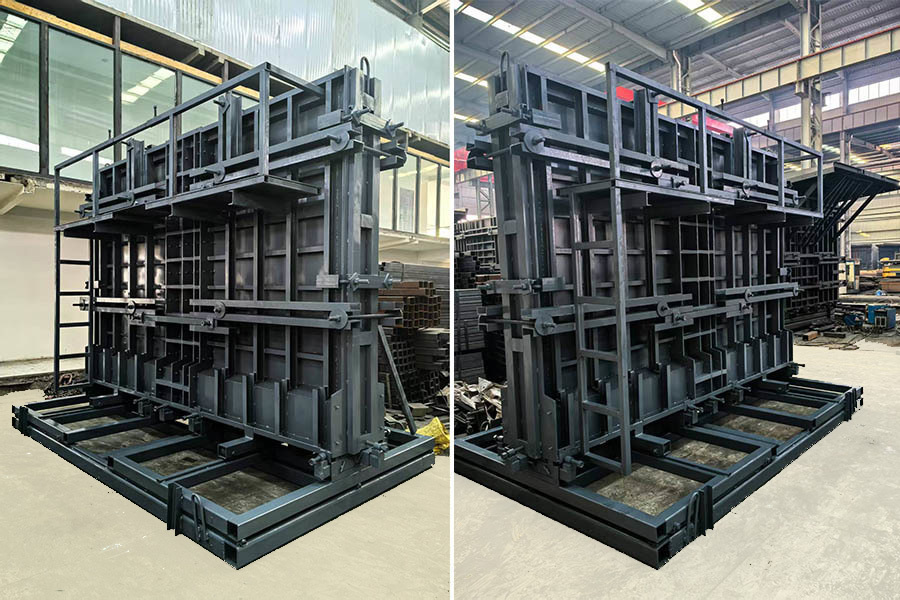
The main difference comes down to steel grade and heat treatment depth. Low-cost molds often use unalloyed mild steel with no post-weld stress relief, so wear appears quickly around the gate and flange areas. A longer-lasting mold typically uses pre-hardened or quenched and tempered steel, with hardness checked on all wear surfaces. Build quality matters too: full-length back ribs, clean internal welds, and polished cavity surfaces prevent stress cracks and surface defects that shorten service life.
Common shortcuts include reducing side plate thickness, using recycled or mixed scrap steel, skipping stress relief after welding, and leaving internal surfaces rough instead of mirror-polished. Some suppliers also omit stiffening ribs behind the panel face or use thin base frames that flex during vibration. These choices lower the upfront price but lead to warping, slurry leakage, and more frequent repair stops once the mold is under daily production loads.
Yes, if you plan to produce more than a few hundred panels or run multiple fence heights. Replaceable wear plates and liners let you swap out only the damaged zones, usually the bottom edge or tongue-and-groove connections, without machining the entire mold. The initial cost is higher, but over two or three years the reduction in downtime and repair labor usually outweighs that premium.
A good trial cast should come out with clean edges, uniform panel thickness, and no visible cold joints or honeycombing. Demolding should not require excessive hammering. Check whether the fence face has blowholes concentrated in corners, which often signal poor venting or rough cavity finish. If the sample panel needs heavy patching or grinding before it can be sold, that is exactly what your daily production team will face in large batches.
Molds shipped by sea or stored in humid yards can develop surface rust within weeks, especially on machined sealing faces and ejector slots. Rust destroys the smooth cavity finish and creates drag marks on every cast panel. Before accepting delivery, inspect for bloom rust and pitting. After use, clean off concrete residue within the same shift, apply a light protective oil, and store the mold off the ground with a breathable cover to avoid condensation.
For a standard two-meter precast fence panel, a basic welded mold might cost a few thousand US dollars, while a high-end version with hardened wear plates, stress-relieved frame, and polished cavity can run two to three times that figure. The price gap is not just branding; it reflects steel tonnage, heat treatment, machining tolerance, and the supplier's willingness to guarantee dimensional stability over several thousand cycles.
Yes, but proceed carefully. Any cutting or welding on a stressed frame can introduce distortion, especially near thin side plates or existing welds. Small changes like drilling extra drainage holes or adding a lifting lug are usually safe. For major dimensional corrections, send photos and measurements back to the original supplier first, because they understand where internal ribs and stress points are located and can advise whether local modification will void the mold's remaining service life.
Conclusion
A fence mold's working life rarely hinges on a single spec. The steel grade matters less than how the mold is machined, heat-treated, and maintained. Daily abrasive contact with fresh concrete wears down lower-grade steel fast, but even good steel fails early if corner radii are too sharp or ejection systems are poorly designed. Production tolerances show up immediately in finished panels: a half-millimeter drift in the mold frame becomes visible warping, inconsistent thickness, or edges that never align on site. Getting consistent concrete release without extra labor depends on draft angles, surface finish, and the release agent routine. Molds with smooth, non-porous surfaces and adequate taper let panels pop out cleanly, reducing the need for workers to scrape or patch after every pour.
Cost factors go far beyond the initial quote. Freight, packaging for export, import duties, spare parts, and the frequency of repair downtime all shape total ownership cost. Chinese mold suppliers vary widely in pricing because they use different steel sources, machining precision, heat treatment depth, and quality control. A cheaper mold often skips normalization or uses recycled steel with inconsistent hardness, which translates into unstable panel dimensions and shorter service life. Conversely, a well-built mold with verified material certificates and hardness reports may cost more upfront but cuts labor and replacement costs over time. Many buyers end up spending more on labor and replacements after choosing the lowest unit price, so verified samples and long-term performance data are worth requesting before committing.
Contact Us
Contact Person: Zhang Zhenlai
Email: [email protected]
Tel/WhatsApp: 8618563210000
Website: https://en.lugongmachinery.com/