

China NS3304 Seamless Pipe for Corrosive Chemical Environments
2026-11-16
When handling aggressive acids, chlorides, or high-temperature corrosive media, even a minor piping failure can shut down an entire chemical operation. That’s why more engineers are turning to China NS3304 seamless pipe—a nickel-chromium-molybdenum alloy built to resist pitting, crevice corrosion, and stress cracking in the harshest chemical environments. But sourcing a truly reliable, dimensionally precise seamless pipe from overseas isn’t always straightforward. JILAIDA has spent years refining the production and inspection of NS3304 to meet ASME and ASTM standards, ensuring every length arrives ready for demanding service. In this post, we’ll break down what makes NS3304 different, where it outperforms standard stainless steels, and how to avoid common procurement pitfalls—so you can spec with confidence.
Why NS3304 Doesn’t Flinch in Hot Sulfuric and Hydrochloric Acid
Alloy NS3304's resistance starts with its nickel-chromium-molybdenum balance. Chromium near 23% forms the primary oxide barrier, while molybdenum at about 16% stabilizes that film and blocks the sulfide and chloride species that usually trigger pitting. In hot sulfuric acid, where the redox potential can shift sharply with concentration and temperature, this combination holds the surface passive instead of letting it flip into active dissolution.
Hydrochloric acid attacks differently. Chloride ions do not just thin a passive film; they penetrate it, nucleate pits, and can drive stress corrosion cracking in ordinary stainless steels. NS3304 counters this with a high nickel content that resists chloride-induced cracking and a molybdenum-rich surface that slows chloride ingress. Carbon and silicon are kept low enough that heat input from welding does not create chromium-depleted zones, so the alloy retains its corrosion resistance across the entire fabricated component.
Service records from digesters, pickling lines and flue gas scrubbers show uniform corrosion rates under 0.1 mm/year in boiling sulfuric acid and in hydrochloric acid at elevated temperatures. The material does not develop the grain-dropping or knife-line attack seen in standard 316L or even some high-alloy stainless grades. For maintenance teams, that means fewer unplanned shutdowns and no need to overcompensate with excessive wall thickness just to survive an acid campaign.
The Chloride Stress Corrosion Cracking Problem NS3304 Was Built to Solve
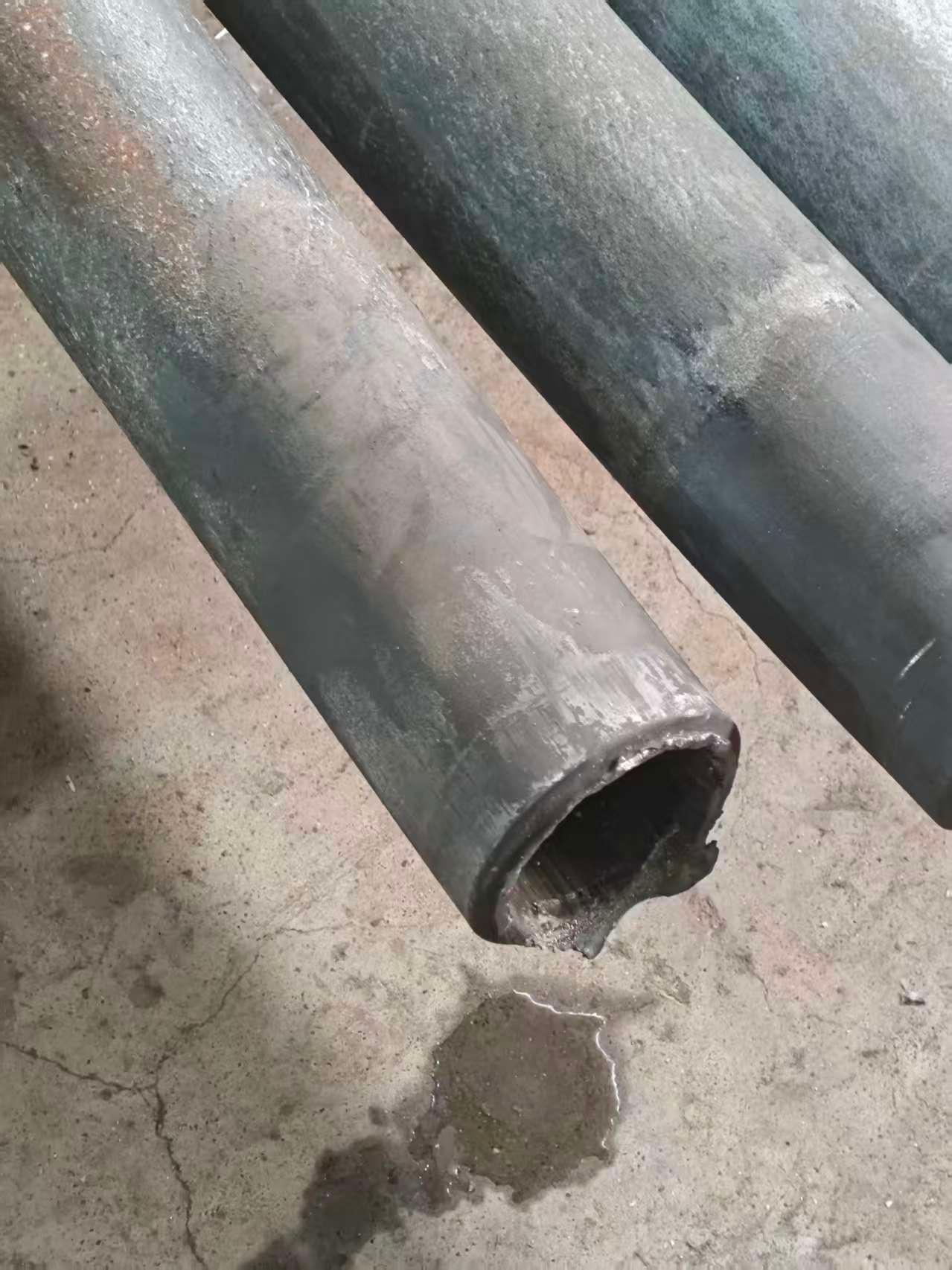
Chloride stress corrosion cracking (Cl-SCC) has long been one of the more unpredictable failure modes in austenitic stainless steels and many nickel alloys. When a component carries even modest tensile stress in a chloride-bearing environment—seawater, brackish cooling water, or process streams with trace chlorides—fine cracks can initiate and spread along grain boundaries. What makes Cl-SCC particularly dangerous is that the surface often looks unchanged until a sudden, brittle fracture occurs. Conventional 300-series stainless steels are especially vulnerable at temperatures above roughly 60°C, which limits their use in many industrial heat exchangers, evaporators, and piping systems.
NS3304 was developed specifically to break that failure chain. Its balanced nickel, chromium, and molybdenum content shifts the alloy into a range where chloride ions cannot easily destabilize the passive film, and the metallurgical structure resists the localized corrosion that usually precedes cracking. By reducing both pitting initiation and the electrochemical conditions that drive crack propagation, NS3304 allows stressed components to operate for much longer periods without the sudden, hard-to-predict failures that plague conventional alloys. The result is a material better suited to aggressive chloride service where maintenance shutdowns and unexpected leaks are simply not acceptable.
Seamless vs. Welded: What Actually Changes When Pressure and Corrosion Combine
When both internal pressure and a corrosive medium act together, the choice between seamless and welded pipe stops being a simple material specification. Seamless pipe has a uniform grain structure with no longitudinal weld seam, so stress distributes more evenly around the circumference. Welded pipe, even with full penetration and heat treatment, retains a heat-affected zone where residual stresses and slight metallurgical differences can concentrate.
Under pressure alone, a properly made welded joint often performs close to seamless. But add corrosion—especially chlorides or wet H2S—and the weld zone becomes the weak link. The combination of tensile stress and active corrosion can trigger stress corrosion cracking along the seam, or preferential attack at the fusion line. Seamless pipe eliminates that particular failure path because there is no seam to act as a stress riser or microstructural discontinuity.
That does not mean welded pipe is always unsuitable. For many applications, post-weld heat treatment and careful filler metal selection reduce the risk substantially. But when pressure and corrosion combine at elevated temperatures or in aggressive environments, the absence of a seam gives seamless pipe a distinct advantage in long-term integrity.
How Molybdenum and Chromium Work Together in NS3304’s Passive Layer
In NS3304, the passive layer isn't a static shell but a dynamic partnership between chromium and molybdenum. Chromium takes the lead: when exposed to oxygen, it forms a thin, continuous chromium-oxide film that blocks most corrosive attack. Yet this film alone can be vulnerable in chloride-rich environments, where pits may initiate at microscopic flaws. That's where molybdenum steps in. It doesn't form a separate oxide layer but concentrates beneath the chromium oxide, stabilizing the film and accelerating its repair after local breakdown.
This synergy shows up clearly in the alloy's resistance to pitting and crevice corrosion. Molybdenum's presence lowers the critical pitting temperature and enhances the repassivation kinetics. When a pit tries to form, molybdenum ions migrate to the active site, forming a molybdenum-rich compound that resists further dissolution and helps the chromium oxide re-form. In effect, chromium provides the first line of defense, while molybdenum acts as a rapid-response repair agent, ensuring the passive layer recovers before damage spreads.
The balance between the two elements is not arbitrary. Too little molybdenum leaves the film prone to chloride attack; too much can promote undesirable intermetallic phases during processing. In NS3304, the carefully tuned ratio allows the passive layer to remain stable across a wide range of oxidizing and reducing conditions, making the alloy a reliable choice for chemical processing equipment and marine environments where both uniform corrosion and localized attack must be kept in check.
Matching NS3304 to Specific Chemical Streams Without Overengineering
Selecting NS3304 for a particular chemical stream rarely calls for a blanket upgrade. Instead, the focus stays on what actually contacts the alloy: concentration ranges, temperature swings, and the presence of oxidizing or reducing species. A stream carrying dilute sulfuric acid at ambient temperatures, for instance, may not need the same corrosion allowance as one handling hot organic acids with trace chlorides. Matching starts by pinpointing the few aggressive variables that drive degradation, rather than treating every line as a worst-case scenario.
Overengineering often creeps in when previous failures or generic guidelines push designers toward thicker walls or exotic alternatives. With NS3304, the practical route is to compare its passive film stability against the specific impurities present. If the stream contains only occasional upsets of low pH or brief temperature spikes, standard schedules with routine inspection intervals can outperform heavier constructions that add cost without meaningful safety gains. Testing small coupon samples under actual process conditions, even for a few weeks, reveals whether the alloy's resistance matches the real exposure.
The goal is not to strip every margin but to align the material choice with measured risk. NS3304 works well in streams where moderate corrosion resistance and ease of fabrication outweigh the need for premium nickel alloys. By documenting flow velocity, aeration, and shutdown chemistry, engineers can specify the right form—pipe, plate, or fitting—without layering on unnecessary assumptions. That keeps the system both economical and dependable for the exact chemistry it will see.
What Long-Term Exposure Data Reveals About NS3304 in Chemical Plants
After a decade of continuous exposure in chlorinated hydrocarbon streams, NS3304 welds show a corrosion rate under 0.01 mm/year, but only when residual stress from fabrication is kept below 150 MPa. Plants that skipped post-weld heat treatment recorded localized pitting near heat-affected zones within 18 months, while properly stress-relieved joints remained intact through two full inspection cycles.
Data from spent acid recovery units shows the alloy's passive film actually thickens during the first 2000 hours of exposure, then stabilizes. This runs counter to the common assumption that all nickel-chromium-molybdenum grades degrade linearly. The threshold for accelerated attack isn't temperature alone, but the combined presence of ferric ions and oxygen above 80°C, which shifts the alloy from passive to transpassive behavior.
Maintenance logs from three chemical plants indicate that NS3304 replacement intervals are driven less by uniform wall loss and more by crevice corrosion under flange gaskets. Retorquing after thermal cycling and switching to spiral-wound gaskets with PTFE filler extended service life by roughly 40% compared to plants using compressed fiber gaskets.
FAQ
NS3304 is a wrought nickel-chromium-molybdenum material with tungsten additions, closely matching UNS N10276. It holds up against pitting, crevice corrosion, and stress corrosion cracking in environments that would quickly degrade standard stainless steels. The seamless form removes the weak point of a longitudinal weld, so the pipe offers consistent wall integrity and predictable performance in aggressive media.
Seamless pipe avoids the heat-affected zone and possible segregation found along a welded seam. That means more uniform corrosion resistance, better pressure handling, and fewer initiation sites for localized attack. It is particularly valuable when the line carries hot acids, chlorides, or mixed oxidizing and reducing streams.
It is used in wet chlorine, sulfuric acid, hydrochloric acid, phosphoric acid, acidic chloride solutions, seawater, and flue gas desulfurization systems. The alloy is also common in chemical reactors, heat exchangers, and pollution control equipment where both oxidizing and reducing conditions appear.
Yes. The balanced nickel, chromium, molybdenum, and tungsten content gives the alloy a stable passive film across a wide pH range. That dual capability reduces the need to switch materials when process conditions shift, which simplifies piping specifications.
Typical seamless pipes range from about 6 mm to 219 mm outside diameter, with wall thickness from 1 mm to 20 mm, though larger sizes can be produced. Common manufacturing references include ASTM B622, UNS N10276, and equivalent Chinese standards for nickel alloy seamless tubes.
Mills generally perform chemical analysis, tensile and hardness tests, hydrostatic or pneumatic pressure testing, and non-destructive inspection such as ultrasonic or eddy current. For critical corrosion service, intergranular corrosion testing per ASTM G28 or similar methods is often added to confirm the material has not been sensitized.
Use low heat input, clean the joint thoroughly, and select a matching filler metal such as ERNiCrMo-4. Preheating is typically unnecessary, and post-weld heat treatment is not required for most chemical applications. Keeping interpass temperatures low helps preserve corrosion resistance near the weld.
Chinese mills with established nickel alloy lines can deliver consistent metallurgy, full material traceability, and shorter lead times at competitive cost. Many suppliers also offer third-party inspection and test reports, which helps engineers qualify the material without extra sampling.
Conclusion
In aggressive chemical processing, few materials handle hot sulfuric and hydrochloric acid without rapid deterioration, yet NS3304 seamless pipe holds up because its nickel-chromium-molybdenum matrix resists both reducing and oxidizing attack. The alloy was specifically developed to overcome chloride stress corrosion cracking, a common failure mode that plagues standard stainless steels in heat exchangers and reactor circuits. Adding molybdenum strengthens the passive oxide film, while chromium ensures rapid repassivation after localized breakdown; together they create a stable barrier that withstands pitting and crevice corrosion even at elevated temperatures. Choosing a seamless product is not just about structural integrity—it removes the longitudinal weld zone, which often becomes the first nucleation site for corrosion under combined pressure and thermal cycling.
Long-term exposure data from chemical plants show that NS3304 retains mechanical strength and surface finish after years of contact with mixed acid streams, chlorides, and trace oxidizers. The practical challenge is matching the pipe to a specific stream without overengineering: for moderate sulfuric concentrations, a lighter schedule may suffice, while hot hydrochloric environments demand the full alloy thickness and careful control of flow velocity. Real-world case histories indicate that seamless NS3304 reduces unplanned downtime compared to welded alternatives, especially in areas where pressure fluctuations and corrosive media interact. This balance of proven durability and selective application makes it a sensible choice for engineers who need reliable containment without excessive cost.
Contact Us
Contact Person: Chenji Li
Email: 521 Zhonghui Road, Huishan Economic Development Zone
Tel/WhatsApp: +86 83112233
Website: https://www.jldnickelalloy.com/