

Calcium Chloride 94% Prills Factory Quality Standards Explained
2026-11-02
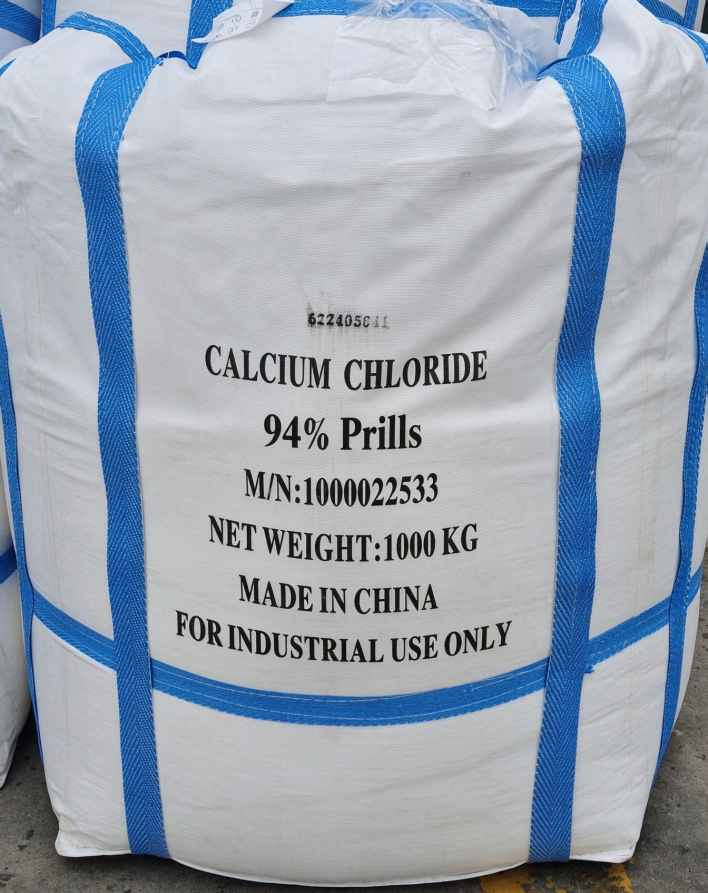
When it comes to sourcing calcium chloride 94% prills, most buyers fixate on price—but the real differentiator lies in what happens inside the factory. At Shouguang Golden Chemical, quality isn't a buzzword; it's a measurable set of standards that determines how each prill performs in ice melting, dust control, or industrial applications. Yet many procurement teams don't know which quality markers actually matter until a batch fails in the field. In this post, we pull back the curtain on the key factory quality standards for 94% prills—so you can avoid costly surprises and ask suppliers the right questions from day one.
Why 94% Purity Isn’t Just a Number
The figure 94% often appears on lab reports, product labels, and technical datasheets, yet its significance extends far beyond a simple quality checkpoint. This specific percentage sits in a practical sweet spot where purity meets process feasibility. Push higher, and you enter exponential cost curves, diminishing returns, and fragile synthesis protocols. Drop lower, and impurities begin interfering with downstream reactions or biological activity. In many fine chemical and pharmaceutical contexts, 94% represents a deliberate balance——high enough to ensure reliable performance, low enough to remain scalable and economically viable.
What makes this number particularly interesting is how it behaves across different measurement methods. HPLC purity, GC assay, and qNMR can each report values near 94% while revealing distinct impurity profiles. A lot that reads 94% on one instrument might behave like 98% in a specific application, or vice versa. Seasoned chemists know that the number without method context is nearly meaningless. The real story lies in the remaining 6%——what those impurities are, how they interact, and whether they matter for your particular use case.
Beyond the bench, 94% carries a psychological weight in buying decisions. It clears the common 90% threshold that many procurement teams use as a rough quality gate, without triggering the premium pricing associated with 97%+ grades. For R&D groups optimizing cost per successful experiment, 94% often emerges as the rational choice. It signals a product that has been refined enough to trust, yet not over-processed to the point of diminishing practical benefit.
Inside the Prilling Tower: Where Quality Takes Shape
Step past the insulated walls and the first thing you notice is the rhythm—molten feed raining through the air in precise, glistening droplets. Inside the prilling tower, that fall is where everything begins. It looks simple from the outside, but every meter of the drop is tuned to one purpose: letting surface tension pull each droplet into a near-perfect sphere while cool air sets the shape before it reaches the collection cone.
Quality doesn't emerge by chance here. The tower's real work happens in the details—nozzle orifice size, melt temperature, air flow direction, and the height of the fall all have to agree. If one variable drifts, the prills show it: hollow shells, ragged edges, uneven size. Operators read the product the way a baker reads a crust, checking for gloss, hardness, and uniformity as the first samples come off the line.
What leaves the tower is more than just solid beads. It's a material that has been shaped by gravity, thermal control, and careful adjustment into something that will flow cleanly, store safely, and dissolve predictably. Step inside on the right day and you can hear the soft hiss of falling particles, feel the cool draft pulling downward, and see exactly where quality takes its final, solid form.
The Lab Checks That Separate Premium Prills from the Rest
A prill's premium status isn't decided in the warehouse—it's proven through a battery of lab checks that most buyers never see. Crush strength testing is the first gate: top-tier prills are pressed until they fail, and the force required is logged across multiple size fractions. This isn't just a number for the datasheet; it tells you whether the product will survive augers, drops, and bulk blending without turning to dust.
Moisture uptake and caking tendency are measured under controlled humidity and temperature cycles that mimic real storage from midsummer to winter. Premium prills absorb almost no water at typical bagged conditions, and they don't weld together under modest pressure. The lab also tracks dustiness by tumbling samples in a rotating drum and weighing the fines released—lower dust means better field distribution and less waste.
Finally, chemical consistency is verified batch to batch using titration or spectroscopy, not just a visual check. Trace nutrient levels, pH after dissolution, and residual coating integrity are all logged. When every one of these checks aligns, the prills earn the right to be called premium—and the performance gap in the field becomes obvious.
Moisture, Magnesium, and the Impurities Nobody Talks About
Most people assume a magnesium supplement is just magnesium, but moisture changes the equation. Magnesium salts are hygroscopic; they pull water from the air during storage and processing. That absorbed moisture doesn't just add weight, it creates a microenvironment where unwanted reactions happen. Trace minerals, residual solvents, or breakdown products can form or become more available. This is the part rarely printed on the label.
Then there are the impurities that come along for the ride: heavy metals from mining, binders used to keep powders flowing, and even byproducts of the chelation process. In humid conditions, these can migrate or interact with the active ingredient in ways that change how your body absorbs it. It is not about fear-mongering; it is about realizing that a simple mineral supplement sits inside a messy physical system. Moisture is the quiet variable that makes "pure" a moving target.
How Factory Standards Shape De-Icing and Dust Control Performance
The consistency of a de-icing or dust control product rarely gets noticed until a winter storm hits or a haul road turns unusable. Behind that reliability sits a factory floor where tolerances are measured in fractions of a percent. Raw material lots are rejected if they drift outside narrow chemical and physical profiles, and production lines are stopped for recalibration long before a bad batch can leave the gate. Those internal thresholds—often tighter than published specs—determine whether a chloride blend spreads evenly, activates at the expected temperature, or leaves behind a sticky residue that clogs equipment.
For dust control, the same discipline applies but shows up differently. A polymer emulsion that looks identical from one supplier to the next may perform entirely differently depending on how it was mixed, heated, and filtered during manufacturing. Factory standards regulate droplet size, viscosity stability, and the percentage of active solids, which in turn affect how the product binds fine particles on a gravel surface. When those variables are controlled lot after lot, field crews can adjust application rates with confidence instead of guessing whether this week's shipment will behave like the last one.
Some plants go a step further by tying production data to field performance logs. A batch number can be traced back to specific mixer settings, raw material sub-lots, and even the shift that ran it. That kind of traceability turns a vague promise of quality into a measurable cause-and-effect chain—and it is the real reason some de-icing and dust control programs see fewer complaints and lower overall material use.
What Buyers Should Verify Before Accepting a Batch
Before signing off on a batch, pull a few samples from different boxes rather than just eyeballing the top layer. Check the actual item against the spec sheet—measurements, material, print alignment—not just the photo on the purchase order. Count units in at least two or three cartons to catch short shipments that often hide in the middle of a pallet.
Confirm that any required labels, barcodes, or compliance marks are present and legible on the packaging. If the order includes electronics or perishables, run a quick functional test or inspect expiry dates on a random selection. Also cross-check the batch number against the packing list; a mismatch can cause trouble later with recalls or returns.
Ask about storage or transport conditions if there's any sign of moisture, crushed corners, or unusual odors. And don't skip the paperwork: verify the commercial invoice matches the actual quantity and declared value, because discrepancies here can delay customs or trigger audits.
FAQ
It refers to the minimum calcium chloride content by weight in the dry product, usually expressed as CaCl2. The remaining percentage includes water of crystallization, small amounts of sodium chloride, magnesium chloride, and other trace impurities. For a 94% prill, the factory typically targets slightly above this to ensure every batch meets the declared minimum.
They usually run titration with EDTA or use atomic absorption spectroscopy on a representative sample. A quality control lab will also measure moisture content, particle size distribution, and insoluble matter. The batch is only released after all results fall within the internal specification, which is often tighter than the published 94% limit.
Prills have a uniform spherical shape, which improves flowability, reduces dust, and prevents caking during storage. For applications like de-icing or dust control, this means easier handling, more consistent spreading, and less waste. The 94% prill form also dissolves at a predictable rate compared to irregular flakes.
Moisture is usually kept below 1% because excess water can cause the prills to soften and clump. Water-insoluble matter is typically limited to 0.2% or less. These limits are important because they directly affect storage stability and the clarity of the final brine solution.
They standardize raw material sources, control the prilling tower temperature, and use automated dosing of the calcium chloride solution. Continuous sampling during production, along with statistical process control, helps detect drift before a full batch is out of specification. Final blending of sub-batches can also smooth out minor variations.
Particle size affects both handling and dissolving rate. Most factories target a range like 1–5 mm, with a high percentage retained between 2–4 mm. Too many fines can create dust and uneven application, while oversized prills may dissolve too slowly. A tight size distribution is a sign of good manufacturing control.
Yes, many producers align with ASTM D98 for calcium chloride or similar national standards. They may also follow ISO 9001 for quality management. However, the specific 94% grade is often defined by supplier specifications, which include purity, alkalinity, sulfate content, and heavy metal limits beyond the basic standard.
The certificate should list actual test results for purity, moisture, insolubles, and particle size against the specification limits. Buyers should check that the test methods are stated and that the batch number matches the delivery. A legitimate certificate will show results from an independent or in-house lab, and any result near the limit should prompt a conversation with the supplier.
Conclusion
The "94%" on a spec sheet isn't a marketing shortcut. It's the minimum calcium chloride content by weight after factoring in water of crystallization and inevitable carryover from the manufacturing line. Inside a prilling tower, molten calcium chloride solution gets sprayed through nozzles at the top and falls against an upward air stream. The droplets cool and harden into near-spherical beads. If the tower temperature or air flow drifts even a few degrees, you get irregular shards, hollow shells, or fused clusters that trap moisture and lower the effective purity. Premium producers run the tower within a narrow band, recirculate fines, and screen out anything below 1 mm or above 4 mm. That consistency matters because surface area and dissolution rate change with shape and size. A 94% nominal purity only holds if the prills are dense, uniform, and free of excessive broken material.
Lab verification is where the real sorting happens. A trustworthy factory checks every batch with EDTA titration for calcium content, Karl Fischer or oven method for moisture, and flame photometry for magnesium and sodium. Magnesium above 0.3% or moisture above 1.5% quietly eats into de-icing performance and can leave residue on roads or dust control surfaces. Those impurities are rarely discussed in sales sheets, but they dictate how fast a prill dissolves at -10°C or whether it clumps in storage. Before accepting a shipment, buyers should request a certificate of analysis that lists moisture, magnesium, sodium, insoluble matter, and particle size distribution—not just the headline 94%. Spot-check by dissolving 50 grams in distilled water: any murkiness or slow settling suggests off-spec filler. The best factories publish their internal rejection limits and re-test every 50 metric tons, because in cold weather, a 1% drop in effective calcium chloride can mean the difference between clear pavement and black ice.
Contact Us
Contact Person: Tom Cui
Email: [email protected]
Tel/WhatsApp: +8618663670626
Website: https://www.jinjigoldenchem.com