

Calcium Chloride 77% Granules Export Best Practices and Key Considerations
2026-11-16
Exporting calcium chloride 77% granules isn’t just about hitting purity specs on paper. One misstep in moisture control, packaging choice, or destination climate assumptions can turn a profitable shipment into a costly claim. That’s why we’re breaking down the export practices that actually hold up at port and in storage—from granule stability to documentation that clears customs without surprises. Drawing on real shipment data and field feedback, Shouguang Golden Chemical shares the key considerations most suppliers overlook until it’s too late. If you’re moving bulk or bagged CaCl₂ 77% across borders, this guide is built for the problems you’ll actually face.
The 77 Percent Granule Specification Buyers Verify Before Unloading
The 77 percent figure isn't a marketing number—it's the line between usable material and a costly rejection. Before any hose is connected or hatch opened, experienced buyers pull samples from at least three depths in the container or silo truck. They look for consistent granule size, absence of caking, and a quick field test that confirms active content meets the 77 percent minimum. If the top layer reads fine but the bottom is damp or fines-heavy, that shipment gets flagged on the spot.
The certificate of analysis only gets you so far. Smart teams verify the spec against the physical load, not the other way around. They check moisture content, crush strength, and the percentage of undersized granules because each of these can quietly pull the overall quality below the 77 percent mark. Once unloading starts, any dispute turns into a paperwork war with the supplier, so the rule is simple: test first, sign later.
Packaging Layers That Prevent Caking Before the Container Arrives
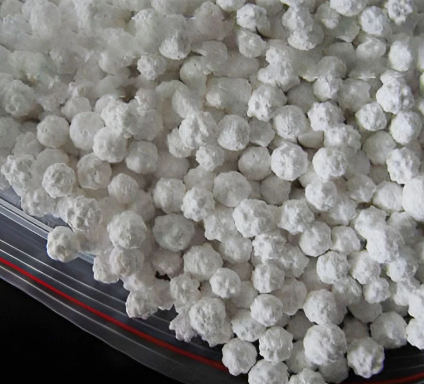
Most powders start to clump long before they reach the final container, often during warehousing or transit when temperature swings push moisture into the product. A well-designed packaging system treats the bag or liner as an active barrier rather than a passive wrapper. Multi-layer films with an aluminum foil core and a polyethylene inner surface can cut water vapor transmission to less than 0.01 g/m²/day, while also minimizing static charge that draws fine particles together.
Some suppliers go a step further by placing desiccant sachets between the outer woven layer and the inner liner, or by flushing the headspace with dry nitrogen just before sealing. This removes residual oxygen and humidity that would otherwise condense on the powder surface during cool-down. The result is a free-flowing material that discharges cleanly from bulk bags or sacks, without the hard lumps or rat-holing that slow down production at the receiving dock.
Documentation Mistakes That Delay Calcium Chloride Shipments More Than Weather
Most logistics teams assume winter storms or port congestion cause the worst calcium chloride delays, but a stack of incorrectly filled paperwork will hold a container longer than any blizzard. The most common culprit is a mismatched HS code. Calcium chloride can fall under different tariff headings depending on whether it's technical grade, food grade, or anhydrous versus dihydrate. A single digit wrong on the commercial invoice triggers a customs hold that often takes five to seven business days to resolve, while the actual weather delay would have passed in two.
Another silent shipment killer is the missing or outdated Safety Data Sheet. Because calcium chloride is hygroscopic and can generate heat when mixed with water, many carriers require the current SDS to be attached to the shipping instructions before the container is even allowed into the port. If the SDS on file shows a different concentration or fails to note the packaging group, the freight forwarder has to request a revised copy from the manufacturer. That back-and-forth can add a week to the timeline, and it happens far more often than anyone wants to admit.
Then there's the issue of vague product descriptions. Writing simply "calcium chloride" on the bill of lading invites manual inspection, because customs officials need to verify whether it's a dangerous good or a routine de-icing agent. A precise description like "calcium chloride, anhydrous, 94% min purity, packed in 25kg bags, for industrial use only" clears automated screening much faster. Shipments with incomplete descriptions often sit in a document review queue while the weather outside clears up, proving that average typing mistakes are more predictable than a storm front.
Incoterm Choices That Shift Moisture Risk to the Right Party
For goods that are highly sensitive to moisture—think wood furniture, paper, electronics, or certain foodstuffs—the choice of Incoterm often decides who bears the cost when condensation turns a shipment into a claim. Many sellers default to FOB or FAS because risk passes when goods are loaded on board, but that can push moisture risk onto a buyer who has no control over how the container was packed or how long it sat at the port before sailing. A better approach is to align the term with the party that can actually inspect, dry, and protect the cargo before the vulnerable ocean leg. For instance, if a furniture exporter in Vietnam ships under FOB to a buyer in Rotterdam, the buyer inherits any mold that develops during transit but has little ability to demand better desiccant use or pre-shipment drying because the seller already met the loading obligation.
DAP or DPU often works better for moisture-sensitive cargo because the seller keeps risk until the goods arrive at the named destination. That gives the seller a direct incentive to use vacuum packaging, add container desiccants, or choose a routing that avoids known humidity hotspots. It also avoids the common CIF trap: under CIF, the seller arranges insurance but risk still transfers at loading, so the buyer ends up chasing a claim against an insurer while the seller has no further obligation. With DAP Santos, for example, a machinery exporter from Germany knows that a rusted machine at the terminal in Brazil will be their problem, so they are far more likely to specify a moisture-barrier liner and monitor humidity levels before dispatch.
The goal is not to shift moisture risk to whichever party is weaker at negotiating, but to place it with the party that can manage it most cheaply and reliably. EXW may seem attractive to a seller who wants zero transport responsibility, but if the buyer's freight forwarder leaves cartons on a damp floor for a week, the resulting rejection will boomerang back as a damaged relationship and disputed payment. Along with the Incoterm, write explicit packaging and moisture-content requirements into the contract—such as a maximum wood moisture percentage or a required number of desiccant bags per container—and specify where and when moisture tests will be taken. That combination of the right term and measurable standards is what truly protects both sides from surprise mold claims.
Why Some Exporters Prefer Bulk Vessels Over Containerized Granule Loads
When granular cargo volumes climb into the tens of thousands of tonnes per shipment, containerized transport stops making sense quickly. A single Handysize bulk carrier can move what dozens of FEUs would handle, but without the per-box handling charges, chassis coordination, and depot returns. For fertilizer and plastic pellet exporters moving product to ports with limited container crane availability, a geared bulk vessel can discharge directly into silos or trucks using onboard cranes. That cuts port congestion fees and waiting time.
Packaging costs drop sharply too. Bulk shipment needs no individual 25 kg bags or stretch-wrapped pallets; the cargo goes straight into the hold. Fewer touch points mean less breakage, less moisture exposure during loading pauses, and fewer contamination risks from other containerized goods. In markets where local bagging plants already exist near the receiving dock, exporters save even more by shipping loose granules and letting the destination handle final packing. That kind of flexibility is hard to match with containers.
Pricing Levers Beyond Purity Granule Size Hardness and Dissolution Rate
Most buyers fixate on the four physical properties listed in the spec sheet, but seasoned procurement teams know that price moves on far quieter variables. Traceability depth, for instance, can swing a quote by 8–12%: a supplier who offers batch-level audit trails back to the specific mine or synthesis run charges more than one who merely certifies the finished lot. The same goes for supply redundancy—if a vendor can guarantee dual sourcing for a critical precursor without a formal second supplier on paper, they're quietly pricing in the cost of maintaining that buffer, and you're paying for it whether you recognize the line item or not.
Packaging and handling conditions rarely show up in a pricing discussion until something breaks. A granule that ships in moisture-barrier liners with desiccant pillows, then gets vacuum-sealed in smaller sub-lots, will cost more per kilo than the identical material dumped into a standard fiber drum. But the real margin lever is documentation latency: suppliers who can turn around a certificate of analysis with impurity profiles in under 24 hours, rather than the typical five to seven business days, often embed a premium that gets buried in the base price. Buyers who ask for the raw data file instead of a formatted PDF occasionally shave that cost, but only if they're willing to accept the supplier's native export format.
Then there's the question of change control. A vendor that proactively notifies you of a minor shift in sieve cut distribution—even when the material still meets spec—is offering a service that most people don't know they need until a downstream blending step drifts out of tolerance. That proactive alerting costs the supplier real money in process monitoring and customer communication, and it gets priced into the material itself. If your current quote seems too high and you've already beaten down the four headline parameters, ask what's happening behind the certificate: the answer often reveals a cost driver that's far more negotiable than particle size.
FAQ
Line every bag or supersack with a sealed polyethylene barrier, pack a desiccant sachet inside each outer container, and avoid loading during rain. For tropical ports, opt for aluminum foil liners instead of standard PE because the extra layer blocks humidity migration far better over a six-week voyage.
The 77% figure is a minimum, not an exact batch value. Industrial users need to know the actual calcium chloride content, plus limits on magnesium, alkali metal chlorides, and water insolubles. A detailed CoA from an independent lab prevents disputes if a shipment underperforms in their process.
Use low-moisture packaging, keep the granules cool before bagging, and stack pallets with airflow gaps inside the container. Avoid overfilling bags, as pressure from stacked pallets accelerates bridging. Some exporters also add a small silica gel pillow behind the pallet wrap, but it only works if the outer wrap is truly sealed.
Missing net weight in both kilograms and local units, an absent batch number, and unclear country of origin cause frequent holds. Calcium chloride is not typically classified as dangerous goods, but the label should still state 'hygroscopic - keep dry' and include a contact for the responsible exporter in English and Arabic or Bahasa depending on the destination.
A size range that is too broad or dusty will clog feeding systems or create uneven dissolving rates. Buyers using brine-making equipment usually expect a narrow cut, such as 2-4 mm, with minimal fines. Mentioning the mesh range on the data sheet sets expectations and reduces returns from automated plants.
Supersacks reduce handling labor and packaging waste, but only if the receiving facility has a forklift and a hoist or discharge frame. For markets where product is repacked locally or sold in small quantities, 25kg bags with an inner liner remain easier to distribute and store.
They skip testing the packaging under humidity-chamber conditions, forget to verify the container is free of condensation before loading, and fail to send a pre-shipment sample to the buyer for approval. Also, not confirming the destination country's maximum allowable impurities for industrial salts can lead to rejection at the border.
Conclusion
A buyer who knows exactly what to check before unloading will rarely end up with a shipment of calcium chloride 77% granules that fails on arrival. The specification sheet is not just a formality; it covers granule size distribution, hardness, and dissolution rate, and those numbers need to be verified against the physical cargo. If the granules break down too easily or dissolve slower than agreed, the whole batch can be rejected. Packaging matters just as much as the chemical itself. Multiple layers with a moisture barrier and desiccant placement inside the container are often the difference between free-flowing material and a hardened mass by the time the vessel docks. Documentation mistakes, surprisingly, cause more delays than storms or port congestion. A single mismatch in the commercial invoice, packing list, or certificate of analysis can hold the container for weeks. Choosing the right Incoterm is a practical way to assign moisture risk, because once the cargo leaves the seller’s warehouse, the party responsible for humidity exposure changes depending on whether you are working with FOB, CIF, or DAP terms.
Many exporters weigh the trade-off between containerized loads and bulk vessels for this product. Containers offer flexibility and smaller minimum quantities, but bulk shipments can reduce handling damage and allow for continuous loading with less exposure to ambient moisture. The real leverage in pricing, however, goes far beyond the 77 percent purity figure. Granule size affects how the product spreads and dissolves in end-use applications like de-icing or dust control. Hardness determines whether the granules survive transport without turning into powder, while dissolution rate can be adjusted by the manufacturing process to match a buyer’s specific needs. Buyers who negotiate on these technical parameters, rather than just the headline percentage, often secure a product that performs better in the field and avoids costly rework. Exporters who document these choices clearly and package accordingly tend to build repeat business without the usual back-and-forth over quality claims.
Contact Us
Contact Person: Tom Cui
Email: [email protected]
Tel/WhatsApp: +8618663670626
Website: https://www.jinjigoldenchem.com