

Bulk Melamine Polyphosphate: A Comprehensive Guide to Its Properties and Applications
2026-07-23
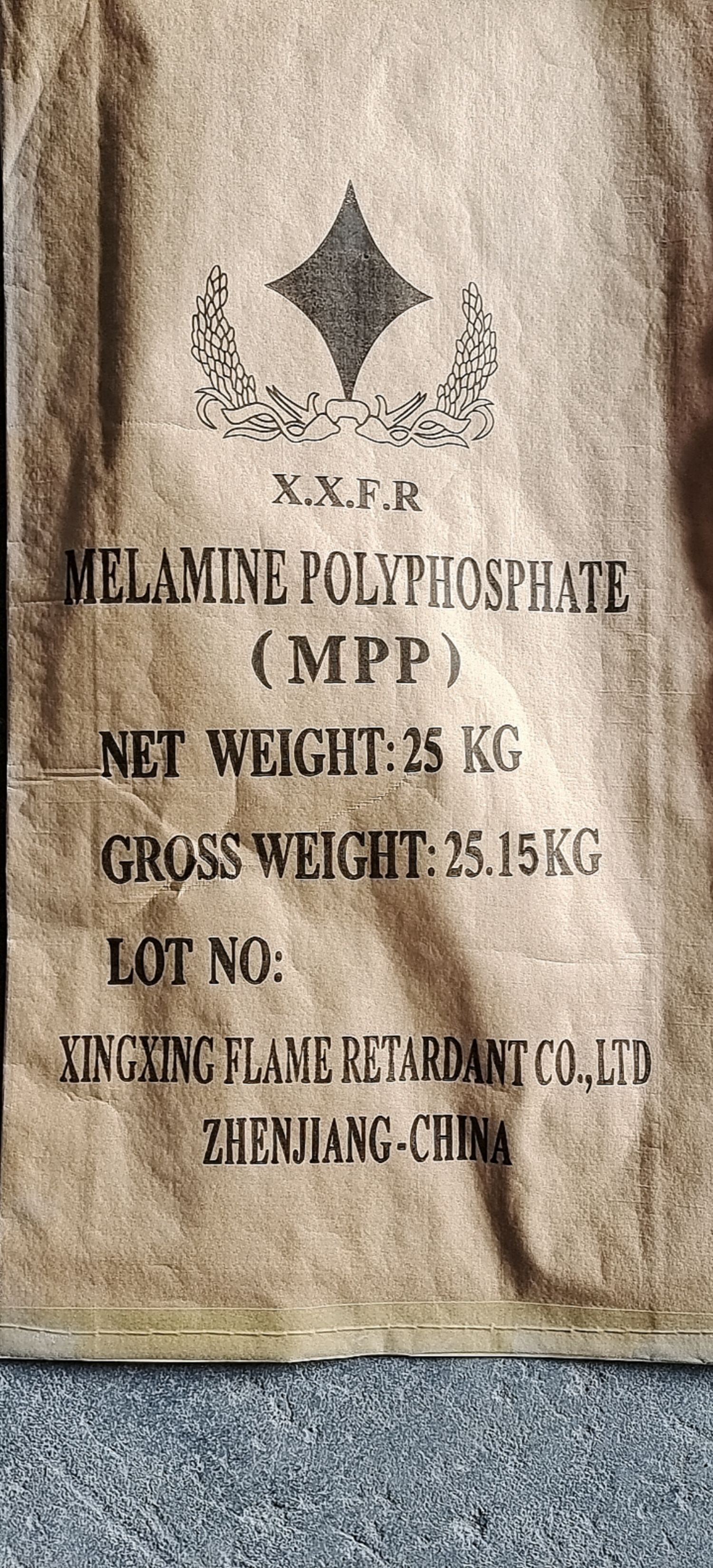
When it comes to flame retardants, melamine polyphosphate (MPP) often flies under the radar—yet its unique halogen-free chemistry and thermal stability are quietly revolutionizing safety standards in electronics and beyond. At X.X.F.R, we’ve seen firsthand how bulk MPP delivers reliable fire protection without the environmental baggage of traditional additives. This guide unpacks what makes MPP tick, from its char-forming magic to its growing role in high-performance polymers.
What Makes Melamine Polyphosphate Stand Out Among Flame Retardants
Melamine polyphosphate brings a combination of thermal stability and char-forming ability that many halogen-free options simply can’t match. Under heat, it swells and creates a dense, insulating barrier that chokes off the fire’s fuel and oxygen supply. This intumescent behavior happens without releasing corrosive or toxic smoke, making it a safer choice for enclosed spaces where people are present.
Another factor that sets it apart is its compatibility with a wide range of polymers, especially polyamides and polyolefins. It disperses easily without damaging mechanical properties, so manufacturers don’t have to trade off strength or flexibility for fire performance. That practical ease of processing, paired with its efficiency at low loadings, has given it a quietly dominant role in electrical components, automotive parts, and construction materials.
Long-term durability also gives it an edge. Unlike some phosphorus-based retardants that can migrate or leach out over time, melamine polyphosphate stays put, maintaining its effectiveness through repeated thermal cycling and humidity exposure. This reliability under real-world conditions has turned it into a go-to solution for applications where failure isn’t an option.
The Chemistry Behind Its Thermal Stability and Char Formation
The backbone of the polymer relies on aromatic and heterocyclic rings linked by stable bonds like C–C, C–O, and C–N that resist homolytic cleavage at elevated temperatures. These bonds demand significant energy to break, delaying decomposition and giving the material its inherent thermal endurance. Electron delocalization across conjugated systems further stabilizes the structure by distributing thermal energy, reducing the likelihood of bond scission at any single point.
Upon heating, the polymer undergoes reorganization rather than unzipping into volatile fragments. Side groups and flexible linkages sacrifice first, stripping away as small molecules and leaving behind a carbon-rich skeleton. This char forms through cyclization and crosslinking reactions that knit the remaining aromatic units into a dense, highly carbonaceous network. The process is self-sustaining once initiated, building a thermally insulating barrier that cuts off oxygen and slows heat penetration into deeper layers.
The precise char yield depends on the ratio of aromatic to aliphatic carbons in the original chain, as well as the presence of heteroatoms that facilitate crosslinking. Phosphorus, nitrogen, or silicon in the backbone can catalyze char formation, lowering the onset temperature and increasing the residue left behind. This char layer not only insulates but also suppresses flame by trapping combustible gases and interrupting the feedback loop between fuel and heat. Together, these chemical transformations produce a material that withstands fire not by burning cleanly away, but by building a protective shell in real time.
Where MPP Fits in Modern Polymer Applications
Modern polymer applications span an incredibly diverse landscape, from flexible food packaging that resists punctures to rigid automotive components that withstand extreme temperatures. Within this spectrum, Melt-Pump Processing (MPP) often goes unnoticed, yet it plays a critical role where precision and material consistency are non-negotiable. Rather than competing with conventional extrusion or injection molding, MPP excels in niche scenarios—think micro-layered films for barrier protection, high-viscosity compounds that clog standard screws, or optically clear sheets where even a minor gel speck is unacceptable. It’s the solution experts reach for when standard equipment can’t quite hit the mark.
MPP’s value becomes especially clear in fields like medical device manufacturing and advanced electronics. For instance, when producing catheter tubing with a wall thickness measured in microns, traditional extrusion often struggles with pulsation and dimensional drift. MPP smooths out these fluctuations by isolating the pumping function, delivering a near-constant flow that keeps tolerances tight. Similarly, in the photovoltaics sector, encapsulation films require flawless dispersion of light-converting additives; MPP’s ability to maintain low shear and precise temperature control prevents agglomeration that would ruin performance. These aren’t just improvements—they’re enablers of functionalities that would otherwise remain theoretical.
Perhaps most intriguing is how MPP unlocks the potential of recycled and bio-based polymers, which are notoriously variable. As the circular economy pushes more post-consumer content into premium products, processors face melt-flow inconsistencies that wreak havoc on standard lines. Here, MPP acts as a buffer, evening out viscosity swings and filtering out leftover contaminants without sacrificing throughput. From biodegradable mulch films that must degrade on schedule to durable outdoor furniture made from ocean-bound plastics, MPP brings reliability to materials that were once considered too unpredictable for high-stakes applications.
Processing Insights: Getting the Most from Bulk MPP
To unlock the full potential of bulk MPP workloads, start by scrutinizing your data distribution. Even minor skew can throttle parallelism, turning a high-throughput pipeline into a bottleneck. Examine partition keys and consider whether hash distribution still aligns with query patterns or if a shift to round-robin would smooth out hot spots. Often, what appears as a code-level inefficiency is actually a layout problem waiting to be corrected.
Next, look at how you’re batching operations. Throwing larger packet sizes at the system doesn’t always translate to faster processing—sometimes it just bloats memory and invites spillover. Experiment with batch boundaries that keep all nodes busy without pushing them into swap. Pair this with intelligent concurrency throttling; the sweet spot is rarely maxing out every available slot right away. Observing wait events during peak loads will quickly show where over-aggressive parallelism trips over itself.
Finally, revisit your indexing strategy with a fresh perspective tailored to bulk operations. Traditional indexes can become a maintenance liability when ingesting millions of rows at once. Instead, lean on staging tables with minimal structures and leverage on-the-fly transformations during merge steps. By treating bulk loading as a distinct phase—not just a sped-up trickle—you’ll discover compounding gains that single-row thinking can never deliver.
Overcoming Common Misconceptions About Melamine Polyphosphate
Melamine polyphosphate (MPP) often gets unfairly lumped together with melamine itself, triggering unwarranted safety alarms. While melamine is indeed known for its misuse in food adulteration, MPP is a chemically distinct, thermally stable flame retardant engineered for high-performance polymers. It does not migrate into food or leach under normal use, and its decomposition at extreme temperatures releases nitrogen-rich gases that suppress flames rather than toxic byproducts. The notion that it poses the same risks as melamine is a fundamental misunderstanding of polymer chemistry and application realities.
Another persistent myth is that MPP is less effective than halogenated flame retardants, leading some manufacturers to hesitate on adoption. In truth, MPP delivers excellent char formation and intumescent performance, particularly in glass-fiber-reinforced polyamides and polyesters. It works synergistically with other additives to meet rigorous fire safety standards without compromising mechanical properties or electrical performance. Dispelling these misconceptions requires not just data sheets but clear communication about real-world testing, regulatory approvals, and long-term stability—areas where MPP consistently proves its value over more controversial alternatives.
Sustainability and Regulatory Pressures Shaping MPP Adoption
Sustainability has shifted from a nice-to-have to a business imperative, pushing manufacturers to reevaluate their material choices. Multi-Photon Polymerization (MPP) offers a pathway to more precise, less wasteful production. Because the process builds components layer by layer with near-zero material scrap, it aligns naturally with circular economy goals. Companies are under growing pressure to reduce their carbon footprint, and adopting MPP can be a tangible step toward greener manufacturing without sacrificing performance or scalability.
Regulatory frameworks, particularly in the EU and North America, are tightening around chemical usage and emissions. MPP enables the use of a wide range of low-toxicity photoresists, helping firms stay ahead of REACH, RoHS, and similar mandates. By minimizing hazardous waste and energy consumption compared to conventional subtractive methods, MPP adoption becomes a compliance strategy. Firms that proactively integrate these 3D printing technologies often find themselves better positioned when new environmental standards take effect, avoiding costly retrofits or penalties.
Beyond compliance, the traceability and digital nature of MPP manufacturing support extended producer responsibility requirements. Detailed build logs and material data make it easier to track a product’s lifecycle, from resin sourcing to end-of-life recycling. Stakeholders—from investors to end customers—now demand proof of sustainable practices, and MPP provides a transparent, auditable process. In many sectors, early adopters are turning this regulatory pressure into a competitive edge, marketing their products as both high-precision and environmentally sound.
FAQ
Melamine polyphosphate is a nitrogen-phosphorus based flame retardant derived from melamine and polyphosphoric acid. It's mostly used as a halogen-free additive in polymers, especially polyamides and epoxies, to improve fire resistance without releasing toxic fumes. Beyond flame retardancy, it sometimes acts as a charring agent in intumescent systems.
It works through a combination of mechanisms. At high temperatures, it decomposes endothermically, cooling the material. It releases non-flammable gases like ammonia and water vapor that dilute oxygen around the flame. The phosphorus component promotes char formation on the polymer surface, creating a protective barrier that slows heat and mass transfer.
You'll find it widely used in electronics (connectors, circuit breakers), automotive parts (under-the-hood components), and construction materials (cables, insulation). It's also gaining traction in textiles and coatings where halogen-free fire safety standards are strict.
It has a high thermal stability, typically above 300°C before significant decomposition, making it suitable for engineering plastics. It's poorly soluble in water and most organic solvents, which helps it stay dispersed in the polymer matrix. It's also relatively non-volatile and exhibits good resistance to hydrolysis.
Compared to phosphinate-based retardants, it usually offers better processing stability in polyamides but may require higher loadings. Unlike ammonium polyphosphate, it's less prone to moisture absorption, which improves long-term electrical properties. It often outperforms melamine cyanurate in maintaining mechanical properties due to better compatibility with some polymers.
While it's generally low in acute toxicity, dust generation during handling should be controlled to avoid respiratory irritation. Standard industrial hygiene like using dust masks and proper ventilation is recommended. It's not classified as hazardous under most regulations, but large spills can create slippery surfaces when wet. Always refer to the supplier's safety data sheet for specific guidance.
Conclusion
Melamine polyphosphate (MPP) has rapidly become a standout among halogen-free flame retardants, largely because its mode of action relies on a dual-phase intumescent mechanism. When exposed to heat, MPP decomposes endothermically, which helps cool the polymer matrix while releasing inert nitrogen-containing gases that dilute oxygen and flammable volatiles. Simultaneously, it catalyzes the formation of a crosslinked, phosphorus-rich char layer that physically insulates the substrate from heat flux and prevents dripping. This chemistry not only imparts exceptional thermal stability up to processing temperatures around 320°C but also promotes effective char structure even in thin-walled molded parts. As a result, MPP finds widespread use in polyamide connectors, epoxy-based electronics, automotive under-hood components, and halogen-free cables, where it maintains mechanical integrity while meeting stringent fire safety standards.
Processing bulk MPP successfully demands attention to particle size distribution and homogeneous dispersion to avoid compromising impact strength or surface finish. Contrary to outdated assumptions, modern fine-micronized MPP grades do not degrade during high-temperature compounding and can actually enhance char formation while minimizing smoke release—a critical factor in mass transport applications. Moreover, sustainability pressures and evolving regulations like RoHS and REACH are steering formulators away from brominated alternatives, with MPP emerging as a frontrunner due to its low toxicity profile and absence of persistent organic pollutants. As circular economy goals gain traction, MPP’s compatibility with mechanical recycling processes and its inherently lower cradle-to-grave environmental burden are reinforcing its position as a future-ready flame retardant for the plastics industry.
Contact Us
Contact Person: Guohua Wang
Email: [email protected]
Tel/WhatsApp: 8613003442895
Website: https://www.xxflameretard.com