

Best 4 Inch Caster Wheels Supplier for Heavy Duty Applications
2026-07-27
When it comes to heavy-duty mobility, choosing the right 4 inch caster wheels can make or break your operation. Whether you're moving massive loads across your warehouse floor or designing rugged industrial carts, durability and smooth rolling aren't just nice-to-haves—they're non-negotiable. That's where CMCL steps in. With decades of engineering expertise and a relentless focus on quality, their heavy-duty casters deliver the strength and reliability that tough jobs demand. But what truly sets them apart in a crowded market? In this guide, we'll dive into the key features that make a caster supplier stand out—and why CMCL has become the go-to choice for professionals who refuse to compromise.
What Really Makes a Caster Wheel Heavy-Duty?
The term "heavy-duty" gets thrown around a lot, but when it comes to caster wheels, it’s not just a marketing label—it’s a combination of specific design elements that separate a wheel that can handle 500 pounds from one that buckles under 200. The first thing to look at is the wheel material itself. A truly heavy-duty caster often uses forged steel or ductile iron for the core, paired with a thick tread made from polyurethane, rubber, or phenolic resin. This isn't just about toughness; it's about distributing weight evenly and resisting deformation over time. A cheaper nylon wheel might hold up initially, but under constant load and rough floors, it'll flatten, crack, or develop flat spots that make rolling a chore.
Beyond the wheel, the mounting hardware and bearing system are what keep everything turning—literally. Heavy-duty casters rely on precision ball bearings or tapered roller bearings, not cheap sleeve bearings that bind under side thrust. The mounting plate or stem needs to be thick enough to prevent flexing, often with reinforced gussets welded in place. And don’t overlook the swivel raceway: a double-row ball bearing design provides smooth rotation and resists the impact forces that can shear off lighter casters when they hit a bump. Every component, from the axle bolt to the zerk fitting, has to handle not just the static load, but the dynamic forces when the equipment starts, stops, or changes direction.
What truly ties it all together is how the caster is matched to the real-world abuse it will face. A wheel that’s perfect for a smooth warehouse floor will fail fast on cracked concrete with metal debris. That’s why true heavy-duty casters also consider ergonomics and floor protection: a larger diameter wheel with a softer tread compound can cut the starting force in half, making it possible for a single operator to move a 2,000-pound cart without a forklift. So when you’re evaluating options, dig past the weight rating and look at the whole package—materials, bearings, mounting, and how seamlessly they work together under the loads you actually expect. That’s the real secret.
The Unsung Advantages of 4-Inch Wheels
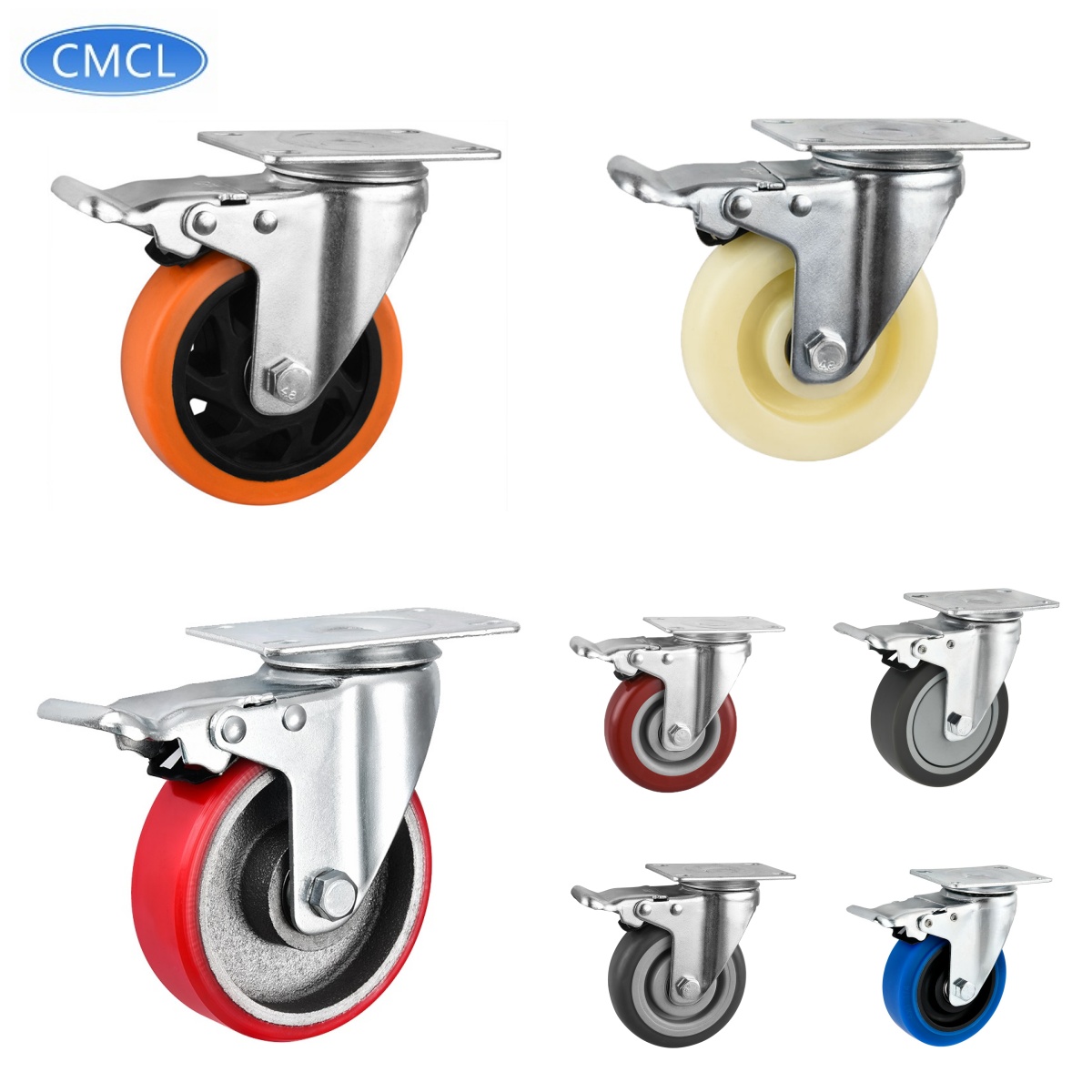
Most people associate larger wheels with smoother rides and better performance, but 4-inch wheels carve out a unique space that often goes unnoticed. Their compact size isn’t just about saving space—it’s about unlocking agility and precision in ways that bulkier alternatives simply can’t match. Whether you’re pushing a cart through tight warehouse aisles or gliding on a mini cruiser, the small diameter means sharper turns and quicker response. You feel more connected to the surface, because every subtle shift in weight or direction translates instantly, without the lag of a larger rotating mass.
Durability is another quiet strength of these diminutive wheels. With a smaller diameter, the material density often increases, making them surprisingly resistant to flat spots and wear over time. They thrive on indoor surfaces, where larger wheels might scuff or struggle with traction. And because they sit closer to the ground, the center of gravity drops, adding stability that defies their size. It’s a practical advantage that daily users appreciate—less worry about bumps, less maintenance, and a ride that feels consistently dependable.
Energy efficiency rarely enters the conversation, but it’s a genuine perk. Less mass to spin up means you use less effort to get moving and keep moving, a subtle difference that adds up over hours of use. Pair that with the fact that these wheels often go unnoticed —no flashy spokes or oversized profiles—and you get a tool that does its job without drawing attention. It’s the absence of bulk that lets you focus on what you’re doing, not on the gear you’re using.
Material Choices That Define Toughness
When something needs to take a beating and keep going, the choice of materials isn't just a footnote—it's the entire story. In the world of extreme durability, from rock-climbing carabiners to the suspension arms of an off-road truck, you quickly learn that chemistry and microstructure are destiny. A steel alloy that gets its backbone from chromium and molybdenum can withstand torsional stress that would shear a common carbon steel like warm butter. Meanwhile, a polymer infused with glass fibers turns a flimsy sheet into a panel that laughs off impacts and shrugs away chemical spills. These aren't accidental discoveries; they're deliberate marriages of a material's inner architecture to the punishment it's meant to endure.
The real magic often happens when you abandon the idea of a single, uniform substance. Composites have rewritten the rulebook by letting engineers place strength exactly where the load path demands it. Picture a carbon-fiber racing bicycle frame: the tubes are laid up so that layers of unidirectional carbon resist pedaling forces along one axis, while a different weave handles the twisting that comes from sprinting out of the saddle. That directional tuning means the frame not only survives crashes that would fold an aluminum equivalent, but it also transmits power with an efficiency that feels almost electric. In the industrial world, ceramic-matrix composites do a similar trick, taking the heat resistance of ceramics and giving them just enough toughness to avoid catastrophic failure in jet engines—a balance that took decades to perfect.
Then there's the quiet revolution in high-performance fibers. Ultra-high-molecular-weight polyethylene is, pound for pound, stronger than steel yet light enough to float. It's the reason a maritime rope can moor a ship in a hurricane without snapping, and why modern body armor can stop a rifle round while weighing less than the uniform it sits under. These materials don't simply resist force; they manage it, spreading energy across thousands of molecular chains that refuse to break. The same principle applies to the humble silicone seal on a deep-sea camera housing: it's not about being rock hard, but about deforming just enough to keep the crushing pressure from reaching the electronics. In every case, toughness comes down to a material's refusal to fail in the way you'd expect—and that's a quality you can't fake with a thicker cross-section or a cheap filler.
Load Capacity and Durability: The Real-World Essentials
When you're hauling gear for a weekend trip or loading up tools for a job site, the last thing you want to worry about is whether your equipment can handle the weight. Load capacity isn't just a number on a spec sheet—it’s the difference between a smooth journey and a roadside breakdown. Overloading can strain frames, snap suspension components, and even lead to dangerous handling. That’s why understanding the real-world limits of your gear means looking beyond theoretical ratings and considering how weight distribution, road conditions, and repeated stress play out over time.
Durability goes hand in hand with load capacity, because a product that's strong out of the box but falls apart after a few months of heavy use isn't truly reliable. In practice, materials like reinforced steel, high-density polyethylene, and double-stitched seams can make all the difference when they face gravel roads, rain, or constant vibration. Cheaper builds might save you money upfront, but they often fail at the worst possible moment. The essentials boil down to this: if your gear can’t consistently take the punishment of daily loads, it’s just adding extra weight to your day.
Where 4-Inch Heavy-Duty Casters Prove Their Worth
Factory floors demand equipment that can shoulder massive loads and roll smoothly over expansion joints and debris. That’s where a set of 4-inch heavy-duty casters changes the game. Their compact diameter allows machinery to sit low for stability, yet the robust steel construction and hardened bearings effortlessly carry tons. You’ll see them keeping assembly carts, welding tables, and custom jigs mobile without sacrificing precision or safety.
Out in the back of a busy restaurant or hotel, these casters prove their mettle just as convincingly. Think about those towering racks of dishes, linen carts piled high, or keg dollies rumbling over thresholds and drain grates. The 4-inch size strikes an ideal balance—small enough to tuck under tight spaces, but with the load rating and swivel action to make tight turns a breeze even when fully loaded. They absorb shocks that would rattle smaller wheels apart, all while gliding quietly to keep the front-of-house ambiance undisturbed.
Harsh environments are another arena where they shine. In meat processing rooms, chemical storage areas, or outdoor maintenance yards, these casters shrug off moisture, grease, and temperature extremes. With polyurethane treads that won’t mark floors but still grip smooth concrete, paired with sealed precision bearings, they keep vital equipment moving through washdowns and rough terrain. When downtime is measured in dollars, the reliability of a well-made 4-inch heavy-duty caster becomes impossible to ignore.
How to Spot a Supplier That Delivers Beyond the Spec Sheet
A spec sheet can tell you a lot about a product’s dimensions, materials, and technical tolerances—but it rarely reveals the supplier’s true ability to solve problems on the fly. The real test comes when something goes off script: a design change mid-production, an unexpected logistics snag, or a sudden spike in demand. How a supplier handles these moments tells you far more than any neatly formatted PDF ever could. Look for suppliers who ask thoughtful questions about your end use instead of just confirming order quantities. If they’re proactively suggesting alternative materials that could cut costs without sacrificing quality, or flagging potential compliance issues before they become headaches, you’ve found a partner, not just a vendor.
Another revealing signal lies in how they communicate about their own supply chain. A supplier that openly shares details about their sub-suppliers, lead times for raw materials, and quality control checkpoints is demonstrating a level of confidence and transparency that spec sheets rarely capture. When you visit their facility—or have a trusted agent do so—watch whether the floor manager can explain process nuances without consulting a manual. Observe how workers interact with equipment and whether they seem empowered to halt a line if something looks off. These cultural cues speak volumes about the consistency and care you’ll receive over repeated orders.
Pay attention to the small, unscripted moments too. How quickly do they respond when you send a technical drawing with a minor error? Do they catch it and ask for clarification, or simply proceed as if nothing is amiss? A supplier that reads between the lines of your RFQ—catching a mismatch between a tolerance callout and a material grade, for instance—proves they’re engaged and knowledgeable. Ultimately, you want someone who treats your product’s success as their own, and that commitment rarely appears in the fine print of a datasheet.
FAQ
A 4 inch caster becomes heavy duty when it combines a robust swivel assembly, high-grade bearings, and a tough wheel material like forged steel or phenolic. These components handle constant loads and frequent movement without failing, even under industrial stresses.
Look for suppliers with a proven track record in industrial mobility, transparent load ratings, and positive client feedback from demanding settings. A good supplier often provides detailed spec sheets and supports custom mounting configurations.
Top choices include forged steel for extreme loads, phenolic for chemical resistance, and polyurethane for floor protection. The right material balances durability, ergonomic push effort, and compatibility with your floor surface.
Depending on construction, a single 4 inch heavy duty caster might support 1,200 to over 4,000 pounds. Always check the dynamic load rating per wheel and factor in impact shock and total cart weight.
Hard, smooth floors like sealed concrete or epoxy coatings are ideal. For delicate flooring, soft tread options like mold-on rubber or polyurethane prevent marring while still handling heavy loads.
They are a common choice because the diameter offers a good balance between maneuverability and load distribution. It allows lower cart profiles while still clearing obstacles on factory floors.
Precision ball bearings reduce rolling resistance and keep the wheel true under load, which is vital for heavy carts that need to be pushed manually. Roller bearings handle higher radial loads and are preferred for electric towing applications.
Features like a total lock brake, swivel lock, and marine-grade corrosion resistance can extend casters’ life in harsh environments. Also, check the kingpin construction — a nut-and-bolt kingpin with thrust bearings is more durable than a riveted design.
Conclusion
In demanding industrial and commercial settings, where floors groan under massive loads and equipment must move with unerring reliability, the choice of caster wheels separates smooth operations from constant headaches. A genuinely heavy-duty caster isn’t just about a thicker bracket or a larger wheel; it’s the synergy of precision engineering, robust materials, and a design that anticipates real-world abuse. The 4-inch wheel size hits a unique sweet spot—large enough to glide over debris, uneven surfaces, and door tracks without jarring the payload, yet compact enough to maintain a low center of gravity and easy maneuverability in tight spaces. The unsung hero is often the wheel material itself: cast iron for brute strength and floor protection, polyurethane for quiet, non-marking resilience, or phenolic for chemical resistance and extreme heat tolerance. A supplier that truly delivers goes beyond load ratings on a spec sheet; they test under dynamic conditions, consider impact forces, and offer precise bearing choices that ensure consistent swiveling under load.
The best 4-inch heavy-duty caster wheels prove their mettle in harsh arenas—automotive assembly lines, food processing plants, heavy machinery dollies, and mobile scaffolding—where failure isn’t an option. Durability hinges on more than just capacity; it’s about thread guards that keep debris out of swivel races, hardened raceways that resist brinelling, and grease fittings that extend service life. Spotting a supplier that exceeds expectations means looking for transparency in testing standards, traceability of components, and a willingness to customize treads, mounts, and finishes to match your exact operational environment. They don’t just sell wheels; they deliver a mobility solution that keeps your work moving, day after punishing day.
Contact Us
Contact Person: Ruby
Email: [email protected]
Tel/WhatsApp: +86 13360379367
Website: https://www.cmcl-casters.com