

Behind the Scenes at a Permanent Magnet Factory: Crafting the Core of Modern Tech
2026-08-12
They’re inside your phone, powering your car, and driving the future of green energy—yet permanent magnets are often overlooked. Step inside a DAWA factory and discover the precision and passion behind these hidden heroes of modern technology.
Where Raw Elements Become Magnetic Powerhouses
There’s something almost alchemical about the moment raw, inert materials begin to exhibit magnetic force. Unassuming chunks of iron, cobalt, or nickel—rarely noticed in their natural state—are transformed through precise processing and alloying into components that can attract, repel, and hold. It’s not simply about adding magnetism; it’s about unlocking a latent potential that was always there, waiting for the right conditions.
The journey from raw ore to magnetic powerhouse involves intense heat, controlled cooling, and deliberate exposure to powerful electromagnetic fields. Each step refines the internal structure, aligning domains that were once chaotic into orderly ranks capable of sustaining a field. Even trace additives—a dash of boron, a hint of dysprosium—can dramatically elevate performance, turning a common material into something resilient enough for a precision motor or sensitive enough for a medical sensor.
What emerges isn’t just a magnet; it’s a tailored solution. The unrefined elements don’t simply gain strength—they gain purpose. Whether in a quiet household appliance or the demanding environment of a wind turbine, these transformed raw elements quietly power the mechanisms we rely on, their ordinary origins completely eclipsed by their extraordinary capabilities.
The Intricate Dance of Powder and Pressure
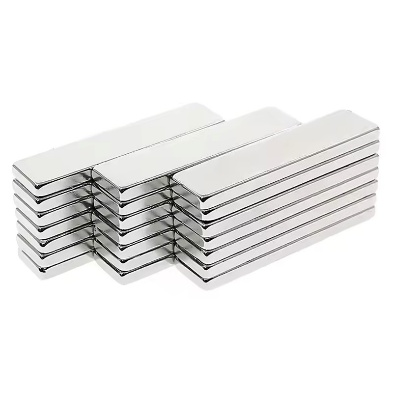
Imagine a fine, almost weightless dust settling into a steel mold, each particle barely visible to the naked eye. At first, there's nothing but a loose collection of specks. Then comes the pressure, immense and unyielding, as a hydraulic ram descends. The powder resists, air hissing out from between the grains. Under the force, those tiny particles begin to slide, reorient, and lock together. It's a silent transformation: what was once a formless heap now gains the shape and density of a solid component, all without a single flame or molten drip.
The secret lies in the behavior of the particles themselves. On the surface, they might appear smooth, but at a microscopic level they are jagged, offering countless points of contact. As pressure builds, these asperities deform, creating mechanical bonds that hold the compact together—a phenomenon known as cold welding. The pressure must be perfectly calibrated: too little and the green part crumbles; too much and internal stresses can lead to cracks during ejection. It's a delicate equilibrium, where the powder and the press engage in a precise ballet, each movement choreographed to produce a part that is both uniform and strong.
There's an art to reading the subtle cues of this process. A skilled operator can sense when the powder isn't flowing evenly, or when a slight adjustment in punch timing is needed to avoid density variations. Even the ambient humidity can influence the outcome, as moisture can change how the powder packs. Modern presses might be computer-controlled, but they still rely on that fundamental interplay between particulate matter and intense force—a reminder that sometimes the most sophisticated manufacturing starts with the simplest elements: powder and pressure.
Temperatures That Forge Unseen Forces
Beneath the surface of our everyday world, temperature gradients sculpt forces so subtle they evade casual notice. A slight rise in a silicon wafer, a chill across a metal plate—these thermal whispers can bend materials, initiate phase transitions, and even give rise to electrical potentials deep within crystals. It’s in these delicate imbalances that pyroelectricity and thermoelectric effects are born, converting heat flow into measurable voltage without a single moving part.
Consider a piece of tourmaline warmed by the sun: asymmetric expansion of its lattice pushes charges to opposite ends, generating a spark capable of igniting curiosity. Decades later, in labs saturated with liquid nitrogen, researchers still harvest similar principles, coaxing currents from ceramics that don’t just withstand extreme cold but thrive in it. The unseen forces here are literal—electromagnetic fields emerging from nothing but heat, waiting to be harnessed by anyone patient enough to watch a thermometer and a voltmeter simultaneously.
Yet the true mystery lies in the sheer precision required. A tenth of a degree separates a silent sensor from a screaming alarm; a thermal shock can crack not just glass but entire paradigms. Engineers obsess over junction depths and Seebeck coefficients while nature effortlessly juggles these forces in magma chambers and thunderclouds. The unseen becomes seen only when we learn to read temperature not as mere warmth, but as a language of pressure, polarization, and latent power.
Precision in Every Micron: The Quality Gauntlet
Every component that leaves our facility has survived a relentless battery of inspections designed to expose even the slightest deviation. Laser micrometers measure critical dimensions down to a fraction of a human hair, while automated optical systems scan surface textures for flaws invisible to the naked eye. This is not mere checking; it's a deliberate obstacle course where only the flawless advance.
Our testing chambers simulate years of operational stress in a matter of hours. Cycles of extreme temperature, vibration, and load are compressed into accelerated life tests, pushing materials to their limits. Data pours in from dozens of sensors, feeding proprietary algorithms that predict long-term behavior. A single anomaly—a microscopic crack, an unexpected frequency shift—triggers a forensic review that halts the batch until the root cause is understood and eradicated.
What emerges from this gauntlet is more than a validated part; it's a documented pedigree of compliance. Each shipment carries a digital certificate tied to its unique serial number, containing the actual inspection records, metrology reports, and environmental exposure logs. For our partners in aerospace, medical devices, and precision instrumentation, this transparency transforms quality from a vague promise into a verifiable asset.
Beyond the Assembly Line: Human Craft Meets Automation
In workshops where tradition once reigned supreme, a quiet transformation is taking place. The rhythmic tap of a hammer and the scent of freshly cut wood now intermingle with the soft hum of precision machinery. Skilled artisans, custodians of centuries-old techniques, are discovering that automation doesn't have to eclipse their expertise—it can amplify it. A watchmaker might still shape delicate components by hand, but now uses computer-guided tools to achieve previously unimaginable tolerances. This partnership preserves the soul of craftsmanship while pushing the boundaries of what human hands can create.
The key lies in striking a balance where technology serves as an extension of the artisan's will. Rather than replacing the decision-making and aesthetic judgment that define great craftsmanship, automation handles repetitive or physically demanding tasks. A ceramicist can program a wheel to center the clay, then take over for the expressive shaping that gives each vessel its unique character. This collaboration frees the maker to focus on creativity, experimentation, and those subtle imperfections that make an object feel alive. The result isn't mass-produced uniformity but a new breed of bespoke excellence.
Looking forward, this fusion of manual skill and digital precision is redefining industries from furniture making to fashion. Apprenticeships are evolving to teach both traditional techniques and coding, empowering a generation of makers who can seamlessly move between chisel and computer. The assembly line, once a symbol of soulless efficiency, is being replaced by studios where human touch and machine intelligence enhance each other. In this era, the most compelling products are born not from choosing between craft and automation, but from weaving them together into something greater than the sum of their parts.
From Factory Floor to the Heart of Everyday Tech
The journey begins in cavernous halls where robotic arms glide with surgical precision, soldering micro-components onto circuit boards no thicker than a credit card. Here, in these hyper-controlled environments, silicon wafers are etched with billions of transistors, each one a tiny switch that will later power your morning alarm or navigate you through rush hour traffic.
On the assembly line, the bare skeletons of smartphones and laptops slowly take shape as screens are bonded, batteries inserted, and casings sealed. Workers wearing anti-static suits perform quality checks that feel almost ritualistic—tapping, bending, and scrutinizing every seam. It's a dance of human oversight and machine consistency, where a single misplaced speck of dust could render a device useless.
Weeks later, that same device sits in your palm, its origins invisible. You swipe and tap without a second thought, using technology so deeply integrated that it feels like an extension of your own hand. The factory floor, with all its noise and precision, fades into the background, leaving behind only the quiet miracle of everyday connection.
FAQ
It’s a world of intense heat, precise metallurgy, and magnetic fields you can feel. Workers handle rare earth elements, and the process involves melting, crushing, pressing, and sintering materials in controlled atmospheres. The noise and scale are surprising—think jet-engine-oven sounds and powders so fine they behave like liquid.
Magnets are the hidden muscles inside motors and speakers. In a phone, they enable vibration and sound. In EVs, neodymium magnets in the motor convert electricity to motion with incredible efficiency. Without them, your tech would be heavier, slower, and less responsive.
Rare earths like neodymium and samarium have unpaired electrons that create massive magnetic strength. A tiny neodymium magnet can lift a thousand times its weight. The challenge is that mining and separating these elements is environmentally tricky, so factories often invest in recycling and precise usage.
Alignment and magnetization. Imagine a loose powder being perfectly aligned by a magnetic field so strong it’s like the Earth’s core. Then it’s compacted and sintered into a solid. Finally, a burst of current creates the permanent magnetic field—a silent, invisible snap that turns inert material into a force.
Absolutely. Strong fields can erase credit cards, stop pacemakers, and pull metal objects across the room. Workers avoid wearing jewelry or steel-toe boots. There are degaussing zones, and everyone learns the ‘magnet shuffle’—keeping hands away from pinch points when two surfaces snap together.
They use cryogenics, heating, and high-speed rotors. A magnet might be dunked in liquid nitrogen then baked to simulate years of use. Eddy-current testers map the field with a spinning coil. Some are spun at 100,000 RPM to see if they crack—it’s a tough final exam before they ship.
Grain boundary diffusion is a big one—it infuses heavy rare earths only where needed, boosting performance while using less scarce materials. Additive manufacturing, like 3D printing magnets, lets engineers create complex 3D fields. Factories are also exploiting scrap magnets to close the loop sustainably.
Conclusion
Step inside a permanent magnet factory and you’re not just seeing machines—you’re witnessing a transformation where rare earth elements like neodymium are crushed, mixed, and pressed into shapes that will one day power everything from your earbuds to electric vehicles. It starts with raw powders, handled with surgical care because even a whisper of oxygen can weaken their future strength. The “dance” of aligning these grains under immense pressure is mesmerizing: a magnetic field forces each particle to face the same direction, locking in the potential for an invisible force that will later spin motors and levitate trains. But this is just the beginning; the real magic happens inside towering vacuum furnaces, where blistering heat sets the alignment permanently—turning a fragile compact into a magnetic powerhouse without any of the drama visible to the human eye.
Then comes the relentless quality gauntlet: lasers measure every micron, magnetizing coils test flux density, and X-rays peer inside for hidden cracks. A single flaw and the piece is scrapped—because in a turbine generator or a surgical robot, there’s no room for second best. Yet despite all the high-tech sensors, human judgment still rules the floor. Skilled hands fine-tune presses, adjust furnace profiles, and make call that automation can’t. It’s this blend of artistry and precision that turns a factory into a crucible of modern life. From the roar of the assembly line to the silent efficiency of a smartphone’s haptic motor, these magnets fade into the background of our daily routines—unseen, yet absolutely essential.
Contact Us
Contact Person: Kelvin Lo
Email: [email protected]
Tel/WhatsApp: 0769-88561131
Website: https://dawamagnetic.com/