

5G Core Network Vendors: Key Players and Selection Guide
2026-05-26
The 5G era is no longer a distant promise—it's here, reshaping industries and redefining connectivity. But behind every lightning-fast download and seamless IoT connection lies a critical foundation: the 5G core network. Choosing the right vendor for this heart of the network is one of the most strategic decisions a mobile operator can make. While giants like Ericsson and Huawei dominate headlines, a new wave of agile innovators is changing the game. Among them, IPLOOK stands out with its flexible, cloud-native solutions that challenge traditional heavyweight approaches. In this guide, we’ll navigate the landscape of 5G core vendors, unpack what truly matters in a selection, and reveal why the next big choice might not be the obvious one.
Overview of the 5G Core Vendor Landscape
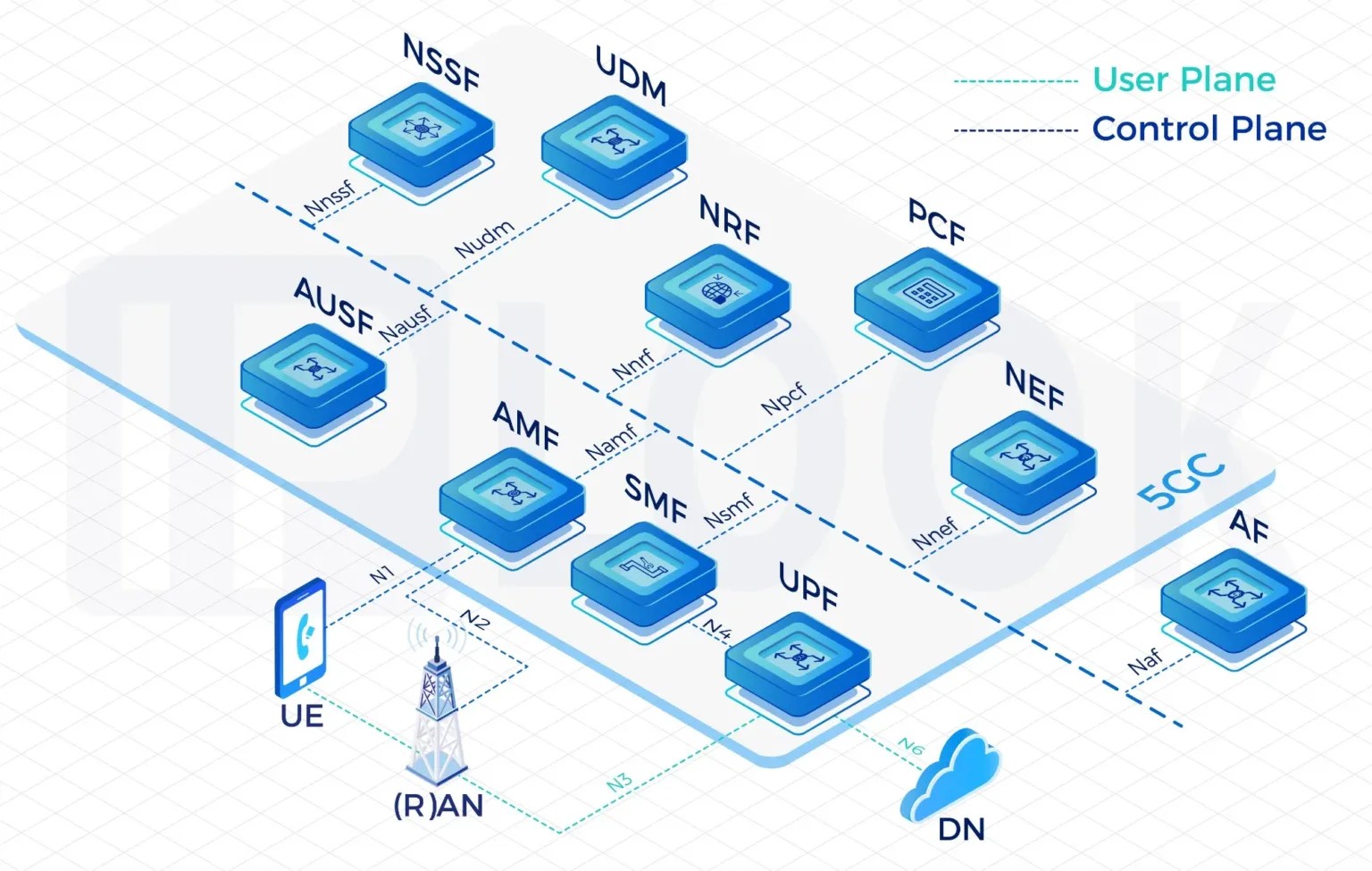
The 5G core market has quickly evolved from early standards debates into a fiercely contested commercial reality, with a handful of established network equipment providers and several agile newcomers shaping the supply side. Incumbents like Ericsson, Nokia, and Huawei have leveraged their extensive radio access portfolios and deep operator relationships to offer end‑to‑end 5G core solutions, often packaged with professional services and systems integration. Meanwhile, challengers such as Mavenir, Samsung, and Affirmed Networks (now part of Microsoft) are betting on cloud‑native, software‑centric architectures to disaggregate traditional vendor lock‑in, appealing to operators that want best‑of‑breed components and multi‑vendor interoperability.
A defining trait of today’s landscape is the shift toward open, container‑based platforms that can run on generic compute infrastructure, blurring the lines between telecom and IT vendors. This has opened the door for hyperscalers like AWS, Google Cloud, and Microsoft Azure to enter the core network domain, not necessarily as standalone vendors but as enablers of telco‑grade cloud environments and edge computing frameworks. The result is a complex ecosystem where traditional telecom suppliers, software disruptors, and public cloud providers coexist – often in the same operator network – each contributing different pieces of the service‑based architecture puzzle.
Despite the push for openness, the market remains concentrated among a few players with proven track records in large‑scale deployments, especially as operators navigate the complexities of standalone 5G (SA) rollouts. Tier‑1 carriers still lean toward vendors that can offer global support, comprehensive security capabilities, and smooth migration paths from 4G evolved packet cores. Smaller vendors often gain traction by targeting niche use cases, private networks, or greenfield operators unencumbered by legacy systems. As the technology matures, the vendor landscape will likely see further consolidation, with partnerships and acquisitions bridging gaps in areas like policy control, network slicing, and exposure functions.
Established Giants vs. Emerging Challengers
When you look at the landscape of any major industry, there’s a clear divide between the old guard and the new wave. The established giants have spent decades building infrastructure, refining their supply chains, and earning consumer trust. They move with the confidence of entities that have weathered multiple economic cycles, yet that very stability can sometimes translate into a reluctance to pivot quickly. Their playbook is tried and tested, but it’s also written in ink that’s increasingly hard to adapt.
Emerging challengers, on the other hand, operate with a different kind of energy. They aren’t burdened by legacy systems or institutional inertia, so they can experiment with bold ideas and rapidly iterate based on real-time feedback. Often digital natives, these companies understand how to leverage data and community in ways that feel organic rather than forced. However, they face their own hurdles—scaling without sacrificing quality, securing funding in competitive markets, and convincing skeptical customers to take a chance on something unproven.
The real fascination lies in how these two camps influence each other. Giants start adopting the agility of startups through acquisitions or internal innovation labs, while challengers study the reliability and depth of experience that only comes with time. This friction creates a dynamic where neither can afford to stand still, ultimately driving the entire sector forward in unexpected ways.
Differentiating Factors in 5G Core Solutions
The shift to a cloud-native, service-based architecture fundamentally alters how networks handle scaling and resilience. Instead of rigid, appliance-driven upgrades, operators can now introduce microservices and containerization to isolate workloads, meaning a surge in signaling traffic no longer drags down user-plane throughput. This decoupling, built on stateless network functions and distributed data layers, enables granular, hitless software updates—an operational leap that directly translates to fewer maintenance windows and more consistent subscriber experiences.
Another critical distinction lies in how slice orchestration touches real-time resource allocation. While many vendors promise end-to-end slicing, the real differentiator is the ability to fuse radio-aware policy control with core-level programmability. Imagine a factory floor where a sudden burst of machine control data triggers instant, automated rebalancing of UPF instances at the edge, without human intervention. That kind of closed-loop agility requires deep integration between the session management function and exposure interfaces, turning network slicing from a static template into a dynamic, revenue-generating asset.
Finally, security postures vary significantly in their architectural underpinnings. Truly differentiated cores embed encryption as a service, allowing slices to carry their own isolated key management and TLS termination points. This goes beyond simple perimeter defense, enabling zero-trust models where even inter-VNF traffic is authenticated and micro-segmented. Coupled with native support for lawful intercept and fraud detection algorithms that learn from control plane patterns, these designs bake threat mitigation into the fabric of the core rather than bolting it on afterward.
Criteria for Evaluating Vendor Proposals
When weighing vendor proposals, you quickly realize that price rarely tells the whole story. A bid that looks like a bargain can mask hidden costs from slower delivery, rigid contracts, or frequent service gaps. Smart evaluation starts by mapping the total cost of engagement against the value promised—factoring in onboarding friction, support responsiveness, and the vendor's willingness to adapt as your needs shift. It's less about the number on the first page and more about what that number buys you six months down the road.
Beyond spreadsheets and price comparisons, the real differentiator often lies in cultural and operational fit. Does the vendor communicate in a way that syncs with your team's rhythms, or will every interaction feel like pulling teeth? Look for evidence of transparent reporting, proactive problem-solving, and a track record of keeping commitments when timelines tighten. The strongest proposals come from vendors who ask sharp questions about your goals, not just ones who fill out your RFP with polished but hollow enthusiasm.
Finally, treat the proposal as a preview of the relationship, not just a document to score. Reach out to their existing clients—not the cherry-picked references, but contacts you find through your own network—and listen for hesitation or overly rehearsed praise. Dig into how they handled something going sideways, because every partnership hits bumps. The vendor worth choosing is the one whose proposal shows they've thought harder about your success than their own sales script.
Deployment Models: From Public Cloud to On-Premises
When organizations decide how to host their applications and data, the spectrum of deployment options can be surprisingly broad. At one end sits the fully managed public cloud, where a third-party provider runs everything in shared data centers, offering near-infinite scalability and a pay-as-you-go model. At the other extreme is the classic on-premises setup, where hardware lives in a company’s own facility, managed by an internal IT team. Between these poles, a range of hybrid and colocation solutions have emerged, each blending different levels of control, cost, and responsibility. The choice isn’t just technical—it reflects strategic bets about compliance, performance, and long-term flexibility.
Few organizations today commit entirely to a single model. A retailer might keep transactional databases in a private cloud for latency reasons while bursting e-commerce workloads into a public cloud during peak seasons. A healthcare provider might rely on on-premises servers for sensitive patient records but use a cloud-based analytics platform for research. This mixing of environments, often called hybrid cloud, is the default for many enterprises. It demands careful orchestration, consistent security policies, and often a containerized approach that lets workloads move fairly easily between locations.
Choosing the right deployment model means weighing trade-offs that aren’t always obvious. On-premises infrastructure can offer unmatched control and data sovereignty, but it requires significant capital expenditure and specialized staff. Public clouds slash upfront costs and simplify scaling, yet costs can spiral without careful governance, and vendor lock-in remains a real risk. Emerging options like edge computing further complicate the picture by placing compute resources closer to users or devices, blurring the line between local and remote infrastructure. In practice, the best strategy often involves matching each workload to its ideal environment rather than searching for a one-size-fits-all solution.
Future-Proofing Your 5G Core Investment
Building a 5G core that can adapt to tomorrow’s demands requires more than just deploying the latest 3GPP release. It means choosing a cloud-native architecture that allows independent scaling of network functions, enabling you to handle traffic spikes without overprovisioning hardware. By decoupling software from proprietary infrastructure, you gain the freedom to evolve individual components as standards mature, instead of being locked into a single vendor roadmap.
Investing in programmable, API-driven frameworks ensures that your network can support emerging use cases like network slicing and edge computing without costly forklift upgrades. The key is to embed flexibility at the design stage, using open interfaces and service-based architectures that let you plug in new capabilities as they become commercially viable. This approach turns your 5G core into a platform for innovation rather than a static connectivity pipe.
Operational agility is equally critical—automation and analytics must be woven into the core from day one. Predictive scaling, closed-loop healing, and real-time policy control allow your network to self-optimize as usage patterns change. When you pair this with a multi-vendor strategy, you reduce dependency on any single supplier and future-proof your investment against technological shifts, making the 5G core a sustainable asset for the next decade.
FAQ
The market is dominated by established telecom giants like Ericsson, Nokia, Huawei, and ZTE. These companies offer comprehensive 5G core solutions covering all key functions such as AMF, SMF, and UPF. In addition, there are specialized providers like Mavenir and Affirmed Networks (now part of Microsoft) that focus on cloud-native and open architectures, appealing to operators seeking more flexibility.
Traditional vendors often provide integrated, end-to-end systems with a mix of proprietary and virtualized components, while newer entrant's solutions are built from the ground up for containers and microservices. Cloud-native providers emphasize agility, being able to run on any Kubernetes-based infrastructure and easy integration with open-source tools. This can mean faster deployment cycles and potentially lower costs, though trade-offs may include less extensive feature maturity in some areas.
Key considerations include: system performance and latency, scalability to handle increased devices, openness and interoperability (e.g., support for 3GPP standards and easy integration with multi-vendor RAN), security posture, total cost of ownership, vendor stability and roadmap, and the ability to deploy on your preferred infrastructure (bare metal, private cloud, or hybrid). It's also wise to evaluate their experience with network slicing and edge computing capabilities.
Operators increasingly avoid single-vendor lock-in to maintain negotiation power and optimize costs. An open, standards-compliant 5G core allows mixing components from different suppliers—for example, using one vendor's control plane with another's user plane. It also simplifies the introduction of new services and ensures smoother upgrades since components are more decoupled. Interoperability testing and conformance to latest 3GPP releases are critical markers.
Network slicing lets operators create multiple virtual networks on top of a common physical infrastructure, each tailored to specific use cases like massive IoT, autonomous vehicles, or enhanced mobile broadband. Vendors differ in how they implement slicing—some provide sophisticated end-to-end orchestration with guaranteed SLAs, while others may offer more basic support. Look for automated slice lifecycle management, fine-grained resource allocation, and the ability to deploy slices across distributed edge locations.
Most vendors now support diverse deployment models: traditional dedicated hardware appliances, fully virtualized software on COTS servers, and cloud-native containers orchestrated by Kubernetes. Some also provide SaaS-like offerings through public cloud partnerships (e.g., with AWS, Azure, or Google Cloud). The choice depends on your existing infrastructure, regulatory requirements, and strategic goals. Cloud-native deployment is trending but may require new operational expertise.
Security evaluation should go beyond basic compliance. Examine how the vendor secures the signaling plane (e.g., protection against SS7/Diameter attacks adapted to HTTP/2 for SBA), data encryption in transit and at rest, identity and access management, and inter-slice isolation. Also assess their vulnerability handling process, whether they provide regular updates, and their track record in responding to telecom-specific threats. Support for dedicated security functions like NEF exposure security is a plus.
Overlooking the total cost of scaling, underestimating integration complexity with existing OSS/BSS, and focusing only on feature checklists instead of real-world performance under load are frequent mistakes. Another pitfall is ignoring the vendor's roadmap alignment with future 3GPP releases and specific vertical requirements. Also, don't forget to check cultural fit and support quality—a vendor's responsiveness during trials can reveal a lot about what post-deployment partnership will feel like.
Conclusion
The 5G core network vendor landscape is undergoing a profound transformation, shaped by the competing forces of established telecom giants and agile emerging challengers. Traditional players like Ericsson, Nokia, and Huawei continue to leverage their deep integration with radio access networks and decades of operator relationships, offering end-to-end reliability that many service providers still depend on. Meanwhile, newcomers—often software-centric companies such as Mavenir, Casa Systems, and cloud-native startups—are disrupting the market with open, disaggregated architectures that promise greater flexibility and cost efficiency. The real differentiators lie in how each vendor embraces cloud-native principles, supports multi-vendor interoperability, and enables network slicing at scale. Automation capabilities, built-in security frameworks, and the ability to seamlessly integrate with existing OSS/BSS systems have become critical buying criteria, moving the conversation beyond mere throughput and latency metrics.
When selecting a 5G core partner, operators must weigh a complex mix of technical and strategic factors. Deployment models now span a wide spectrum—from fully on-premises solutions that satisfy strict data sovereignty requirements to public-cloud-based cores that offer elastic scaling and reduced upfront investment. A pragmatic evaluation framework should scrutinize not only feature completeness and 3GPP compliance but also the vendor's roadmap for supporting upcoming releases, edge computing integration, and API exposure for developer ecosystems. Future-proofing the investment hinges on the vendor's commitment to continuous innovation, community-driven standards alignment, and the proven ability to decouple software from underlying hardware. Ultimately, the ideal choice strikes a balance between immediate performance needs and long-term architectural freedom, ensuring the core network can evolve gracefully as 5G-Advanced and 6G concepts begin to materialize.
Contact Us
Contact Person: Shimmy
Email: [email protected]
Tel/WhatsApp: 85253392231
Website: https://www.iplook.com