

5G Core Network Platform: Unlocking Next-Gen Connectivity
2026-05-26
The leap to 5G isn’t just about faster speeds—it’s a complete rethinking of how networks operate, and the core is where the magic happens. As industries race to embrace ultra-reliable low-latency communication, massive IoT, and network slicing, the 5G core network platform becomes the silent enabler behind every transformative experience. At the forefront of this shift, IPLOOK delivers cloud-native, converged core solutions that strip away complexity, letting operators focus on innovation instead of infrastructure. What does it really take to unlock next-gen connectivity? Let’s dive into the engine room of 5G.
The Heartbeat of 5G: Why Core Networks Demand a Rethink
A truly transformative 5G experience doesn’t just live in the radio. While faster air interfaces grab headlines, the real revolution depends on a core network that can keep pace with the radical shift in how data is processed, routed, and secured. The old model—rigid, centralized, and hardware-bound—simply can’t sustain the sprawling demands of ultra-low latency applications, massive IoT, and network slicing. Without a fundamental rethinking of the core, 5G risks becoming little more than a faster 4G.
Consider what happens when millions of devices—autonomous vehicles, industrial sensors, augmented reality headsets—expect near-instantaneous responses. A legacy core with distant, monolithic gateways introduces unavoidable lag, choking the very services 5G promises to unleash. The path forward lies in a distributed, cloud-native architecture where control and user plane functions can be placed closer to the action. This isn’t just about upgrading components; it’s about designing a core that breathes, flexes, and self-heals in real time, matching the dynamic tempo of the applications it supports.
Security and agility also take on new meaning when the network perimeter dissolves into a mesh of edge sites and multi-cloud integrations. A reimagined core embeds identity-based trust models and encrypted micro-segmentation from the start, rather than bolting them on afterward. It moves from manual, error-prone configurations to intent-driven automation that reduces time-to-service from weeks to minutes. This shift isn’t optional—it’s the heartbeat that will determine whether 5G lives up to its full potential or flatlines under the weight of outdated thinking.
Cloud-Native by Design: Breaking Free from Legacy Chains
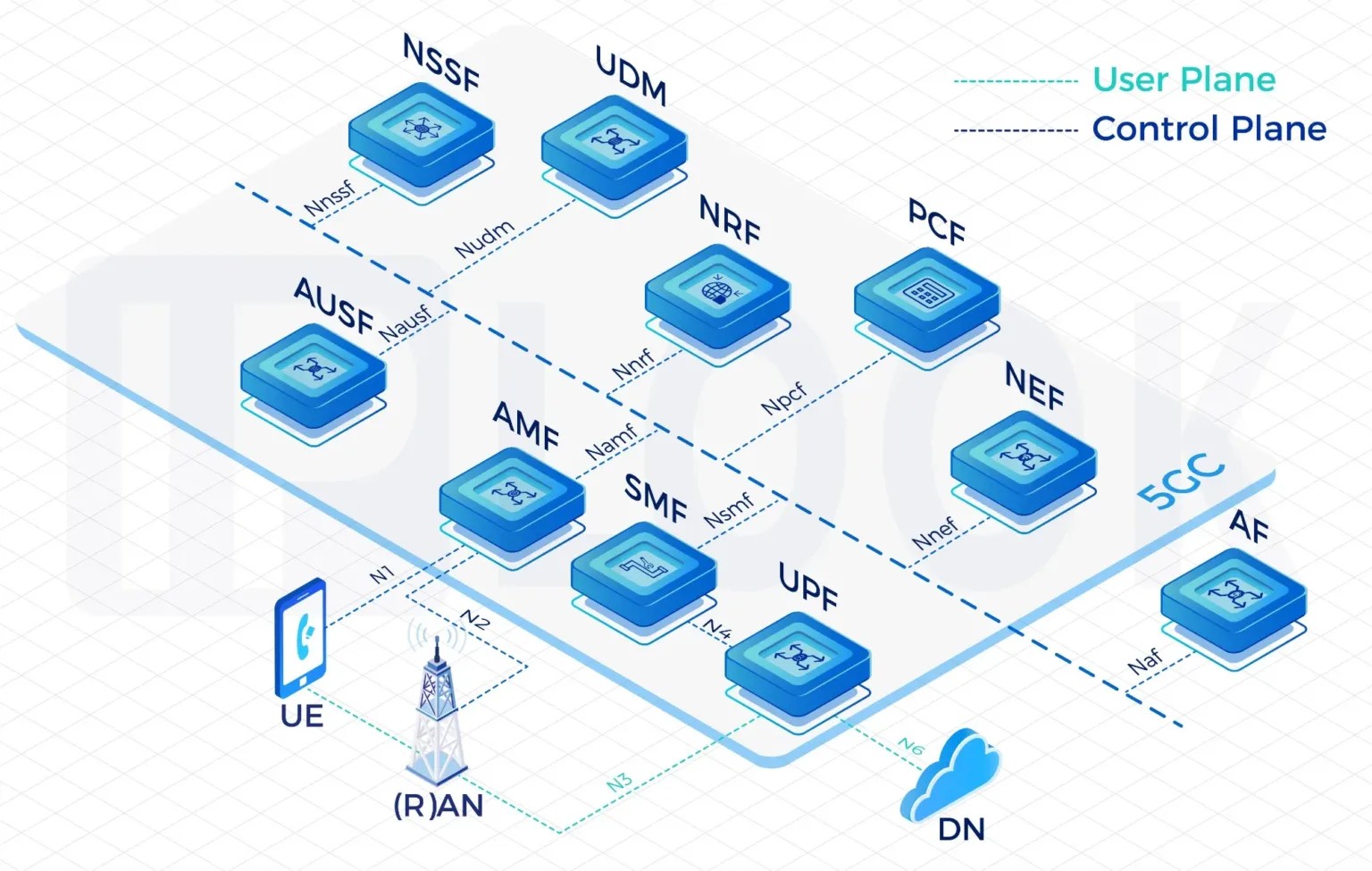
Building with a cloud-native mindset means leaving behind the rigid architectures of the past. It's not just about lifting and shifting old applications into a virtual machine—it's a fundamental reimagining of how systems are assembled, scaled, and maintained. We design each component as an independent service, loosely coupled and communicating over lightweight protocols. This shift frees teams from the monolith's constraints, letting them innovate faster and deploy fearlessly.
The real liberation comes when you stop treating infrastructure as something you merely rent. Instead, we embrace it as programmable, disposable, and self-healing. Containers and orchestration platforms let us declare the desired state and trust the platform to handle the rest. Gone are the days of handcrafted servers and fragile snowflake configurations. Now, every deployment rebuilds the environment from scratch, ensuring consistency and banishing that dreaded “works on my machine” syndrome.
Adopting this approach also reshapes how teams collaborate. With clear API contracts and autonomous services, ownership becomes transparent, and dependencies shrink. You're no longer waiting on a centralized ops team for every release—instead, you’re shipping value directly to users, multiple times a day. It’s not merely a technical evolution; it’s an operational and cultural one that turns legacy drag into agile momentum.
Network Slicing: Carving Out Custom Experiences
Imagine a highway where every vehicle gets its own dedicated lane, calibrated exactly for its speed, size, and destination. That's the essence of network slicing—a technique that transforms a single physical infrastructure into multiple logical networks, each tailored to a specific need. A smart factory might get a slice with ultra-low latency for robotic arms, while a streaming service secures a fat pipe for 4K video, all running concurrently without stepping on each other's toes.
Beyond raw performance, slicing unlocks a new level of experiential customization. An event organizer could launch a temporary slice offering augmented reality overlays to live audiences, while an agricultural drone fleet gets a low-power, wide-area slice for soil sensors. Carriers become experience curators, dynamically molding connectivity to match the moment rather than forcing users into a one-size-fits-all plan.
Edge Intelligence: Processing Power Where It Matters
The shift toward edge intelligence is reshaping how devices handle data. Instead of shipping every bit of information to a distant cloud server, the processing happens right where the data is born—on sensors, cameras, or embedded systems. This approach eliminates the round-trip delay that can make real-time actions feel sluggish, and it allows smart decisions to be made in the moment, without waiting for a distant response.
Practical examples are everywhere. In a factory, edge AI can spot defects on an assembly line within milliseconds, stopping faulty parts before they move further. Autonomous vehicles rely on edge processing to interpret sensor data instantly, because even a split-second latency in braking could be dangerous. Beyond speed, keeping sensitive information local—like medical images or surveillance footage—dramatically reduces the risk of exposure during transmission, a quiet but crucial win for privacy.
Security in the Fast Lane: Guarding a Hyperconnected World
The race toward a fully interconnected reality has outpaced the very mechanisms meant to protect it. Every sensor, smart appliance, and automated system adds a new thread to a fabric that’s growing more intricate by the second — and more susceptible to tearing. We’ve moved beyond the era of isolated breaches; now a single compromised device can ripple outward, turning entire infrastructures into playgrounds for bad actors. The speed of integration demands a security mindset that isn’t just reactive, but woven into the core of every connection from the moment it sparks to life.
Traditional perimeter defenses crumble when the boundary itself becomes a blur. In a world where a factory robot converses with cloud analytics and a hospital’s infusion pump syncs with a patient’s wearable, trust can’t be granted by location alone. It has to be earned continuously, verified at every handshake, and revoked the instant anomalies hint at trouble. This isn’t about building higher walls — it’s about designing resilience into the very flow of data, ensuring that when (not if) a node goes rogue, the whole system doesn’t follow suit.
The human layer remains the most unpredictable element, yet it’s often the last to receive attention. As connectivity accelerates, the friction between convenience and caution intensifies. Empowering individuals to recognize and resist manipulation becomes as critical as any algorithmic safeguard. After all, a hyperconnected world amplifies both our ingenuity and our blind spots — and the difference between a seamless experience and a catastrophic failure often rests on a single, well-trained instinct.
From Automation to Autonomy: The Self-Driving Network
Automation has long been the backbone of network management, handling repetitive tasks and reducing human error. Yet, automated systems still depend on predefined rules and human oversight when something unexpected occurs. The shift toward true autonomy means building networks that don’t just follow scripts—they perceive, reason, and act on their own. It’s a move from tools that assist operators to systems that emulate a seasoned engineer’s judgment, learning continuously and making decisions without waiting for a ticket to be filed.
A self-driving network integrates telemetry, machine learning, and closed-loop orchestration to achieve goals like self-configuration, self-healing, and self-optimization. Instead of static thresholds, it analyzes real-time data streams to predict congestion, detect anomalies, and reroute traffic before users notice an issue. When a link degrades or a configuration drifts, the network doesn’t just alert—it executes corrective actions, validates the outcome, and logs the remediation. This isn’t about removing people from the loop entirely; it’s about freeing engineers from routine firefighting so they can focus on architecture and innovation.
Operators who embrace this evolution see fewer outages and faster resolution times, but the real payoff is architectural agility. Networks that understand intent can spin up new services, enforce security policies, and scale resources without manual intervention. As environments grow more distributed—spanning edge, cloud, and IoT—the cognitive load on human teams becomes unsustainable. Autonomy transforms that complexity into a manageable, self-adjusting fabric, turning what used to be operational burdens into strategic enablers.
FAQ
A 5G core network platform is the central brain of a 5G mobile network, managing data and connectivity services. Unlike 4G's evolved packet core, it's built on a service-based architecture, enabling network functions to be virtualized, independent, and programmable. This shift allows for ultra-low latency, network slicing, and faster deployment of new services.
By breaking monolithic functions into modular, independently scalable services that communicate via APIs, the platform lets operators rapidly integrate new technologies, scale on demand, and test features without impacting the entire network. This agility cuts time-to-market for applications like autonomous driving or smart factories.
Network slicing creates multiple isolated virtual networks on a shared physical infrastructure, each optimized for specific use cases. A slice for autonomous vehicles can guarantee ultra-reliable low latency, while another for massive IoT can prioritize low power and massive connections. This flexibility transforms how industries consume connectivity.
It integrates with edge computing nodes to process data closer to the source, reducing round-trip time. The platform's distributed design and user plane function selection let operators route traffic to the nearest edge, enabling real-time applications like augmented reality, industrial robotics, and tactile internet.
It embeds security by design with features like encrypted signaling, mutual authentication, and network function authorization. The modular architecture isolates breaches, while continuous monitoring and automated response mechanisms protect against modern threats, all enforced through a centralized policy framework.
It supports millions of connections per square kilometer by efficiently handling sporadic, low-bitrate traffic. Features like connectionless data delivery and extended discontinuous reception drastically reduce device power consumption, making it viable for smart meters, asset trackers, and city-wide sensors.
Through advanced session management and gateway selection, it maintains uninterrupted sessions even as users move across cells or access technologies. The platform can anchor sessions at a centrally located user plane while dynamically inserting local breakouts, ensuring voice, video, and critical data flows remain intact.
It allows operators to offer SLAs tailored to enterprise needs via network slicing, dedicated QoS profiles, and on-demand resource allocation. A manufacturing plant can get a high-resilience slice for automation, while a stadium gets high capacity for live streaming, all managed through self-service portals and real-time analytics.
Conclusion
The shift to 5G hinges on a radical transformation of the core network. Legacy architectures simply cannot sustain the demands of ultra-low latency, massive device density, and relentless data throughput that define this new era. A cloud-native foundation becomes non-negotiable, breaking away from rigid, hardware-bound systems to embrace microservices and containerized agility. This architectural rebirth enables operators to carve out network slices with surgical precision—each a bespoke virtual network tailored for specific applications, from autonomous vehicles to immersive AR. Meanwhile, pushing intelligence to the edge slashes latency, processing data right where it's generated and unlocking real-time decision-making for factories, hospitals, and smart cities.
As connectivity explodes, security cannot be an afterthought; it must race at 5G speeds, baked into every layer from the core to the edge to shield an increasingly porous attack surface. The ultimate ambition, however, is a self-driving network—an autonomous entity that leverages AI and analytics to self-optimize, self-heal, and predict failures before they happen. This evolution from automated scripts to genuine autonomy transforms the core platform into the invisible engine of a hyperconnected world, quietly orchestrating a future where connectivity is not just fast but flawlessly intuitive and resilient.
Contact Us
Contact Person: Shimmy
Email: [email protected]
Tel/WhatsApp: 85253392231
Website: https://www.iplook.com